



Begin of page section:
Page sections:

  • Go to contents (Accesskey 1)
  • Go to position marker (Accesskey 2)
  • Go to main navigation (Accesskey 3)
  • Go to sub navigation (Accesskey 4)
  • Go to additional information (Accesskey 5)
  • Go to page settings (user/language) (Accesskey 8)
  • Go to search (Accesskey 9)

End of this page section. Go to overview of page sections

Begin of page section:
Page settings:

English en
Deutsch de
Search
Login

End of this page section. Go to overview of page sections

Begin of page section:
Search:

Search for details about Uni Graz
Close

End of this page section. Go to overview of page sections


Search

Begin of page section:
Main navigation:

Page navigation:

  • University

    University
    • About the University
    • Organisation
    • Faculties
    • Library
    • Working at University of Graz
    • Campus
    Developing solutions for the world of tomorrow - that is our mission. Our students and our researchers take on the great challenges of society and carry the knowledge out.
  • Research Profile

    Research Profile
    • Our Expertise
    • Research Questions
    • Research Portal
    • Promoting Research
    • Research Transfer
    • Ethics in Research
    • Commission for Scientific Integrity
    Scientific excellence and the courage to break new ground. Research at the University of Graz creates the foundations for making the future worth living.
  • Studies

    Studies
    • Prospective Students
    • Students
  • Community

    Community
    • International
    • Location
    • Research and Business
    • Alumni
    The University of Graz is a hub for international research and brings together scientists and business experts. Moreover, it fosters the exchange and cooperation in study and teaching.
  • Spotlight
Topics
  • Sustainable University
  • Researchers answer
  • Work for us
Close menu

End of this page section. Go to overview of page sections

Begin of page section:
You are here:

University of Graz News Stipendien von Rudi Roth

End of this page section. Go to overview of page sections

Wednesday, 11 June 2014

Stipendien von Rudi Roth

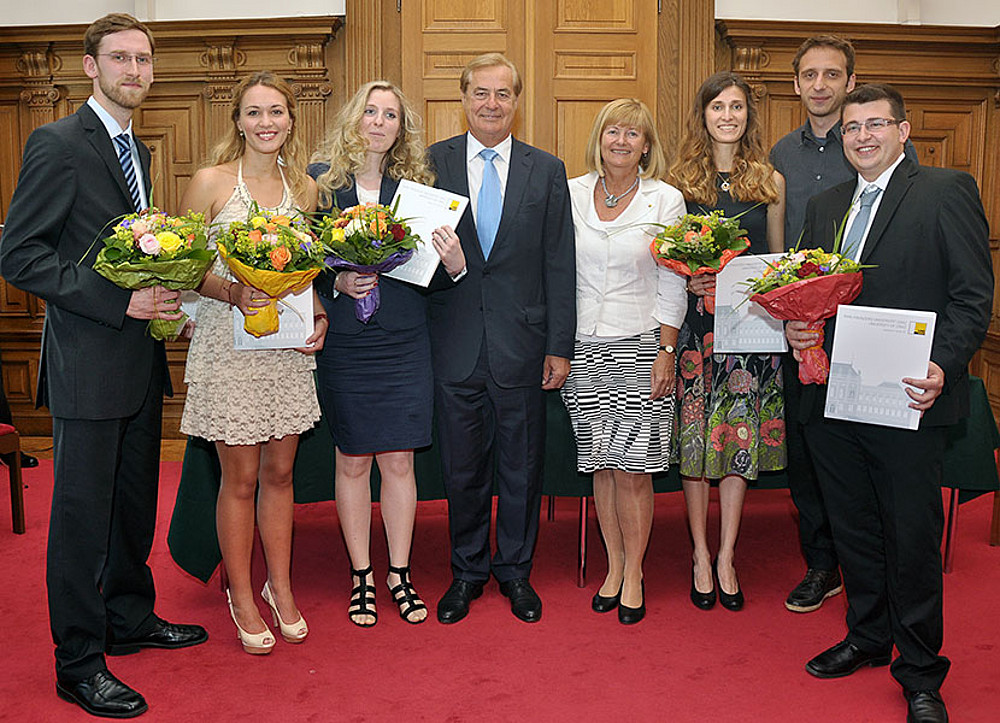
Honorarkonsul Rudi Roth und Rektorin Christa Neuper (Mitte) mit den StipendiatInnen Lukas Hermann Stachl, N.N., Laura Kromják, Almina Bešić, Branimir Staletovik und Anaid Ceribašić-Begovac (v.l.)

Honorarkonsul Rudi Roth und Rektorin Christa Neuper (Mitte) mit den StipendiatInnen Lukas Hermann Stachl, N.N., Laura Kromják, Almina Bešić, Branimir Staletovik und Anaid Ceribašić-Begovac (v.l.)

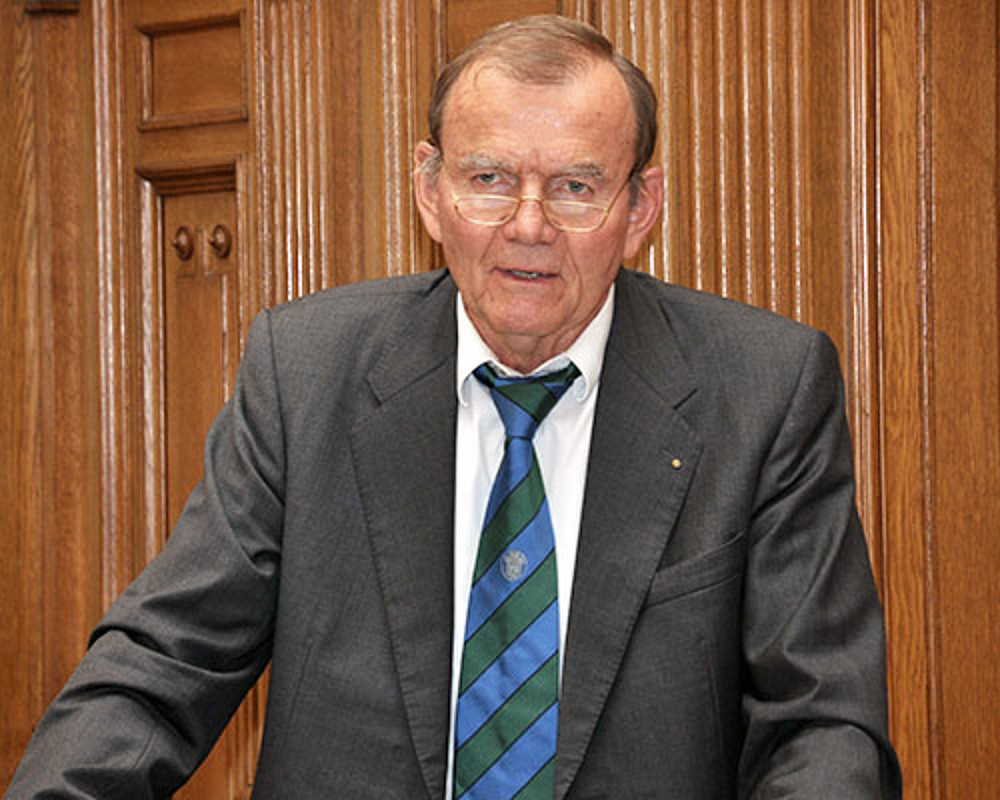
Prof. Gunther Nitsche, Mitglied der Auswahlkommission, stellte die StipendiatInnen und ihre Arbeiten vor.

Prof. Gunther Nitsche, Mitglied der Auswahlkommission, stellte die StipendiatInnen und ihre Arbeiten vor.

Unternehmer fördert Studierende der Uni Graz mit 9.350 Euro

Der international erfolgreiche Unternehmer und Honorarkonsul von Ungarn, Senator Mag. Rudi Roth, fördert seit 2001 hervorragende Studierende der Karl-Franzens-Universität Graz, die sich in ihrer Diplom-/Masterarbeit oder Dissertation einem Thema mit Bezug zu Ost- oder Südosteuropa widmen. Heuer stellt Rudi Roth insgesamt 9.350 Euro zur Verfügung. Am 11. Juni 2014 verlieh der Sponsor die Stipendien an der Uni Graz gemeinsam mit Rektorin Christa Neuper an sechs junge ForscherInnen.


Die Beziehungen zu Südosteuropa haben an der Uni Graz eine lange Tradition. Im Jahr 2000 wurde der universitätsweite Schwerpunkt Südosteuropa ins Leben gerufen. „Honorarkonsul Rudi Roth hat den Schwerpunkt durch seine Stipendien für wissenschaftliche Arbeiten junger Forscherinnen und Forscher von Anfang an unterstützt und dazu beigetragen, die Beziehungen zu dieser Region weiter zu stärken“, dankte Rektorin Christa Neuper dem Sponsor für seine Treue und die Nachhaltigkeit der Initiative.

Neuper gratulierte den sechs Studierenden, die für die Förderung ausgewählt wurden: „Die Stipendien sind eine Auszeichnung und machen Sie gleichzeitig zu Botschafterinnen und Botschaftern der Universität Graz.“

„Wichtig ist, durch diese Stipendien eine Brücke zu schlagen zwischen Österreich und den Ländern in Südosteuropa“, begründete Rudi Roth seine langjährige Unterstützung. Nicht nebeneinander, sondern miteinander, sei die Devise. „Frieden kannst du nur haben, wenn du ihn gibst!“, betonte der Unternehmer.


Die diesjährigen StipendiatInnen sind

  • Almina Bešić (Doktorat Betriebswirtschaft): Strategies of Austrian Companies in the Western Balkans
  • Anaid Ceribašić-Begovac (Joint-Master „Geschichte des Südöstlichen Europa“): Die Aussiedlung der moslemischen Bevölkerung aus Serbien 1862
  • Laura Kromják (Doktorat Anglistik/Amerikanistik): Trauma Memory and the Aftermath of Genocides in Anglophone Auto/biographies
  • Lukas Hermann Stachl (Rechtswissenschaften): Der Ombudsmann – Einrichtung in Ungarn und Österreich im Vergleich
  • Branimir Staletovik (Joint Master South-Eastern European Studies): „Skopje 2014“ and its Effects on the Process of Nation-Building
  • N.N. (LL.M. in South East European Law and European Integration): Means of Protection of Trade Mark and Patent in Macedonia


Über 200.000 Euro hat Rudi Roth, selbst Absolvent der Uni Graz, bereits in Form von Stipendien gestiftet. Die Förderung ermöglicht den Studierenden, im Ausland Feldforschung und Quellenstudien zu betreiben. Ziel ist, die Expertise zu Ost- und Südosteuropa weiter auszubauen und die fruchtbaren nachbarschaftlichen Beziehungen zu stärken.


created by Gudrun Pichler

Related news

Higher Education Strategy 2040: Austria’s universities on course for the future

Austria has 77 higher education institutions, which is above the EU average – but does this really make sense? The new Higher Education Strategy 2040 focuses on cooperation rather than mergers. As one of the six largest universities in Austria, the University of Graz plays a central role in this.

Climate research in Greenland: Old data provides new insights

The polar explorer and University of Graz professor Alfred Wegener left behind a unique collection of climate data from Greenland. A research team from the University of Graz is now analysing this 100-year-old treasure trove of data and comparing it with current measurements.

Diversity in nature and science: How we talk about plants and each other

Ginkgo, kiwi, hemp: they exist as male and female plants. Anyone who paid attention in biology class will confirm this. But is this categorisation, established by Carl von Linné almost 300 years ago, still valid today? An interdisciplinary team at the University of Graz is questioning these attributions and using this as a starting point to provide food for thought for gender-sensitive interaction between students, scientific and teaching staff.

Around the world in eight stops: the Long Night of Research at the University of Graz

On 24 April from 5 pm, you can take a short trip around the globe at the University of Graz, discovering pecularities of foreign countries or new local features in the entrance hall of the University Library. The itinerary takes you through introduced animal species, political attitudes and the omnipotence of algorithms. There will also be a programme in the historic reading hall, as well as at the UniGraz@Museum and the University Archive.

Begin of page section:
Additional information:

University of Graz
Universitaetsplatz 3
8010 Graz
Austria
  • Contact
  • Web Editors
  • Moodle
  • UNIGRAZonline
  • Imprint
  • Data Protection Declaration
  • Accessibility Declaration
Weatherstation
Uni Graz

End of this page section. Go to overview of page sections

End of this page section. Go to overview of page sections

Begin of page section:

End of this page section. Go to overview of page sections

