Begin of page section:
Page sections:

  • Go to contents (Accesskey 1)
  • Go to position marker (Accesskey 2)
  • Go to main navigation (Accesskey 3)
  • Go to sub navigation (Accesskey 4)
  • Go to additional information (Accesskey 5)
  • Go to page settings (user/language) (Accesskey 8)
  • Go to search (Accesskey 9)

End of this page section. Go to overview of page sections

Begin of page section:
Page settings:

English en
Deutsch de
Search
Login

End of this page section. Go to overview of page sections

Begin of page section:
Search:

Search for details about Uni Graz
Close

End of this page section. Go to overview of page sections


Search

Begin of page section:
Main navigation:

Page navigation:

  • University

    University
    • About the University
    • Organisation
    • Faculties
    • Library
    • Working at University of Graz
    • Campus
    Developing solutions for the world of tomorrow - that is our mission. Our students and our researchers take on the great challenges of society and carry the knowledge out.
  • Research Profile

    Research Profile
    • Our Expertise
    • Research Questions
    • Research Portal
    • Promoting Research
    • Research Transfer
    • Ethics in Research
    • Commission for Scientific Integrity
    Scientific excellence and the courage to break new ground. Research at the University of Graz creates the foundations for making the future worth living.
  • Studies

    Studies
    • Prospective Students
    • Students
    • Welcome Weeks for First Year Students
  • Community

    Community
    • International
    • Location
    • Research and Business
    • Alumni
    The University of Graz is a hub for international research and brings together scientists and business experts. Moreover, it fosters the exchange and cooperation in study and teaching.
Topics
  • Sustainable University
  • Researchers answer
  • Work for us
Close menu

End of this page section. Go to overview of page sections

Begin of page section:
You are here:

University of Graz News Sternstunden

End of this page section. Go to overview of page sections

Tuesday, 10 October 2017

Sternstunden

Modell des European Solar Telescope. Grafik: EST

Das European Solar Telescope (EST) wird mit einem Durchmesser von 4,5 Metern das größte je in Europa gebaute Sonnenteleskop sein. Grafik: EST
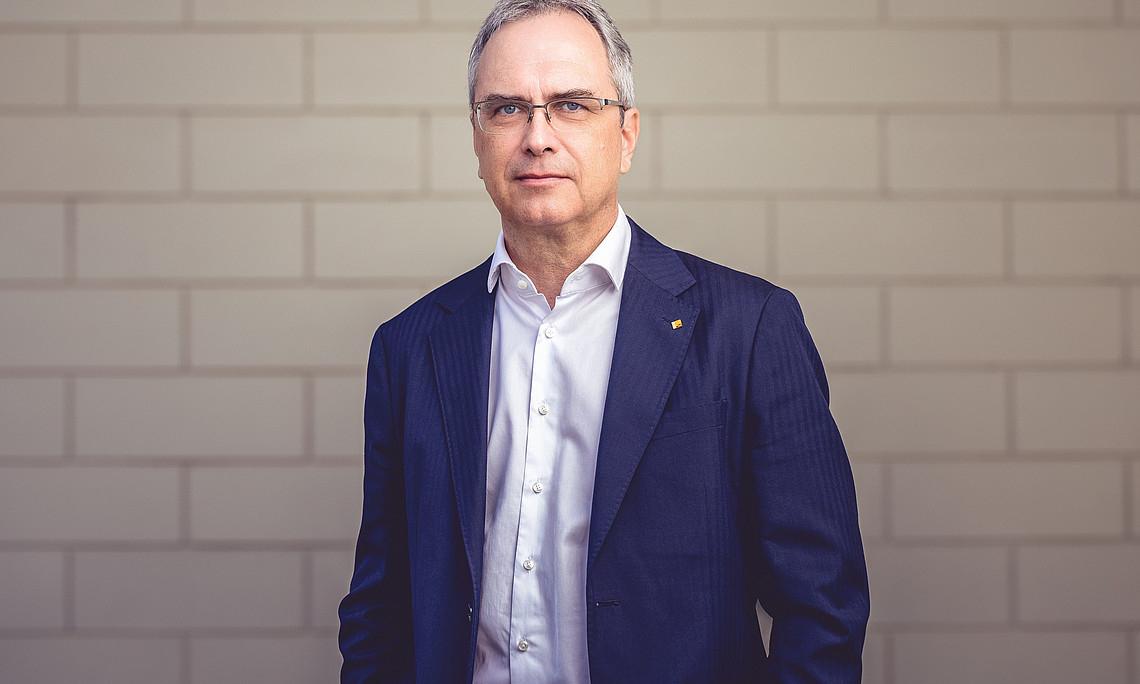
Astrophysik der Uni Graz ist an Vorbereitungen für das größte Sonnenteleskop Europas beteiligt

Es ist ein ambitioniertes Projekt: Das European Solar Telescope (EST) wird mit einem Durchmesser von 4,5 Metern das größte je in Europa gebaute Sonnenteleskop sein und einzigartige Beobachtungen der Vorgänge auf dem heißen Stern ermöglichen. Die Uni Graz ist bei den Vorbereitungen mit an Bord. Auf Initiative von Univ.-Prof. Dr. Arnold Hanslmeier treffen sich von 9. bis 11. Oktober 2017 führende VertreterInnen der Sonnenphysik-Institute aus den beteiligten Ländern in Bairisch Kölldorf in der Oststeiermark. Organisiert wird die erste EST-Tagung in Österreich in Kooperation mit der Uni Graz, der Österreichischen Akademie der Wissenschaften (ÖAW) und der Region Bad Gleichenberg.

„Das Teleskop wird mit einer ganz neuartigen Technologie ausgestattet sein und so die weltweit besten Bilder der Sonne liefern. Man kann damit Details in einer Größe von rund 50 Kilometern erkennen“, weiß Hanslmeier. Dadurch gewonnene neue Einsichten sind auch für die Erde relevant. Sie sollen unter anderem dazu beitragen, den Zusammenhang zwischen der Sonnenaktivität und dem Klima auf unserem Planeten zu verstehen sowie die Vorhersage des Weltraumwetters, verursacht durch Sonneneruptionen, zu verbessern.
„14 Staaten haben ihre Absicht erklärt, sich am EST zu beteiligen. Die Gesamtkosten liegen bei etwa 200 Millionen Euro, die unter den Mitgliedsländern aufgeteilt werden“, so Hanslmeier. Die Fertigstellung ist für 2025 geplant. Stehen wird das Teleskop auf Teneriffa.
Ziel der Konferenz ist, neben wissenschaftlichen Diskussionen, das Projekt potentiellen Stakeholdern, Kooperationspartnern und Förderorganisationen vorzustellen.

created by Gudrun Pichler

Related news

Jurassic Sounds: Biologist reconstructs insect songs from 165 million years ago

It was apparently not just the roars of the dinosaurs that made up the soundscape of the animal world during the Jurassic period. Crickets and grasshoppers communicated through a variety of songs and high-pitched sounds, as Thorin Jonsson from the Institute of Biology at the University of Graz discovered together with colleagues from the universities of Lincoln, Bristol (UK), Beijing (China) and Tempe (USA). The findings on what are so far the oldest traces of sound on Earth have just been published in the journal PNAS.

EU funding boosts international exchange between universities

The University of Graz is further expanding its international study opportunities through the European university alliance Arqus and is taking the lead in two key projects. In future, students will benefit from even more joint degree programmes and from simplified recognition of academic achievements through the Joint European Degree Label.

Rescue and risks: Researchers have surveyed public perceptions of AI

The use of artificial intelligence has had to be made transparent since 2 August 2026. The EU’s AI Act, which has been in force since then, also sets out how risky an application is and which security measures apply as a result. However, the assessment of risks by the legislation differs in some cases significantly from the perceptions of the Austrian public. This is the finding of a representative study carried out by data scientist Stefan Thalmann from the University of Graz and his team.

The Healing Sea: Researchers discover new approaches to treating chronic inflammation in sponges

Chronic inflammation plays a key role in many diseases, ranging from metabolic disorders and cardiovascular diseases to tissue damage following injuries or infections. “Normally, the body is able to resolve inflammation on its own. If this process becomes unbalanced, immune cells remain permanently active and continue to drive negative changes in the tissue,” explains Andreas Koeberle, a pharmacist at the University of Graz.

Begin of page section:
Additional information:

University of Graz
Universitaetsplatz 3
8010 Graz
Austria
  • Contact
  • Web Editors
  • Moodle
  • UNIGRAZonline
  • Imprint
  • Data Protection Declaration
  • Accessibility Declaration
Weatherstation
Uni Graz

End of this page section. Go to overview of page sections

End of this page section. Go to overview of page sections

Begin of page section:

End of this page section. Go to overview of page sections