Begin of page section:
Page sections:

  • Go to contents (Accesskey 1)
  • Go to position marker (Accesskey 2)
  • Go to main navigation (Accesskey 3)
  • Go to sub navigation (Accesskey 4)
  • Go to additional information (Accesskey 5)
  • Go to page settings (user/language) (Accesskey 8)
  • Go to search (Accesskey 9)

End of this page section. Go to overview of page sections

Begin of page section:
Page settings:

English en
Deutsch de
Search
Login

End of this page section. Go to overview of page sections

Begin of page section:
Search:

Search for details about Uni Graz
Close

End of this page section. Go to overview of page sections


Search

Begin of page section:
Main navigation:

Page navigation:

  • University

    University
    • About the University
    • Organisation
    • Faculties
    • Library
    • Working at University of Graz
    • Campus
    Developing solutions for the world of tomorrow - that is our mission. Our students and our researchers take on the great challenges of society and carry the knowledge out.
  • Research Profile

    Research Profile
    • Our Expertise
    • Research Questions
    • Research Portal
    • Promoting Research
    • Research Transfer
    • Ethics in Research
    Scientific excellence and the courage to break new ground. Research at the University of Graz creates the foundations for making the future worth living.
  • Studies

    Studies
    • Prospective Students
    • Students
  • Community

    Community
    • International
    • Location
    • Research and Business
    • Alumni
    The University of Graz is a hub for international research and brings together scientists and business experts. Moreover, it fosters the exchange and cooperation in study and teaching.
  • Spotlight
Topics
  • Sustainable University
  • Researchers answer
  • Work for us
Close menu

End of this page section. Go to overview of page sections

Begin of page section:
You are here:

University of Graz News Spurensuche

End of this page section. Go to overview of page sections

Thursday, 29 September 2022

Spurensuche

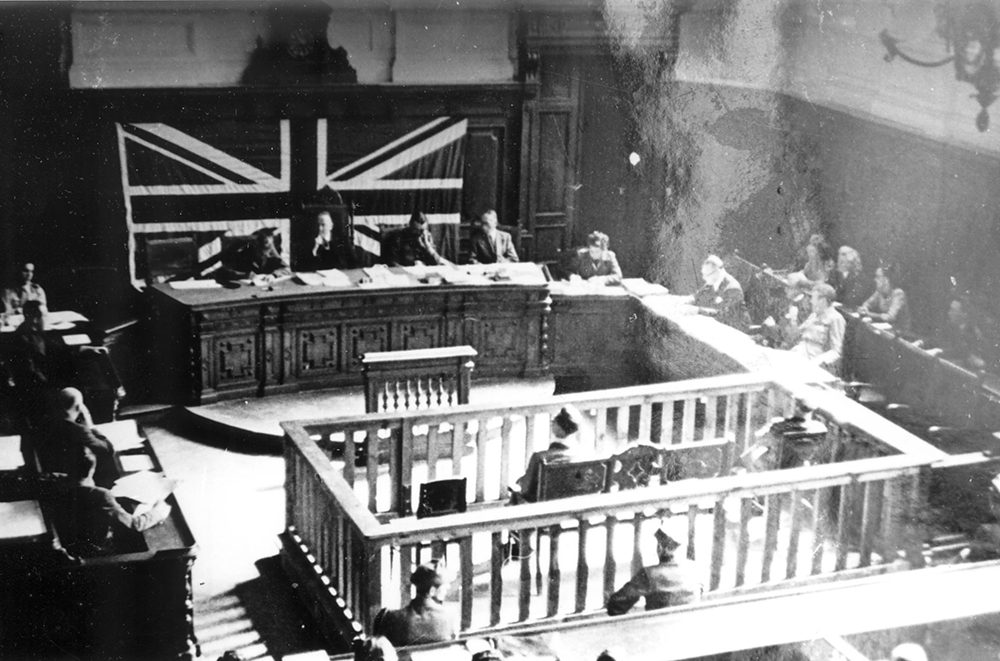
Im Herbst 1947 wurden Verbrechen in Liebenau vor das Militärgericht der britischen Besatzungsmacht in Graz gebracht. Foto: Universalmuseum Joanneum

Im Herbst 1947 wurden die Verbrechen in Liebenau vor das Militärgericht der britischen Besatzungsmacht in Graz gebracht. Foto: Universalmuseum Joanneum

Holocaust vor der Haustür: Uni Graz beleuchtet Liebenauer Prozess vor 75 Jahren

Schuhsohlen, Knöpfe und Zahnbürsten: Es sind erschütternde Funde, die erst jüngst das Massaker an ungarischen Jüdinnen und Juden im Lager Graz-Liebenau wieder ins Bewusstsein gerückt haben. Vergessen ist jedoch der Prozess gegen das damalige Lagerpersonal. Zwei der vier Angeklagten wurden zum Tode verurteilt. 75 Jahre danach setzt sich am 10. Oktober 2022 eine Konferenz an der Universität Graz mit dem Gerichtsverfahren auseinander. Neben renommierten WissenschafterInnen kommen erstmals Nachkommen der Täter zu Wort.

„Der Holocaust fand auch vor unserer Haustür statt“, erinnert Zeithistorikerin Barbara Stelzl-Marx an die grausamen NS-Verbrechen in der Steiermark. Zehntausende ungarische Jüdinnen und Juden wurden im April 1945 vor der aus dem Osten vorrückenden Roten Armee „evakuiert“. Viele überlebten diese Todesmärsche nicht – aufgrund von Erschöpfung, mangelnder Versorgung oder weil sie erschossen wurden. In Rechnitz, am Präbichlpass bei Eisenerz, aber auch im Lager Liebenau kam es zu Massenerschießungen. Im Herbst 1947 wurden diese Endphaseverbrechen in Liebenau vor das Militärgericht der britischen Besatzungsmacht in Graz gebracht. Der sogenannte „Liebenauer Prozess“ endete nach fünf Tagen mit zwei Todesurteilen, einer Haftstrafe und einem Freispruch.

Barbara Stelzl-Marx, Leiterin des Ludwig Boltzmann Instituts für Kriegsfolgenforschung und Professorin für europäische Zeitgeschichte an der Uni Graz: „Der Liebenauer Prozess erregte 1947 große Aufmerksamkeit, danach geriet das Thema für viele Jahrzehnte in Vergessenheit.“ Es sei, so die Historikerin, im wortwörtlichen Sinn Gras über das Lager, die verübten Verbrechen, aber auch über die Spuren der Opfer gewachsen. „Es stellt sich etwa die Frage, wie aus liebevollen Familienvätern Täter werden konnten? Wie die Vergehen geahndet wurden und welche Formen der Erinnerungskultur sich etablierten?“

75 Jahre später beschäftigt die Auseinandersetzung nicht nur die Wissenschaft. Auch die nachfolgenden Generationen von Opfern und Tätern. Diesen Aspekt beleuchtet die Tagung. Barbara Stelzl-Marx: „Erstmals sprechen Nachkommen von zum Tode verurteilten Tätern über die Auseinandersetzung im Familiengedächtnis und die Bedeutung für ihre Biografie.“

>> über die Tagung mehr erfahren

created by Andreas Schweiger

Related news

Cosmetics in the environment: University of Graz proves danger to ants

Titanium dioxide, which is found in cosmetics, for example, is increasingly entering the environment in the form of nanoparticles. This could also put insects at risk. If ants ingest the substance in combination with the pesticide glyphosate, it disturbs the development of their offspring. Scientists at the University of Graz are drawing attention to the negative consequences of this toxic cocktail.

How are tech companies changing democracy? Uni Graz designs exhibition for schools

Filtered information, conspiracy theories, fake news – certain groups and corporations are using social media and algorithms to try to influence public opinion in their favour. Their goal: to weaken fundamental rights and diversity of opinion and seize power. In a new exhibition, researchers at the University of Graz are working with pupils to explore the impact of social media and AI on democracy. In accompanying workshops, the scientists want to encourage young people to develop their own ideas for a socially and ecologically viable future and to actively help shape it. The exhibition, designed as a travelling exhibition for schools, will open on 9 March 2026 at the Dreihackengasse Gymnasium in Graz.

Step by step: What motivates Mireille van Poppel as a scientist and vice-rector

Improving people's health and eliminating inequalities: Mireille van Poppel pursues these goals both as a public health researcher and as vice-rector for Internationalisation and Equality. In both roles, she pays particular attention to individual needs.

Master's degree in psychotherapy in Graz: registration opens in March

Graz is becoming a hotspot for psychotherapy: from 2026, the University of Graz and the Medical University of Graz will jointly offer the new master's programme. Registration for the admission procedure for the 140 study places will start in March.

Begin of page section:
Additional information:

University of Graz
Universitaetsplatz 3
8010 Graz
Austria
  • Contact
  • Web Editors
  • Moodle
  • UNIGRAZonline
  • Imprint
  • Data Protection Declaration
  • Accessibility Declaration
Weatherstation
Uni Graz

End of this page section. Go to overview of page sections

End of this page section. Go to overview of page sections

Begin of page section:

End of this page section. Go to overview of page sections