



Begin of page section:
Page sections:

  • Go to contents (Accesskey 1)
  • Go to position marker (Accesskey 2)
  • Go to main navigation (Accesskey 3)
  • Go to sub navigation (Accesskey 4)
  • Go to additional information (Accesskey 5)
  • Go to page settings (user/language) (Accesskey 8)
  • Go to search (Accesskey 9)

End of this page section. Go to overview of page sections

Begin of page section:
Page settings:

English en
Deutsch de
Search
Login

End of this page section. Go to overview of page sections

Begin of page section:
Search:

Search for details about Uni Graz
Close

End of this page section. Go to overview of page sections


Search

Begin of page section:
Main navigation:

Page navigation:

  • University

    University
    • About the University
    • Organisation
    • Faculties
    • Library
    • Working at University of Graz
    • Campus
    Developing solutions for the world of tomorrow - that is our mission. Our students and our researchers take on the great challenges of society and carry the knowledge out.
  • Research Profile

    Research Profile
    • Our Expertise
    • Research Questions
    • Research Portal
    • Promoting Research
    • Research Transfer
    • Ethics in Research
    • Commission for Scientific Integrity
    Scientific excellence and the courage to break new ground. Research at the University of Graz creates the foundations for making the future worth living.
  • Studies

    Studies
    • Prospective Students
    • Students
  • Community

    Community
    • International
    • Location
    • Research and Business
    • Alumni
    The University of Graz is a hub for international research and brings together scientists and business experts. Moreover, it fosters the exchange and cooperation in study and teaching.
  • Spotlight
Topics
  • Sustainable University
  • Researchers answer
  • Work for us
Close menu

End of this page section. Go to overview of page sections

Begin of page section:
You are here:

University of Graz News Sprache und Kultur

End of this page section. Go to overview of page sections

Friday, 22 November 2013

Sprache und Kultur

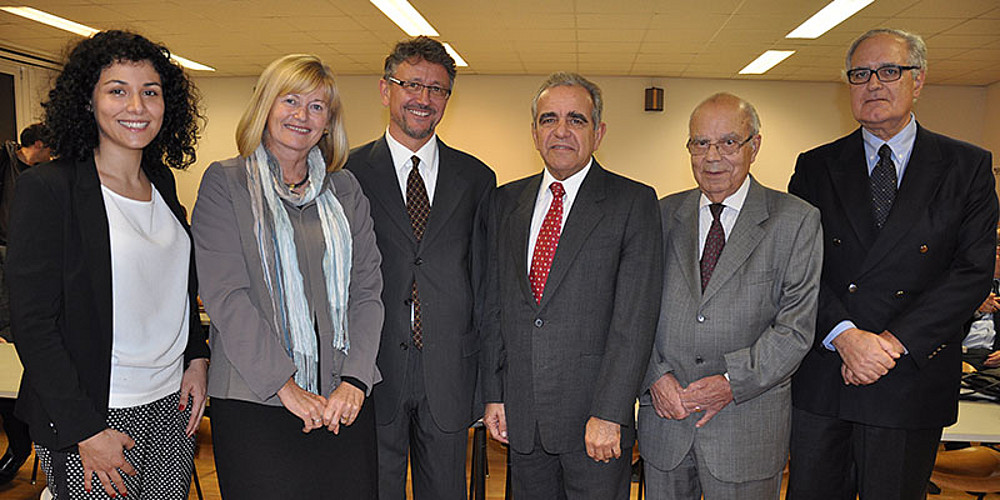
V.l.: Isabel Azevedo, Leiterin des Zentrums für Portugiesische Sprache, Rektorin Christa Neuper, Martin Hummel, Leiter des Instituts für Romanistik, Botschafter Pedro Moitinho de Almeida, Palma Caetano, in den Anfängen Lektor für Portugiesisch in Graz

V.l.: Isabel Azevedo, Leiterin des Zentrums für Portugiesische Sprache, Rektorin Christa Neuper, Martin Hummel, Leiter des Instituts für Romanistik, Botschafter Pedro Moitinho de Almeida, Palma Caetano, in den Anfängen Lektor für Portugiesisch in Graz, und Ivo Castro, Professor an der Universität Lissabon

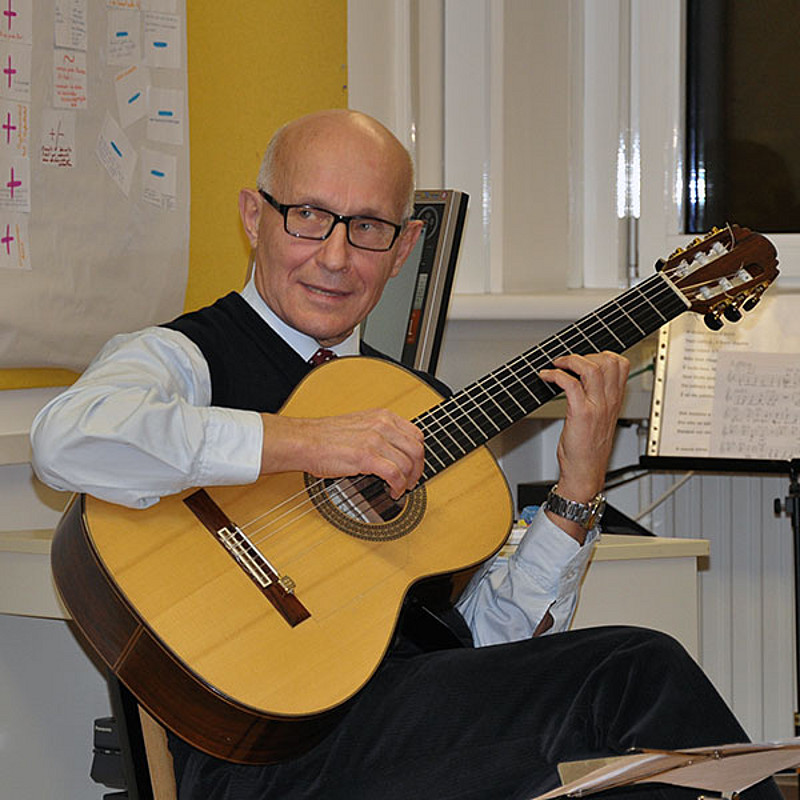
Adolf Sawoff war einer der Ersten, die an der Uni Graz Portugiesisch lernten.

Adolf Sawoff war einer der Ersten, die an der Uni Graz Portugiesisch lernten.

Am Institut für Romanistik wurde das „Centro de Língua Portuguesa“ eröffnet

Die Uni Graz hat eine neue Einrichtung bekommen. Am Institut für Romanistik im Universitätszentrum Wall wurde am 21. November 2013 das Zentrum für Portugiesische Sprache eröffnet. Seine Aufgaben sieht das „Centro de Língua Portuguesa“, das vom Portugiesischen Kulturinstitut Instituto Camões gefördert wird, vor allem in der Unterstützung der Studierenden bei kulturellen Aktivitäten. „Ziel ist die Verbreitung der portugiesischen Sprache und Kultur“, fasste Mag. Isabel Azevedo, Leiterin der Institution zusammen.


Rektorin Christa Neuper unterstrich in ihrer Begrüßung die Bedeutung der Sprachen an der Uni Graz: „Sprachen sind eine wichtige Säule in Forschung und Lehre. An der Geisteswissenschaftlichen Fakultät werden derzeit etwa 6500 Studierende in unterschiedlichen Sprachen ausgebildet. Darüber hinaus belegt jede/r zweite der mehr als 30.000 Studierenden mindestens einen Sprachkurs während der Studienzeit“, so Neuper.

Nach den Grußworten des Botschafters der Portugiesischen Republik in Österreich, Pedro Moitinho de Almeida, warf Univ.-Prof. Dr. Martin Hummel, Leiter des Instituts für Romanistik, einen Blick auf die Anfänge des Portugiesischen an der Uni Graz. Von diesen berichtete dann aus eigener Erinnerung Dr. Palma Caetano. Der Träger des Österreichischen Staatspreises für Literarische Übersetzung  war der erste Lektor für Portugiesisch an der Karl-Franzens-Universität. 1969 begann er mit einer Lehrveranstaltung über zwei Wochenstunden mit vier Studierenden. Einer von diesen war Adolf Sawoff alias Don Adolfo, der bei der Eröffnungsfeier mit seiner Gitarre und Vertonungen der Gedichte von Fernando Pessoa Portugal hör- und spürbar werden ließ. Den Festvortrag hielt Prof. Dr. Ivo Castro von der Universität Lissabon über „Fernando Pessoa e a Língua Portuguesa“.


Portugiesisch ist die Muttersprache von 200 Millionen Menschen und für 15 Millionen eine Zweitsprache. Seit 2010 kann sie an der Uni Graz gemeinsam mit einer anderen romanischen Sprache studiert werden.
created by Gudrun Pichler

Related news

Higher Education Strategy 2040: Austria’s universities on course for the future

Austria has 77 higher education institutions, which is above the EU average – but does this really make sense? The new Higher Education Strategy 2040 focuses on cooperation rather than mergers. As one of the six largest universities in Austria, the University of Graz plays a central role in this.

Climate research in Greenland: Old data provides new insights

The polar explorer and University of Graz professor Alfred Wegener left behind a unique collection of climate data from Greenland. A research team from the University of Graz is now analysing this 100-year-old treasure trove of data and comparing it with current measurements.

Diversity in nature and science: How we talk about plants and each other

Ginkgo, kiwi, hemp: they exist as male and female plants. Anyone who paid attention in biology class will confirm this. But is this categorisation, established by Carl von Linné almost 300 years ago, still valid today? An interdisciplinary team at the University of Graz is questioning these attributions and using this as a starting point to provide food for thought for gender-sensitive interaction between students, scientific and teaching staff.

Around the world in eight stops: the Long Night of Research at the University of Graz

On 24 April from 5 pm, you can take a short trip around the globe at the University of Graz, discovering pecularities of foreign countries or new local features in the entrance hall of the University Library. The itinerary takes you through introduced animal species, political attitudes and the omnipotence of algorithms. There will also be a programme in the historic reading hall, as well as at the UniGraz@Museum and the University Archive.

Begin of page section:
Additional information:

University of Graz
Universitaetsplatz 3
8010 Graz
Austria
  • Contact
  • Web Editors
  • Moodle
  • UNIGRAZonline
  • Imprint
  • Data Protection Declaration
  • Accessibility Declaration
Weatherstation
Uni Graz

End of this page section. Go to overview of page sections

End of this page section. Go to overview of page sections

Begin of page section:

End of this page section. Go to overview of page sections

