




Begin of page section:
Page sections:

  • Go to contents (Accesskey 1)
  • Go to position marker (Accesskey 2)
  • Go to main navigation (Accesskey 3)
  • Go to sub navigation (Accesskey 4)
  • Go to additional information (Accesskey 5)
  • Go to page settings (user/language) (Accesskey 8)
  • Go to search (Accesskey 9)

End of this page section. Go to overview of page sections

Begin of page section:
Page settings:

English en
Deutsch de
Search
Login

End of this page section. Go to overview of page sections

Begin of page section:
Search:

Search for details about Uni Graz
Close

End of this page section. Go to overview of page sections


Search

Begin of page section:
Main navigation:

Page navigation:

  • University

    University
    • About the University
    • Organisation
    • Faculties
    • Library
    • Working at University of Graz
    • Campus
    Developing solutions for the world of tomorrow - that is our mission. Our students and our researchers take on the great challenges of society and carry the knowledge out.
  • Research Profile

    Research Profile
    • Our Expertise
    • Research Questions
    • Research Portal
    • Promoting Research
    • Research Transfer
    • Ethics in Research
    • Commission for Scientific Integrity
    Scientific excellence and the courage to break new ground. Research at the University of Graz creates the foundations for making the future worth living.
  • Studies

    Studies
    • Prospective Students
    • Students
    • Registration for Study Programme (Winter semester 2026/27)
    • Welcome Weeks for First Year Students
  • Community

    Community
    • International
    • Location
    • Research and Business
    • Alumni
    The University of Graz is a hub for international research and brings together scientists and business experts. Moreover, it fosters the exchange and cooperation in study and teaching.
Topics
  • Sustainable University
  • Researchers answer
  • Work for us
Close menu

End of this page section. Go to overview of page sections

Begin of page section:
You are here:

University of Graz News Spannungsfeld Gesellschaft

End of this page section. Go to overview of page sections

Monday, 28 October 2013

Spannungsfeld Gesellschaft

Uni Graz nimmt Zusammenleben in Vielfalt unter die Lupe

Die Welt ist zwar das sprichwörtliche Dorf, die globalisierte Gesellschaft hingegen plagt sich mit dem Mix aus Kultur, Sprache, Religionen und Lebensformen. Mit einer neuen Veranstaltungsserie will die Uni Graz in Kooperation mit dem Verein ISOP im Rahmen der „Integrationspartnerschaft Steiermark“ aktuelle Fragen und Möglichkeiten des Zusammenlebens in Vielfalt aufzeigen. Prominente ForscherInnen, darunter Menschenrechtsexperte Wolfgang Benedek, Historiker Helmut Konrad und Kulturwissenschafterin Roberta Maierhofer, bringen ihre Sichtweisen ein. Am 5. November 2013 startet die Diskussionsreihe.

„Das Land Steiermark bekennt sich zur Entwicklung einer offenen Gesellschaft auf Basis der Grundrechte der Europäischen Menschenrechtskonvention.“ Dieses Commitment legte die Landesregierung in der 2011 beschlossenen Charta des Zusammenlebens in Vielfalt ab. Die Karl-Franzens-Universität bringt sich nun aktiv in diesen Prozess ein. „Die Themen und Grundsätze der Charta sollen mit aktuellen Ergebnissen der Forschung in Beziehung gesetzt und quer gedacht werden“, erklärt Ao.Univ.Prof. Dr. Katharina Scherke, Soziologin an der Uni Graz, die Intention.
In Zusammenarbeit mit ISOP, dem Verein für innovative Sozialprojekte, hat Scherke die Vortrags- und Diskussionsreihe konzipiert. Eingebettet sind die öffentlich und kostenlos zugänglichen Veranstaltungen in den Uni-Forschungsschwerpunkt Heterogenität und Kohäsion, dessen Sprecherin Scherke ist. „Die Perspektive aus der Praxis soll die Vorträge ergänzen, eine lebendige Debatte ist uns wichtig“, betont Scherke.

Auftakt am 5. November 2013
In den folgenden zwei Jahren kommen in regelmäßigen Abständen renommierte WissenschafterInnen der Uni Graz zu Wort und bringen ihre Expertise ein. Den Anfang macht Univ.-Prof. Dr. Wolfgang Benedek, Institut für Völkerrecht und Internationale Beziehungen, am 5. November um 18.30 Uhr in der Aula der Karl-Franzens-Universität. Er eröffnet den Diskussionsreigen mit seinem Impulsreferat über „Menschenrechte zwischen Anspruch und Realität“. Der Eintritt ist frei.

Die nächsten Termine im Wintersemester
10. Dezember 2013: „Mehrsprachigkeit als Normalität, Ressource und Chance“ mit Ass.Prof. Dr. Dieter Halwachs und Dr. Barbara Schrammel-Leber
28. Jänner 2014: „Migrationsraum Steiermark“ mit Ao.Univ.Prof. Dr. Karin Schmidlechner-Lienhart, Institut für Geschichte
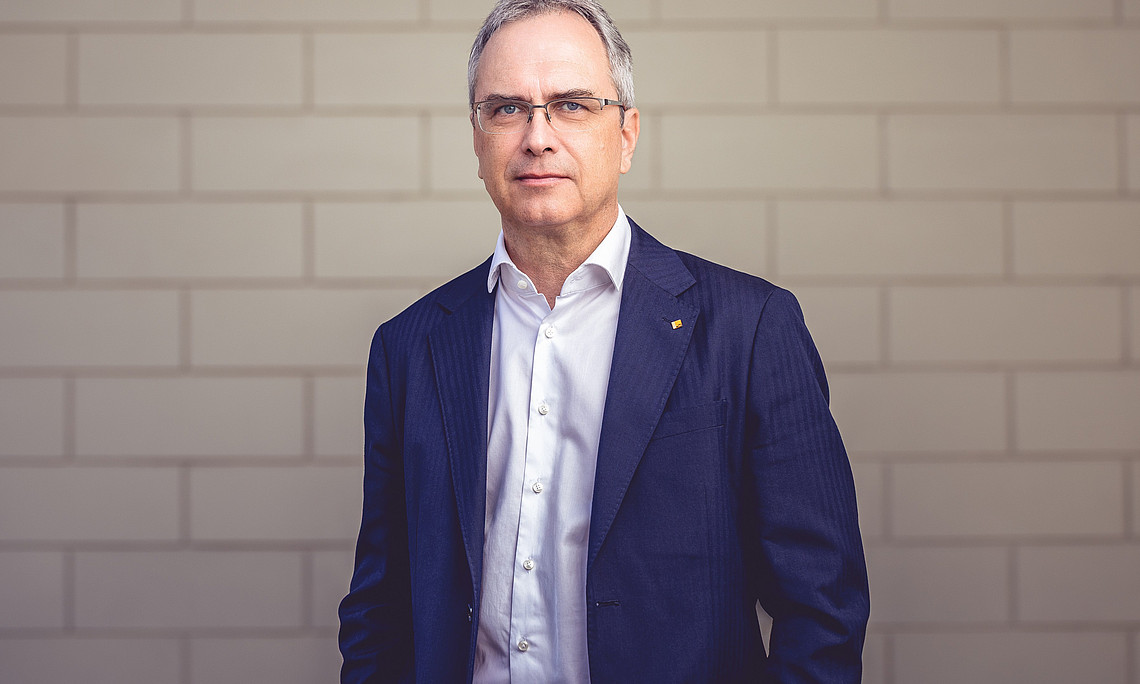
created by Andreas Schweiger

Related news

Commissioned by NATO: University of Graz tests high-tech textiles

As part of an international project, antimicrobial and fire-resistant fabrics with UV protection are being developed in Zagreb. Pharmacists from the University of Graz are ensuring that these fabrics are skin-friendly.

The Arctic up close: ORF special feature on the University of Graz’s research station in S

Students from the University of Graz are spending two weeks conducting research at the Univerisity of Graz research station at the Sermilik Fjord in Greenland, which has been operational for three years. They are measuring glacial runoff, tracking ice melt in real time and installing weather stations. ORF is following the expedition and will be reporting on the special feature ‘Arctic Adventure’ across its various channels from 20 July.

Medicine for ants: Caffeine prolongs the life of infected insects

Black coffee stimulates us and acts against bacteria. So, can caffeine also be good for insects? Yes, confirm biologists of the University of Graz. When ants suffer from a fungal disease, they consume more caffeine and remain active for longer.

How formulas are making medicine more personalised

When Federica Caforio talks about the heart, it doesn’t sound like an operating theatre, but rather like equations, parameters and simulations. Yet this is precisely where the medical promise of her research lies: one day, clinical data will be used to create a digital twin of the heart – a virtual model that will enable a better understanding of diseases and allow for more personalised treatment plans. She will be presenting her research at the ‘ECMTB 2026’ mathematics conference.

Begin of page section:
Additional information:

University of Graz
Universitaetsplatz 3
8010 Graz
Austria
  • Contact
  • Web Editors
  • Moodle
  • UNIGRAZonline
  • Imprint
  • Data Protection Declaration
  • Accessibility Declaration
Weatherstation
Uni Graz

End of this page section. Go to overview of page sections

End of this page section. Go to overview of page sections

Begin of page section:

End of this page section. Go to overview of page sections

