Begin of page section:
Page sections:

  • Go to contents (Accesskey 1)
  • Go to position marker (Accesskey 2)
  • Go to main navigation (Accesskey 3)
  • Go to sub navigation (Accesskey 4)
  • Go to additional information (Accesskey 5)
  • Go to page settings (user/language) (Accesskey 8)
  • Go to search (Accesskey 9)

End of this page section. Go to overview of page sections

Begin of page section:
Page settings:

English en
Deutsch de
Search
Login

End of this page section. Go to overview of page sections

Begin of page section:
Search:

Search for details about Uni Graz
Close

End of this page section. Go to overview of page sections


Search

Begin of page section:
Main navigation:

Page navigation:

  • University

    University
    • About the University
    • Organisation
    • Faculties
    • Library
    • Working at University of Graz
    • Campus
    Developing solutions for the world of tomorrow - that is our mission. Our students and our researchers take on the great challenges of society and carry the knowledge out.
  • Research Profile

    Research Profile
    • Our Expertise
    • Research Questions
    • Research Portal
    • Promoting Research
    • Research Transfer
    • Ethics in Research
    Scientific excellence and the courage to break new ground. Research at the University of Graz creates the foundations for making the future worth living.
  • Studies

    Studies
    • Prospective Students
    • Students
  • Community

    Community
    • International
    • Location
    • Research and Business
    • Alumni
    The University of Graz is a hub for international research and brings together scientists and business experts. Moreover, it fosters the exchange and cooperation in study and teaching.
  • Spotlight
Topics
  • Our digital Advent calendar
  • Sustainable University
  • Researchers answer
  • Work for us
Close menu

End of this page section. Go to overview of page sections

Begin of page section:
You are here:

University of Graz News Southeast European Dialogues

End of this page section. Go to overview of page sections

Friday, 21 November 2014

Southeast European Dialogues

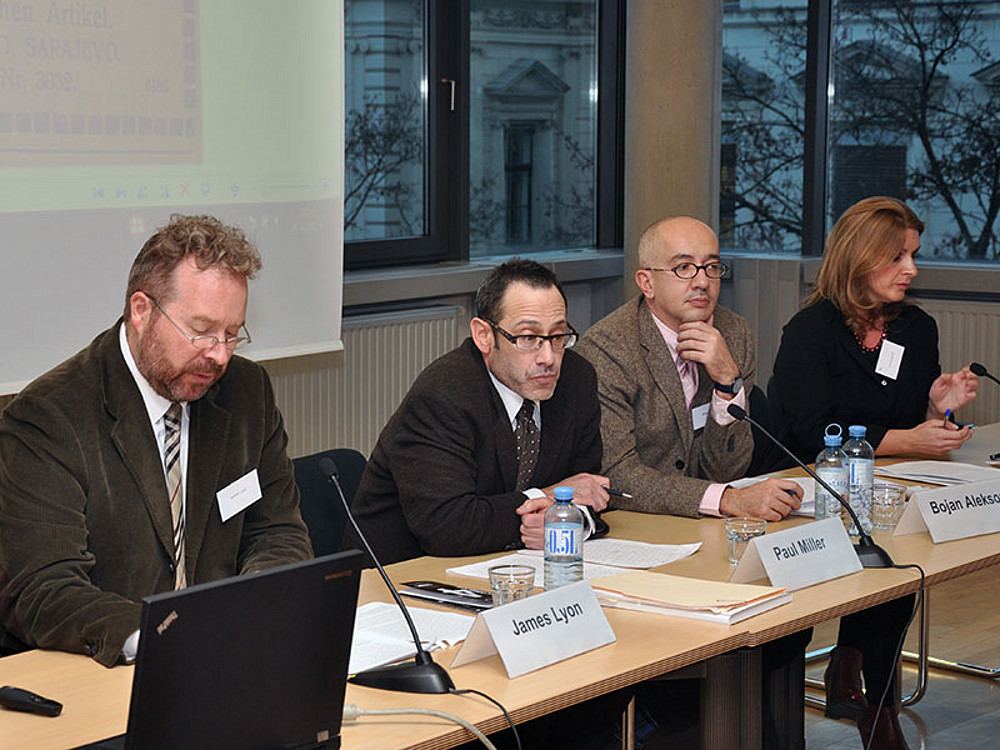
Das erste Podium (v.l.): James Lyon (Uni Graz), Paul Miller (McDaniel College, Westminster, Maryland/USA), Bojan Aleksov (UCL - School of Slavonic and East European Studies, UK) und Armina Galijaš (Uni Graz). Fotos: Uni Graz/Pichler

Das erste Podium (v.l.): James Lyon (Uni Graz), Paul Miller (McDaniel College, Westminster, Maryland/USA), Bojan Aleksov (UCL - School of Slavonic and East European Studies, UK) und Armina Galijaš (Uni Graz). Fotos: Uni Graz/Pichler

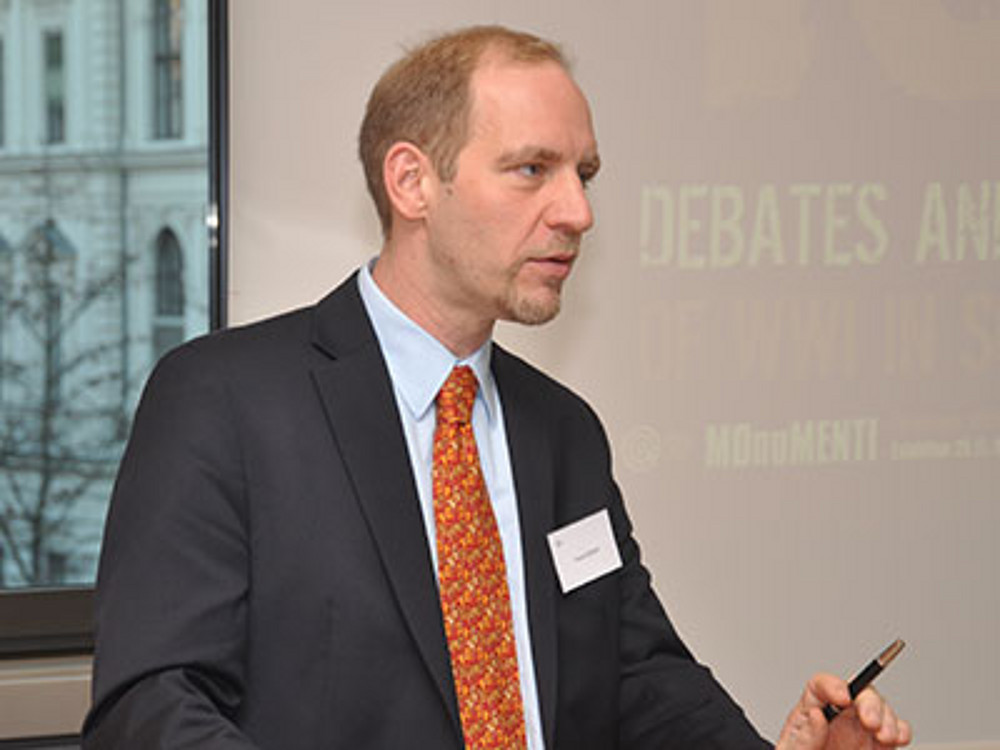
Florian Bieber, Leiter des Zentrums für Südosteuropastudien der Uni Graz

Florian Bieber, Leiter des Zentrums für Südosteuropastudien der Uni Graz

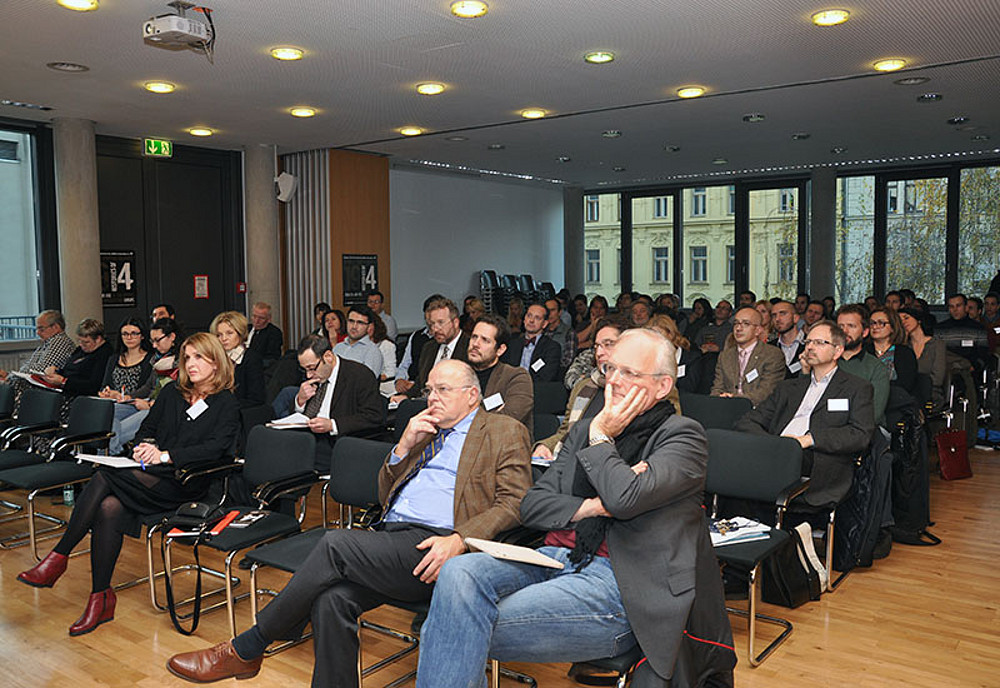
REWI-Dekan Joseph Marko und GEWI-Dekan Lukas Meyer (vorne v.l.). Für weitere Bilder auf Foto und Vorwärtspfeil klicken.

REWI-Dekan Joseph Marko und GEWI-Dekan Lukas Meyer (vorne v.l.). Für weitere Bilder auf Foto und Vorwärtspfeil klicken.

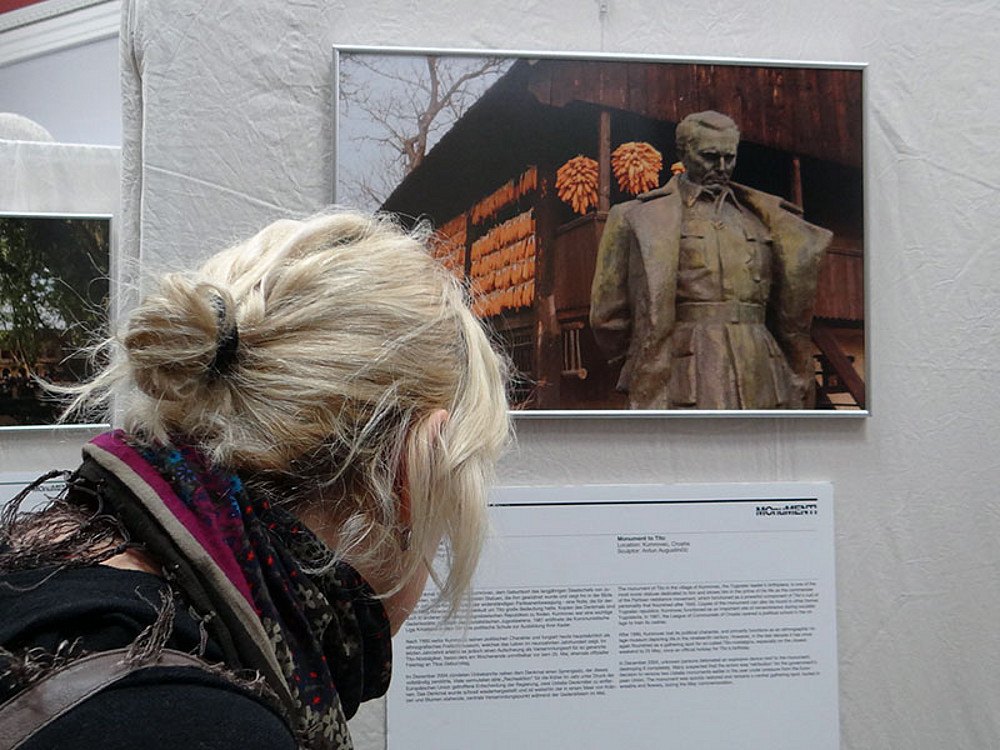
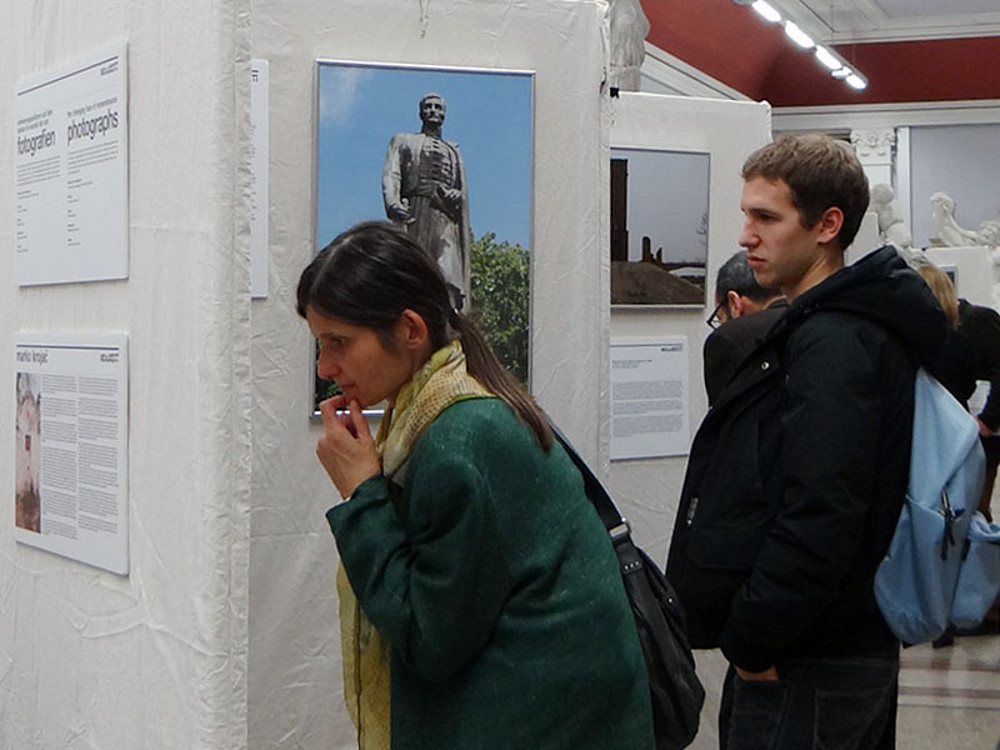
Die Ausstellung MOnuMENTI im Gipsmuseum (Fotos: CSEES) ...

Die Ausstellung MOnuMENTI im Gipsmuseum (Fotos: CSEES) ...

... ist noch bis 9. Dezember 2014 zu sehen.

... ist noch bis 9. Dezember 2014 zu sehen.

Die Konferenz befasst sich mit der Erinnerung an den Ersten Weltkrieg in Südosteuropa

Im Jahr des Gedenkens an den Beginn des Ersten Weltkriegs vor 100 Jahren steht dieses Thema auch im Mittelpunkt der „Southeast European Dialogues“, der jährlichen internationalen Konferenz des Zentrums für Südosteuropastudien an der Universität Graz. Von 20. bis 22. November 2014 fokussiert die Veranstaltung unter dem Titel „Histories of 1914. Debates and Use of the Origins of World War One in Southeastern Europe“ darauf, wie man sich in Südosteuropa an den Großen Krieg erinnert, wie sich die diesbezüglichen Debatten entwickelt haben, und wie sie sich in die nationale Geschichtsschreibung einfügen.

Univ.-Prof. Dr. Joseph Marko, Dekan der Rechtswissenschaftlichen Fakultät, und Univ.-Prof. Dr. Lukas Meyer, Dekan der Geisteswissenschaftlichen Fakultät, begrüßten die Konferenz-TeilnehmerInnen an der Uni Graz. Der Leiter des Zentrums für Südosteuropastudien, Univ.-Prof. Dr. Florian Bieber, führte ins Thema der diesjährigen Southeast European Dialogues ein, bevor sich das erste Podium mit dem Attentäter Gavrilo Princip, der 1914 den Anschlag auf Thronfolger Franz Ferdinand verübt hatte, und jungen Bosniern von damals befasste.


Begleitet wird die Konferenz von der Ausstellung „MOnuMENTI. erinnerungskulturen auf dem balkan im wandel der zeit“. Das Forum Ziviler Friedensdienst zeigt mit dieser Schau, wie sich Identitätskonzepte in den Ländern des westlichen Balkans im Verlauf des 20. Jahrhunderts entwickelt haben. Denkmäler eignen sich besonders dafür, diese Prozesse auf interessante Weise abzubilden. Fotograf Marko Krojač stellt diese Gedenkstätten in ihrem räumlichen Kontext dar.

Die Ausstellung ist bis 9. Dezember 2014 im Gipsmuseum am Institut für Archäologie der Uni Graz, Hauptgebäude, Universitätsplatz 3, zweiter Stock, zu sehen. Öffnungszeiten: Montag bis Freitag von 9 bis 18 Uhr.


>> nähere Informationen zur Konferenz

created by Gudrun Pichler

Related news

Chemical Christmas show at the University of Graz: An explosive evening at the Schauspielh

At the beginning of December, the University of Graz transformed the theater into a laboratory: as part of “Chemical Life,” teacher training students staged a chemical Christmas show for Styrian school classes—complete with ethanol rockets, nitrogen snow, and glowing effects. An evening designed to inspire interest in studying chemistry.

Train by train: Koralm railway accelerates exchange between the Universities

Lectures at the University of Klagenfurt in the morning, seminars at the University of Graz in the afternoon: Austria's longest tunnel and a journey time of around 45 minutes make it easy. The Koralm railway increases the speed of networking between the two university locations. The collaboration builds on existing cooperation - for example in the areas of teacher training, Slavic studies and as employers, the universities are well coordinated.

On the trail of the Big Bang: University of Graz receives 1.5 million euros for doctoral programmes

The Austrian Science Fund FWF has selected the Doctoral Programme in Theoretical Particle Physics at the University of Graz for funding from the Doc.funds. Six young scientists will be funded for 3.5 years. They will gain fundamentally new insights into the origins of the world.

From trans women and knee prostheses: sports science prizes awarded

Walking better with a prosthesis, successfully getting rid of excess weight, training more effectively, more fairness for trans people in sport: these were the topics addressed by the students at the University of Graz who were awarded the sports science prizes for their Master's theses on 3 December 2025.

Begin of page section:
Additional information:

University of Graz
Universitaetsplatz 3
8010 Graz
Austria
  • Contact
  • Web Editors
  • Moodle
  • UNIGRAZonline
  • Imprint
  • Data Protection Declaration
  • Accessibility Declaration
Weatherstation
Uni Graz

End of this page section. Go to overview of page sections

End of this page section. Go to overview of page sections

Begin of page section:

End of this page section. Go to overview of page sections