Begin of page section:
Page sections:

  • Go to contents (Accesskey 1)
  • Go to position marker (Accesskey 2)
  • Go to main navigation (Accesskey 3)
  • Go to sub navigation (Accesskey 4)
  • Go to additional information (Accesskey 5)
  • Go to page settings (user/language) (Accesskey 8)
  • Go to search (Accesskey 9)

End of this page section. Go to overview of page sections

Begin of page section:
Page settings:

English en
Deutsch de
Search
Login

End of this page section. Go to overview of page sections

Begin of page section:
Search:

Search for details about Uni Graz
Close

End of this page section. Go to overview of page sections


Search

Begin of page section:
Main navigation:

Page navigation:

  • University

    University
    • About the University
    • Organisation
    • Faculties
    • Library
    • Working at University of Graz
    • Campus
    Developing solutions for the world of tomorrow - that is our mission. Our students and our researchers take on the great challenges of society and carry the knowledge out.
  • Research Profile

    Research Profile
    • Our Expertise
    • Research Questions
    • Research Portal
    • Promoting Research
    • Research Transfer
    • Ethics in Research
    • Commission for Scientific Integrity
    Scientific excellence and the courage to break new ground. Research at the University of Graz creates the foundations for making the future worth living.
  • Studies

    Studies
    • Prospective Students
    • Students
  • Community

    Community
    • International
    • Location
    • Research and Business
    • Alumni
    The University of Graz is a hub for international research and brings together scientists and business experts. Moreover, it fosters the exchange and cooperation in study and teaching.
  • Spotlight
Topics
  • Sustainable University
  • Researchers answer
  • Work for us
Close menu

End of this page section. Go to overview of page sections

Begin of page section:
You are here:

University of Graz News How maths works: psychologist Stephan Vogel explains how we learn to think in numbers

End of this page section. Go to overview of page sections

Wednesday, 12 March 2025

How maths works: psychologist Stephan Vogel explains how we learn to think in numbers

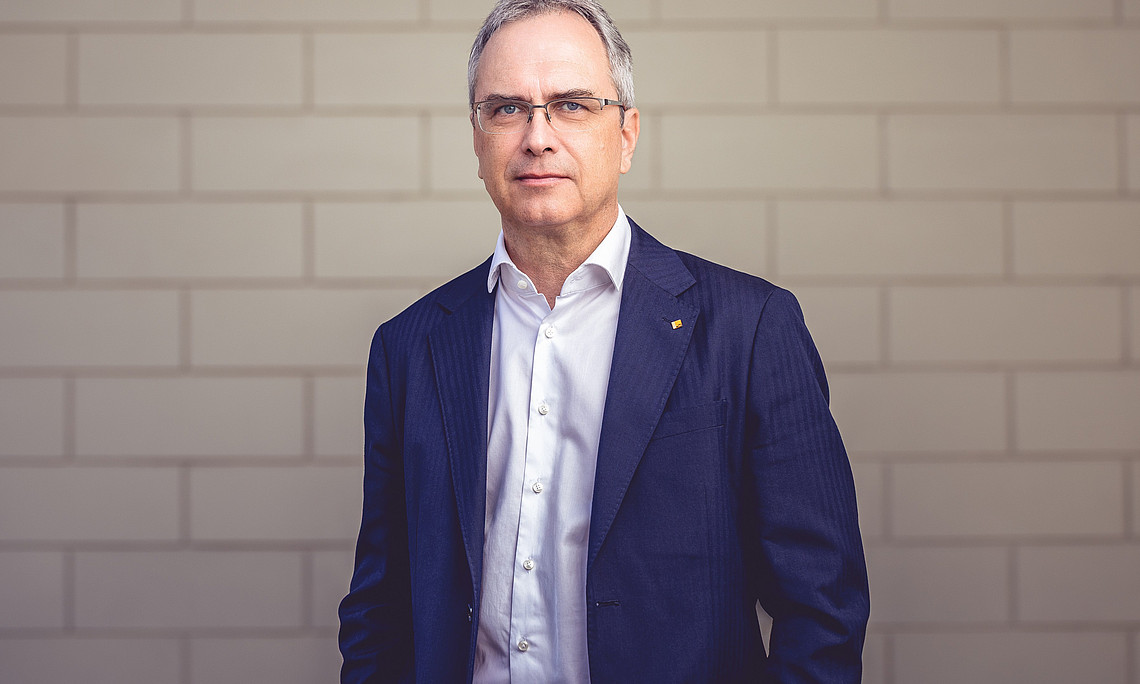
Neuroscientist Stephan Vogel with his arms folded in front of the entrance to the university library

Has figured out how maths learning works: neuroscientist Stephan Vogel is looking for approaches to overcome learning difficulties. Photo: University of Graz/Feldbaumer


The neuroscientist has analysed the processes in the brain and shows where learning difficulties can be addressed.

Arithmetic is a complex process, confirms Stephan Vogel from the Department of Psychology. Several sub-processes in different regions of the brain lead to a result - and this can take time for the inexperienced. However, the neuroscientist argues that it is a lame excuse to regard maths as particularly difficult. "It is socially accepted to say that one is not good at it. In fact, learning to read is comparably complicated. But no one would admit to not being able to decipher a text."
Vogel has used EEG and MRI examinations to find out where the problem lies when someone struggles with adding or multiplying: "In this case, the understanding of quantities and numbers is often not sufficiently developed." We learn the first arithmetic steps in infancy. "At around six months, babies can already differentiate between quantities and recognise when something is added or removed," explains the researcher. Later on, children then have to connect the ideas of quantities with abstract symbols, i.e. numbers. This step is not easy for everyone - just like the connection between speech sounds and letters. "Dyscalculia and dyslexia often occur together," says the researcher.
Vogel is convinced that the importance of developing these basic concepts is still underestimated. It is therefore skipped over too quickly in everyday school life. This takes its toll on those who find it more difficult. "You have to make sure that understanding is well anchored in the first grade. This can be achieved with appropriate visual aids," explains the neuroscientist. Arranging number sequences correctly is one such possibility. Once children have mastered this, they can work more flexibly and efficiently. This leaves the "working memory" in their heads free for other operations.

Confusing symbols
What is actually a bigger hurdle in arithmetic than in writing: the limited inventory of symbols. "We have to put together an infinite number of numbers by simply arranging ten digits in different combinations. This can lead to confusion if our knowledge of them is not yet so well developed," says Vogel. Consolidating the number range up to ten first is a helpful measure. Raising awareness of the problem and pointing out potential errors is another. The psychologist, who is also part of the "Future Education" research network, is currently researching how this can best be achieved in practice as part of an FWF project. 
The good news for those who prefer to use a calculator out of uncertainty: inexperienced and geniuses use the same areas of the brain when solving maths problems. So to get better at it, you don't need to rebuild your head, you just need training.

created by Dagmar Eklaude

Related news

Around the world in eight stops: the Long Night of Research at the University of Graz

On 24 April from 5 pm, you can take a short trip around the globe at the University of Graz, discovering pecularities of foreign countries or new local features in the entrance hall of the University Library. The itinerary takes you through introduced animal species, political attitudes and the omnipotence of algorithms. There will also be a programme in the historic reading hall, as well as at the UniGraz@Museum and the University Archive.

Studying at the University of Graz: How to enrol

Ready for a new chapter in your life with the start of your studies at the University of Graz in the winter semester 2026/27? Here you will find information on deadlines, admission procedures, registration, and everything else you need to successfully start your studies in the fall.

Interpreting data: Why studies sometimes get it wrong

Hilmar Brohmer and Ziva Korda from the Institute of Psychology, together with 500 international colleagues, have re-evaluated a hundred scientific publications and have often come to different conclusions.

Crystal-clear: AI method revolutionises solar observation

The Sun makes life on Earth possible. However, its magnetic fields can also cause massive disruption. This makes it all the more important to gain a better understanding of the processes taking place on our nearest star. A research team from the University of Graz and the High Altitude Observatory in Boulder (USA) has succeeded in doing just that. The astrophysicists have developed an AI-supported method that makes even the smallest structures on the Sun visible. The scientists are convinced that this will bring about a lasting change in solar observation and that the new method can be used for the planned European Solar Telescope.

Begin of page section:
Additional information:

University of Graz
Universitaetsplatz 3
8010 Graz
Austria
  • Contact
  • Web Editors
  • Moodle
  • UNIGRAZonline
  • Imprint
  • Data Protection Declaration
  • Accessibility Declaration
Weatherstation
Uni Graz

End of this page section. Go to overview of page sections

End of this page section. Go to overview of page sections

Begin of page section:

End of this page section. Go to overview of page sections