Begin of page section:
Page sections:

  • Go to contents (Accesskey 1)
  • Go to position marker (Accesskey 2)
  • Go to main navigation (Accesskey 3)
  • Go to sub navigation (Accesskey 4)
  • Go to additional information (Accesskey 5)
  • Go to page settings (user/language) (Accesskey 8)
  • Go to search (Accesskey 9)

End of this page section. Go to overview of page sections

Begin of page section:
Page settings:

English en
Deutsch de
Search
Login

End of this page section. Go to overview of page sections

Begin of page section:
Search:

Search for details about Uni Graz
Close

End of this page section. Go to overview of page sections


Search

Begin of page section:
Main navigation:

Page navigation:

  • University

    University
    • About the University
    • Organisation
    • Faculties
    • Library
    • Working at University of Graz
    • Campus
    Developing solutions for the world of tomorrow - that is our mission. Our students and our researchers take on the great challenges of society and carry the knowledge out.
  • Research Profile

    Research Profile
    • Our Expertise
    • Research Questions
    • Research Portal
    • Promoting Research
    • Research Transfer
    • Ethics in Research
    Scientific excellence and the courage to break new ground. Research at the University of Graz creates the foundations for making the future worth living.
  • Studies

    Studies
    • Prospective Students
    • Students
  • Community

    Community
    • International
    • Location
    • Research and Business
    • Alumni
    The University of Graz is a hub for international research and brings together scientists and business experts. Moreover, it fosters the exchange and cooperation in study and teaching.
  • Spotlight
Topics
  • Our digital Advent calendar
  • Sustainable University
  • Researchers answer
  • Work for us
Close menu

End of this page section. Go to overview of page sections

Begin of page section:
You are here:

University of Graz News Sensibles Thema

End of this page section. Go to overview of page sections

Tuesday, 18 June 2013

Sensibles Thema

Die Ausstellung ist bis 5. Oktober zu sehen.

Die Ausstellung ist bis 5. Oktober zu sehen.

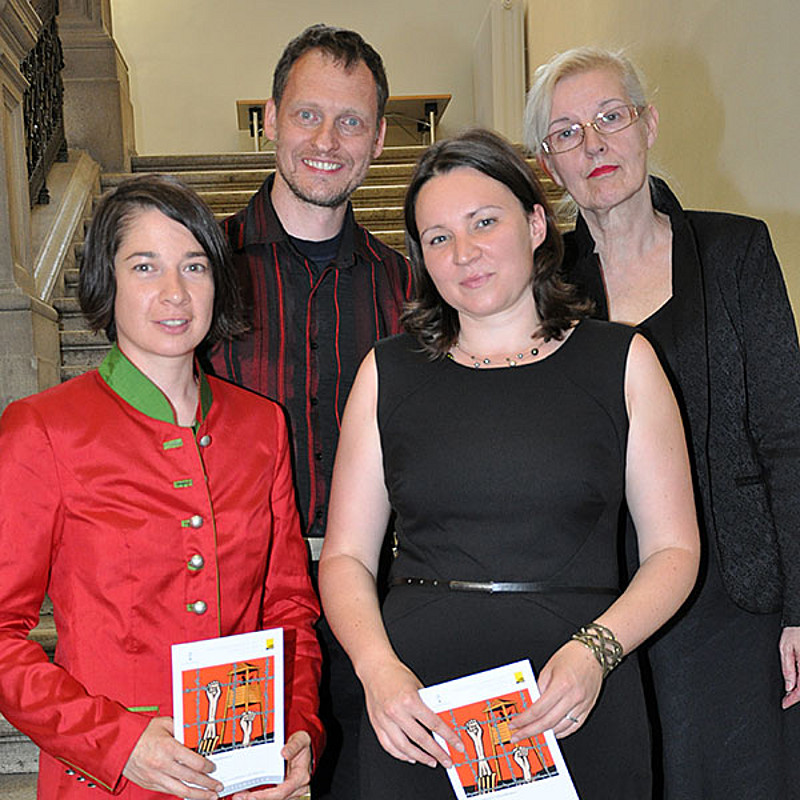
Ausstellungsgestalter Ralf Palandt, Comiczeichnerin Hannelore Greinecker-Morocutti (hinten) und die Kuratorinnen Daniela Kaufmann (l.) und Natalia Bauernhofer

Ausstellungsgestalter Ralf Palandt, Comiczeichnerin Hannelore Greinecker-Morocutti (hinten) und die Kuratorinnen Daniela Kaufmann (l.) und Natalia Bauernhofer

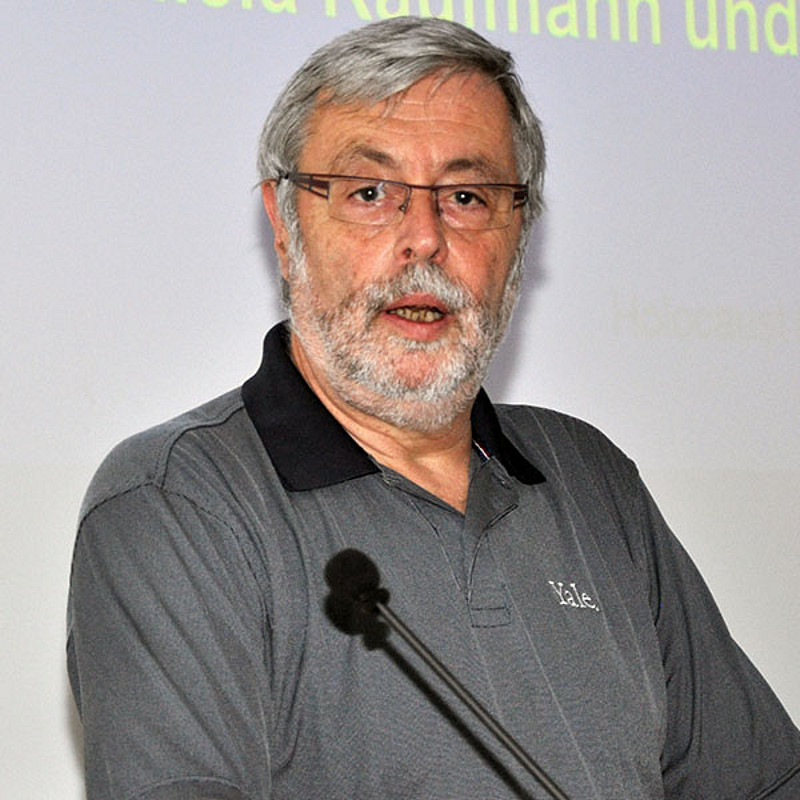
Dekan Helmut Konrad

Dekan Helmut Konrad

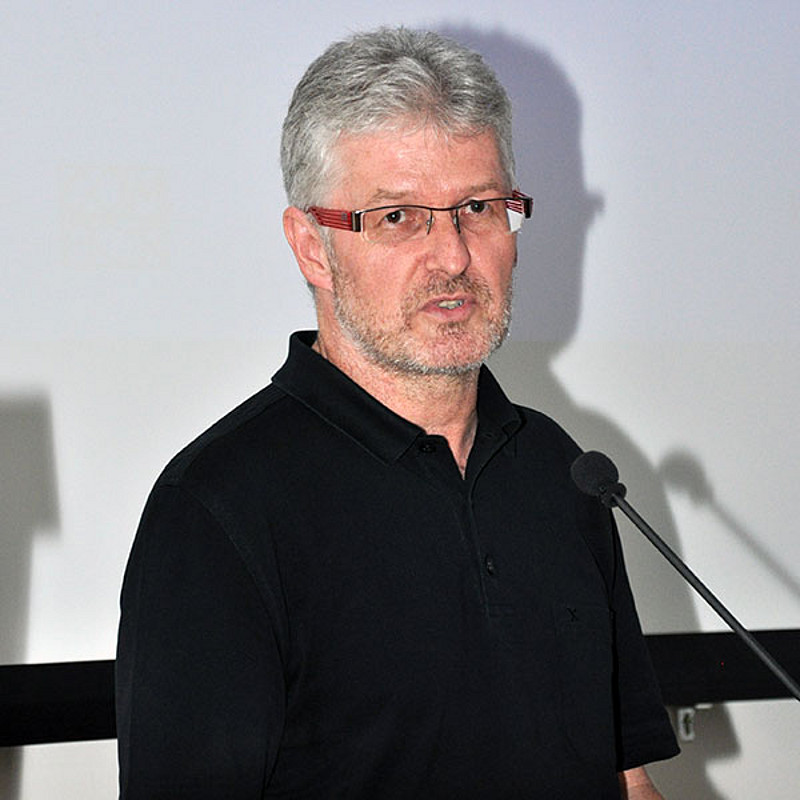
Nikolaus Reisinger, Leiter der Universitätsmuseen

Nikolaus Reisinger, Leiter der Universitätsmuseen

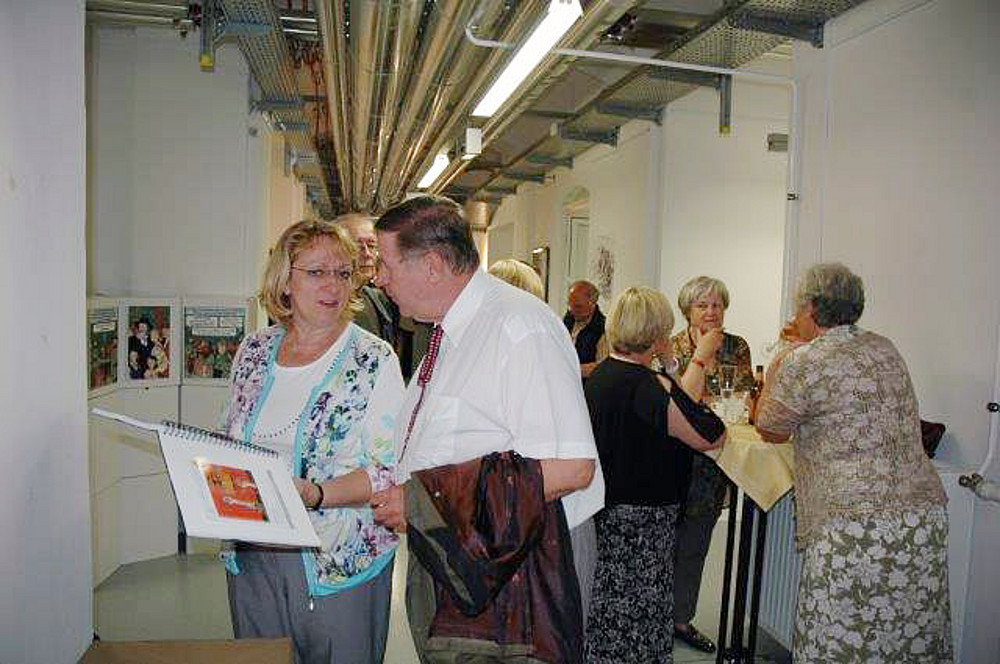
Interessierte BesucherInnen im UniGraz@Museum

Interessierte BesucherInnen im UniGraz@Museum

Am 17. Juni wurde die Ausstellung „Holocaust im Comic“ im UniGraz@Museum eröffnet

Die erste Wanderausstellung, die im UniGraz@Museum Station macht, widmet sich einem hoch sensiblen Thema: „Holocaust im Comic“. Zusammengestellt hat sie der deutsche Kommunikationswissenschafter und Comicforscher Mag. Ralf Palandt, der im Rahmen der Eröffnung am 17. Juni 2013 einen Vortrag zur Einführung in die Materie hielt, um den Hintergrund der Schau erklärend zu beleuchten, die sich keinesfalls als Verharmlosung des Themas verstanden wissen will.


Dekan Helmut Konrad erinnerte in seinen Begrüßungsworten daran, dass sich gerade die Karl-Franzens-Universität Graz in besonderer Weise mit dem Holocaust auseinandersetzen muss. Im September 1940 wurde die 1937 in Berlin gegründete SS-Ärztliche Akademie nach Graz verlegt, wo sie bis zum Kriegsende bestand. Die Angehörigen dieser Akademie waren ausgebildete Offiziere der SS, die an der Universität studierten. Die Akademie und ihre Angehörigen waren Teil der SS.


„Die Auseinandersetzung mit der Vergangenheit war an dieser Universität nicht immer leicht, aber die Uni Graz hat das ausführlich getan“, betonte Helmut Konrad und nannte in diesem Zusammenhang beispielhafte Initiativen wie die Einrichtung des David-Herzog-Fonds 1988, die Auszeichnung von Simon Wiesenthal mit dem Menschenrechtspreis der Karl-Franzens-Universität Graz 1994 sowie die Gründung des Zentrums für Jüdische Studien im Jahr 2000.


Ao.Univ.-Prof. Dr. Nikolaus Reisinger, Leiter der Universitätsmuseen, dankte den an der Ausstellungsgestaltung und -organisation beteiligten Personen. Die Kuratorinnen Comicforscherin Mag. Daniela Kaufmann und Kunsthistorikerin Natalia Bauernhofer haben die Schau an die Uni Graz gebracht.


Anhand von Beispielen setzt sich die Ausstellung differenziert mit Holocaust-Abbildungen in Comics auseinander und regt zum Nachdenken sowie zur reflektierenden Lektüre an. Unter den Exponaten befindet sich unter anderem die Graphik-Novelle „Der Himmel zwischen den Mauern“ der preisgekrönten steirischen Comiczeichnerin und Illustratorin Hannelore Greinecker-Morocutti.


Die Ausstellung „Holocaust im Comic“ ist bis 5. Oktober 2013 im UniGraz@Museum der Karl-Franzens-Universität, Universitätsplatz 3, Kellergeschoß zu sehen.


Öffnungszeiten:

Montag 10–15 Uhr, Mittwoch und Freitag 10–13 Uhr

und nach Voranmeldung

created by Gudrun Pichler

Related news

Chemical Christmas show at the University of Graz: An explosive evening at the Schauspielh

At the beginning of December, the University of Graz transformed the theater into a laboratory: as part of “Chemical Life,” teacher training students staged a chemical Christmas show for Styrian school classes—complete with ethanol rockets, nitrogen snow, and glowing effects. An evening designed to inspire interest in studying chemistry.

Train by train: Koralm railway accelerates exchange between the Universities

Lectures at the University of Klagenfurt in the morning, seminars at the University of Graz in the afternoon: Austria's longest tunnel and a journey time of around 45 minutes make it easy. The Koralm railway increases the speed of networking between the two university locations. The collaboration builds on existing cooperation - for example in the areas of teacher training, Slavic studies and as employers, the universities are well coordinated.

On the trail of the Big Bang: University of Graz receives 1.5 million euros for doctoral programmes

The Austrian Science Fund FWF has selected the Doctoral Programme in Theoretical Particle Physics at the University of Graz for funding from the Doc.funds. Six young scientists will be funded for 3.5 years. They will gain fundamentally new insights into the origins of the world.

From trans women and knee prostheses: sports science prizes awarded

Walking better with a prosthesis, successfully getting rid of excess weight, training more effectively, more fairness for trans people in sport: these were the topics addressed by the students at the University of Graz who were awarded the sports science prizes for their Master's theses on 3 December 2025.

Begin of page section:
Additional information:

University of Graz
Universitaetsplatz 3
8010 Graz
Austria
  • Contact
  • Web Editors
  • Moodle
  • UNIGRAZonline
  • Imprint
  • Data Protection Declaration
  • Accessibility Declaration
Weatherstation
Uni Graz

End of this page section. Go to overview of page sections

End of this page section. Go to overview of page sections

Begin of page section:

End of this page section. Go to overview of page sections