Begin of page section:
Page sections:

  • Go to contents (Accesskey 1)
  • Go to position marker (Accesskey 2)
  • Go to main navigation (Accesskey 3)
  • Go to sub navigation (Accesskey 4)
  • Go to additional information (Accesskey 5)
  • Go to page settings (user/language) (Accesskey 8)
  • Go to search (Accesskey 9)

End of this page section. Go to overview of page sections

Begin of page section:
Page settings:

English en
Deutsch de
Search
Login

End of this page section. Go to overview of page sections

Begin of page section:
Search:

Search for details about Uni Graz
Close

End of this page section. Go to overview of page sections


Search

Begin of page section:
Main navigation:

Page navigation:

  • University

    University
    • About the University
    • Organisation
    • Faculties
    • Library
    • Working at University of Graz
    • Campus
    Developing solutions for the world of tomorrow - that is our mission. Our students and our researchers take on the great challenges of society and carry the knowledge out.
  • Research Profile

    Research Profile
    • Our Expertise
    • Research Questions
    • Research Portal
    • Promoting Research
    • Research Transfer
    • Ethics in Research
    Scientific excellence and the courage to break new ground. Research at the University of Graz creates the foundations for making the future worth living.
  • Studies

    Studies
    • Prospective Students
    • Students
  • Community

    Community
    • International
    • Location
    • Research and Business
    • Alumni
    The University of Graz is a hub for international research and brings together scientists and business experts. Moreover, it fosters the exchange and cooperation in study and teaching.
  • Spotlight
Topics
  • Sustainable University
  • Researchers answer
  • Work for us
Close menu

End of this page section. Go to overview of page sections

Begin of page section:
You are here:

University of Graz News Seitenlage

End of this page section. Go to overview of page sections

Wednesday, 03 August 2022

Seitenlage

Stefan Palan mit Journal

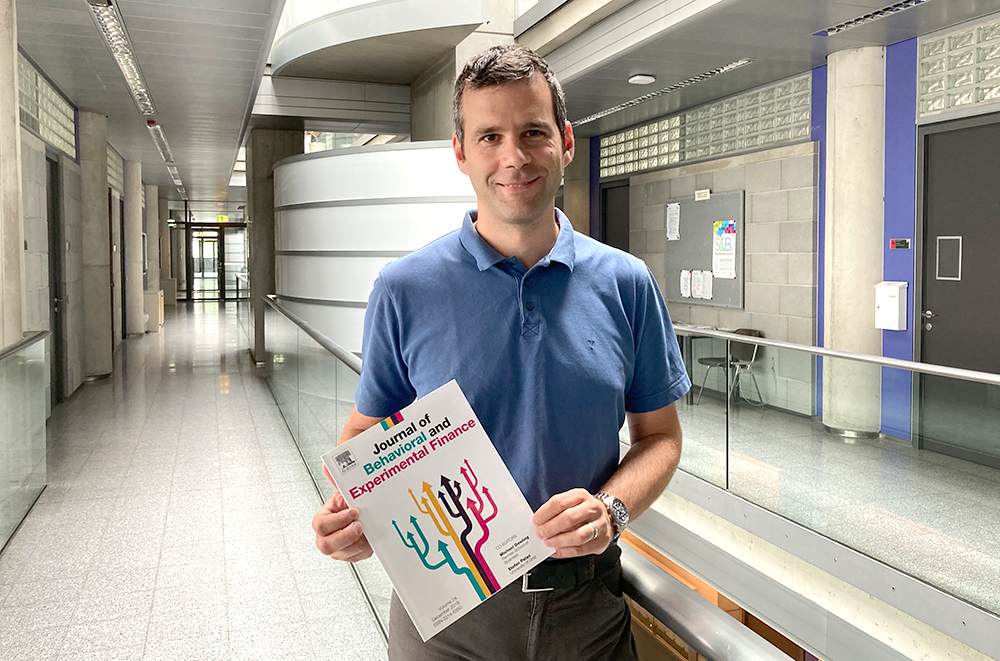
Stefan Palan ist Herausgeber einer Fachzeitschrift der Finanzwissenschaft, die kürzlich den Sprung in die Top-Liga geschafft hat. Foto: Uni Graz/Schweiger

Welche Rolle spielen HerausgeberInnen wissenschaftlicher Journals?

Was für die Modewelt Zeitschriften wie Vogue oder Harper‘s Bazaar bedeuten, sind in der Forschungs-Community wissenschaftliche Fachzeitschriften mit einem hohen Impact-Faktor, der sich durch die Zitierhäufigkeit von Artikeln ergibt.
In der Finanzwissenschaft hat es kürzlich das „Journal of Behavioral and Experimental Finance“ in die Top-Liga geschafft. Mitherausgegeben von Stefan Palan von der Universität Graz liegt das Journal mit einem Impact-Faktor von 8,222 auf Platz 5 von 111 weltweit gereihten Wissenschaftspublikationen in diesem Fachbereich.

Wie wird man eigentlich Editor? Welche Herausforderungen sind zu stemmen? Und was bedeutet die Aufgabe für die eigene Forschung? Diesen Fragen stellt sich Finanzwissenschafter Stefan Palan.

Was bedeutet das erfolgreiche Ranking für Ihre Rolle als Editor?
Stefan Palan: Ein spürbar größeres Interesse von WissenschafterInnen, die Arbeit im Journal zu veröffentlichen. Im Vorjahr hatten wir insgesamt 435 Einreichungen, davon sind letztendlich 64 erschienen.

Wie erfolgt der Auswahlprozess?
Palan: Als Editor treffe ich Entscheidungen über jene Papers, die schlussendlich veröffentlicht werden. Natürlich unterliegen die Artikel einer zusätzlichen Qualitätsprüfung durch GutachterInnen, die auch durch die HerausgeberInnen ausgewählt werden. Editoren haben also eine gewichtige Rolle. Sie prägen mit, was als wissenschaftlicher Fortschritt publiziert wird.

Und beeinflussen EditorInnen nicht auch die thematische Gewichtung?
Palan: Die Ausrichtung eines Journals gibt schon einmal viel vor. Aktuelle Entwicklungen fließen natürlich mit ein. Corona, Kryptowährung und nachhaltige Finanzierung dominieren derzeit die wissenschaftliche Auseinandersetzung in meiner Zeitschrift. Darüber hinaus gibt es Spezialausgaben, die sich bestimmten Schwerpunktthemen widmen.

Darf ein Editor die eigene Forschungsarbeit in „seinem“ Journal publizieren?
Palan: Grundsätzlich ist das möglich. In diesem Fall werden die Qualitätskriterien noch einmal strenger angelegt. Außerdem wird der betroffene Editor technisch daran gehindert zu erfahren, welche GutachterInnen eingeladen werden.

Wie wird man überhaupt HerausgeberIn?
Palan: Ich wurde gefragt, ob ich diese Funktion 2018 übernehmen möchte. Im Regelfall ist man für maximal zehn Jahre mit dieser Aufgabe betraut.

Vor welcher Herausforderung stehen Sie?
Palan: Es wird schwieriger, GutachterInnen zu finden. Es handelt sich um eine Arbeit, die mit viel Aufwand verbunden ist, aber nicht entlohnt wird.

>> Journal of Behavioral and Experimental Finance

created by Andreas Schweiger

Related news

Cosmetics in the environment: University of Graz proves danger to ants

Titanium dioxide, which is found in cosmetics, for example, is increasingly entering the environment in the form of nanoparticles. This could also put insects at risk. If ants ingest the substance in combination with the pesticide glyphosate, it disturbs the development of their offspring. Scientists at the University of Graz are drawing attention to the negative consequences of this toxic cocktail.

How are tech companies changing democracy? Uni Graz designs exhibition for schools

Filtered information, conspiracy theories, fake news – certain groups and corporations are using social media and algorithms to try to influence public opinion in their favour. Their goal: to weaken fundamental rights and diversity of opinion and seize power. In a new exhibition, researchers at the University of Graz are working with pupils to explore the impact of social media and AI on democracy. In accompanying workshops, the scientists want to encourage young people to develop their own ideas for a socially and ecologically viable future and to actively help shape it. The exhibition, designed as a travelling exhibition for schools, will open on 9 March 2026 at the Dreihackengasse Gymnasium in Graz.

Step by step: What motivates Mireille van Poppel as a scientist and vice-rector

Improving people's health and eliminating inequalities: Mireille van Poppel pursues these goals both as a public health researcher and as vice-rector for Internationalisation and Equality. In both roles, she pays particular attention to individual needs.

Master's degree in psychotherapy in Graz: registration opens in March

Graz is becoming a hotspot for psychotherapy: from 2026, the University of Graz and the Medical University of Graz will jointly offer the new master's programme. Registration for the admission procedure for the 140 study places will start in March.

Begin of page section:
Additional information:

University of Graz
Universitaetsplatz 3
8010 Graz
Austria
  • Contact
  • Web Editors
  • Moodle
  • UNIGRAZonline
  • Imprint
  • Data Protection Declaration
  • Accessibility Declaration
Weatherstation
Uni Graz

End of this page section. Go to overview of page sections

End of this page section. Go to overview of page sections

Begin of page section:

End of this page section. Go to overview of page sections