Begin of page section:
Page sections:

  • Go to contents (Accesskey 1)
  • Go to position marker (Accesskey 2)
  • Go to main navigation (Accesskey 3)
  • Go to sub navigation (Accesskey 4)
  • Go to additional information (Accesskey 5)
  • Go to page settings (user/language) (Accesskey 8)
  • Go to search (Accesskey 9)

End of this page section. Go to overview of page sections

Begin of page section:
Page settings:

English en
Deutsch de
Search
Login

End of this page section. Go to overview of page sections

Begin of page section:
Search:

Search for details about Uni Graz
Close

End of this page section. Go to overview of page sections


Search

Begin of page section:
Main navigation:

Page navigation:

  • University

    University
    • About the University
    • Organisation
    • Faculties
    • Library
    • Working at University of Graz
    • Campus
    Developing solutions for the world of tomorrow - that is our mission. Our students and our researchers take on the great challenges of society and carry the knowledge out.
  • Research Profile

    Research Profile
    • Our Expertise
    • Research Questions
    • Research Portal
    • Promoting Research
    • Research Transfer
    • Ethics in Research
    Scientific excellence and the courage to break new ground. Research at the University of Graz creates the foundations for making the future worth living.
  • Studies

    Studies
    • Prospective Students
    • Students
  • Community

    Community
    • International
    • Location
    • Research and Business
    • Alumni
    The University of Graz is a hub for international research and brings together scientists and business experts. Moreover, it fosters the exchange and cooperation in study and teaching.
  • Spotlight
Topics
  • Our digital Advent calendar
  • Sustainable University
  • Researchers answer
  • Work for us
Close menu

End of this page section. Go to overview of page sections

Begin of page section:
You are here:

University of Graz News Schutz und Strafe

End of this page section. Go to overview of page sections

Tuesday, 13 October 2015

Schutz und Strafe
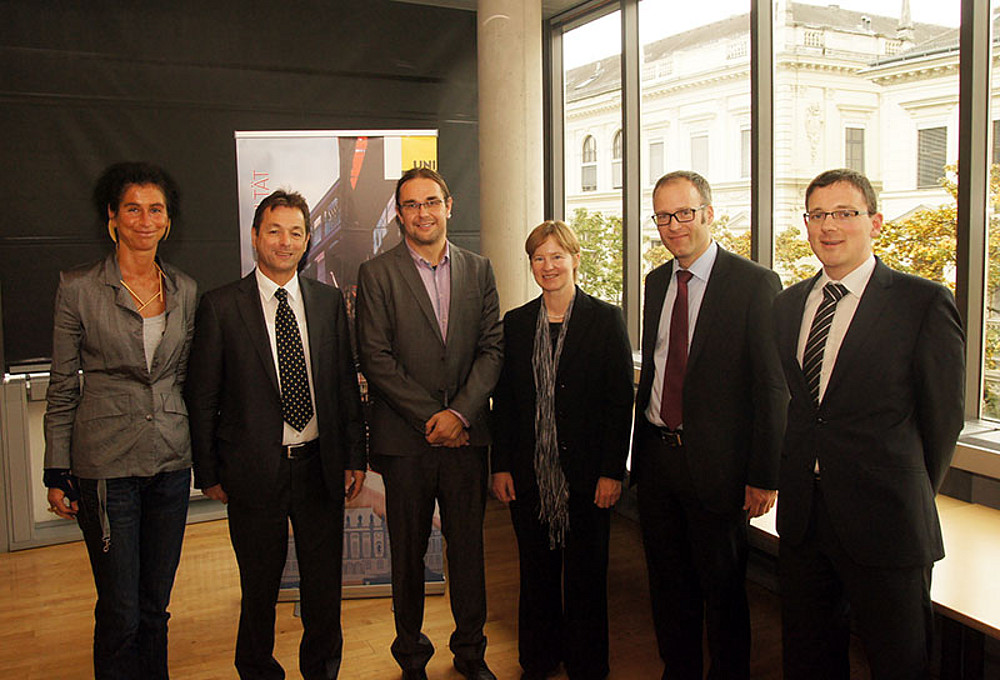
Die sechs ReferentInnen der Tagung von links nach rechts: Brigitta Lurger, Peter Bydlinski, Helmut Hirtenlehner, Anja Ischebeck, Andreas Engert und Stefan Arnold. Foto: KK.

Die sechs ReferentInnen der Tagung von links nach rechts: Brigitta Lurger, Peter Bydlinski, Helmut Hirtenlehner, Anja Ischebeck, Andreas Engert und Stefan Arnold. Foto: KK.

Tagung beschäftigte sich mit Präventionen und Sanktionen im Privatrecht

Erstmalig in Österreich beschäftigte sich eine wissenschaftliche Tagung mit der Frage, ob und inwieweit das Privatrecht präventive Elemente oder gar Strafsanktionen enthält, um zur Verhinderung unerwünschten Verhaltens beizutragen und ob solche Instrumente in Zukunft beibehalten, ausgebaut oder zurückgefahren werden sollten. Das Symposium „Prävention und Strafsanktion im Privatrecht“ unter der Organisation von O.Univ.-Prof. Dr. Peter Bydlinski vom Institut für Zivilrecht, Ausländisches und Internationales Privatrecht der Uni Graz fand vergangene Woche an der Karl-Franzens-Universität statt. 

Zunächst erfolgte eine Annäherung auf interdisziplinärer Ebene: So befasste sich das Einleitungsreferat von Univ.-Prof. Dipl.-Psych. Dr. Anja Ischebeck, Universität Graz, aus psychologischer Perspektive mit der Frage, ob und inwieweit negative Anreize zu erwünschtem Verhalten führen. Danach ging es um die verhaltenssteuernden Effekte von Strafdrohungen, die den zahlreichen TeilnehmerInnen von Assoz.-Prof. Dr. Helmut Hirtenlehner, Universität Linz, näher gebracht – und von ihm tendenziell eher verneint – wurden. Danach beleuchtete Univ.-Prof. Dr. Stefan Arnold LL.M. (Cambridge) von der Universität Graz näher, ob auch Verhaltenssteuerung Aufgabe des Privatrechts ist und wie sie sich zu den ethischen Grundsätzen des Rechts verhält. Im Vortrag des Veranstalters Peter Bydlinski stand das Verhältnis von Präventions- beziehungsweise Strafaspekten mit der im Privatrecht anerkannten Maxime beidseitiger Rechtfertigung von Rechtsfolgen im Sinne ausgleichender Gerechtigkeit im Fokus. Univ.-Prof. Dr. Andreas Engert LL.M.(Univ. Chicago) von der Universität Mannheim referierte danach über die ökonomischen Aspekte präventiv wirkender Normen, während Univ.-Prof. Dr. Brigitta Lurger LL.M. (Harvard) von der Universität Graz abschließend verhaltenssteuernde Normen auf EU-Ebene dargestellte und untersuchte.

Nach den Vorträgen konnten sich die TeilnehmerInnen mit den ReferentInnen austauschen. Diese Diskussionsberichte werden gemeinsam mit den Vorträgen in einem Tagungsband veröffentlicht. Die Tagung erreichte über die nationalen und privatrechtlichen Grenzen hinaus auch deutsche und schweizerische VertreterInnen aus Wissenschaft und Praxis und ebenso solche aus dem Strafrecht.


created by Peter Bydlinski & Gerhild Kastrun

Related news

Chemical Christmas show at the University of Graz: An explosive evening at the Schauspielh

At the beginning of December, the University of Graz transformed the theater into a laboratory: as part of “Chemical Life,” teacher training students staged a chemical Christmas show for Styrian school classes—complete with ethanol rockets, nitrogen snow, and glowing effects. An evening designed to inspire interest in studying chemistry.

Train by train: Koralm railway accelerates exchange between the Universities

Lectures at the University of Klagenfurt in the morning, seminars at the University of Graz in the afternoon: Austria's longest tunnel and a journey time of around 45 minutes make it easy. The Koralm railway increases the speed of networking between the two university locations. The collaboration builds on existing cooperation - for example in the areas of teacher training, Slavic studies and as employers, the universities are well coordinated.

On the trail of the Big Bang: University of Graz receives 1.5 million euros for doctoral programmes

The Austrian Science Fund FWF has selected the Doctoral Programme in Theoretical Particle Physics at the University of Graz for funding from the Doc.funds. Six young scientists will be funded for 3.5 years. They will gain fundamentally new insights into the origins of the world.

From trans women and knee prostheses: sports science prizes awarded

Walking better with a prosthesis, successfully getting rid of excess weight, training more effectively, more fairness for trans people in sport: these were the topics addressed by the students at the University of Graz who were awarded the sports science prizes for their Master's theses on 3 December 2025.

Begin of page section:
Additional information:

University of Graz
Universitaetsplatz 3
8010 Graz
Austria
  • Contact
  • Web Editors
  • Moodle
  • UNIGRAZonline
  • Imprint
  • Data Protection Declaration
  • Accessibility Declaration
Weatherstation
Uni Graz

End of this page section. Go to overview of page sections

End of this page section. Go to overview of page sections

Begin of page section:

End of this page section. Go to overview of page sections