



Begin of page section:
Page sections:

  • Go to contents (Accesskey 1)
  • Go to position marker (Accesskey 2)
  • Go to main navigation (Accesskey 3)
  • Go to sub navigation (Accesskey 4)
  • Go to additional information (Accesskey 5)
  • Go to page settings (user/language) (Accesskey 8)
  • Go to search (Accesskey 9)

End of this page section. Go to overview of page sections

Begin of page section:
Page settings:

English en
Deutsch de
Search
Login

End of this page section. Go to overview of page sections

Begin of page section:
Search:

Search for details about Uni Graz
Close

End of this page section. Go to overview of page sections


Search

Begin of page section:
Main navigation:

Page navigation:

  • University

    University
    • About the University
    • Organisation
    • Faculties
    • Library
    • Working at University of Graz
    • Campus
    Developing solutions for the world of tomorrow - that is our mission. Our students and our researchers take on the great challenges of society and carry the knowledge out.
  • Research Profile

    Research Profile
    • Our Expertise
    • Research Questions
    • Research Portal
    • Promoting Research
    • Research Transfer
    • Ethics in Research
    • Commission for Scientific Integrity
    Scientific excellence and the courage to break new ground. Research at the University of Graz creates the foundations for making the future worth living.
  • Studies

    Studies
    • Prospective Students
    • Students
  • Community

    Community
    • International
    • Location
    • Research and Business
    • Alumni
    The University of Graz is a hub for international research and brings together scientists and business experts. Moreover, it fosters the exchange and cooperation in study and teaching.
Topics
  • Sustainable University
  • Researchers answer
  • Work for us
Close menu

End of this page section. Go to overview of page sections

Begin of page section:
You are here:

University of Graz News Schule fürs Klima

End of this page section. Go to overview of page sections

Monday, 24 January 2022

Schule fürs Klima

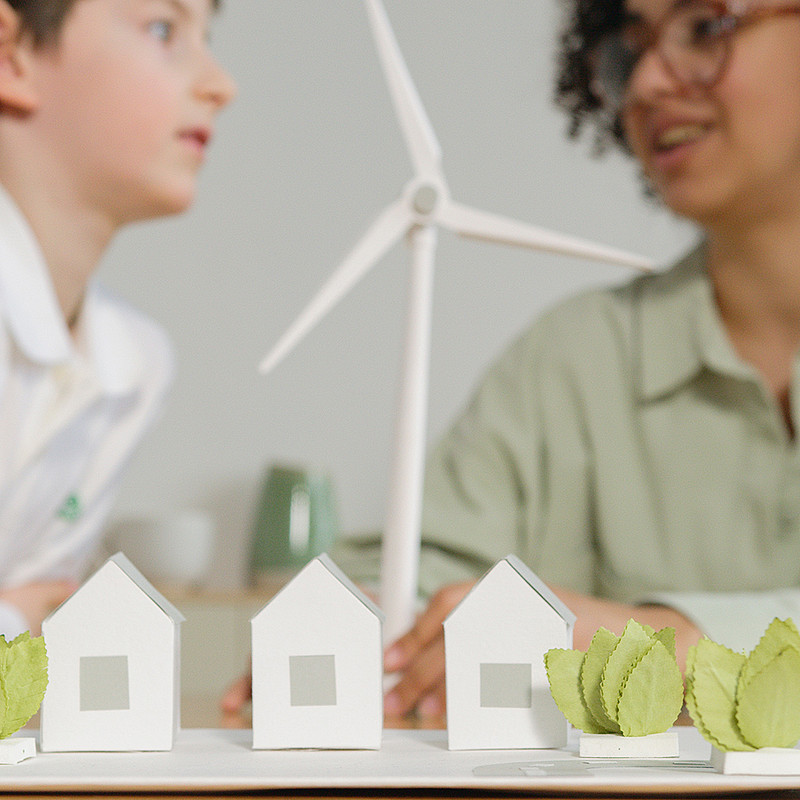
Wie bringt man Kindern ein nachhaltiges Leben näher? Das erforscht das Projekt RegiNaDiff. Foto: pexels.com

Wie bringt man Kindern ein nachhaltiges Leben näher? Das erforscht das Projekt RegiNaDiff. Foto: pexels.com

Wie bringt man Kindern ein nachhaltiges Leben näher? Im AirCampus-Interview dazu Bildungsforscherin Lisa Paleczek

Die Podcast-Plattform der Grazer Universtitäten, der AirCampus, präsentiert jeden Montag Wissens-Podcasts. Heute, anlässlich des Internationalen Tags der Bildung, u.a. auch zu diesen Themen:

1) Schule fürs Klima. Wir alle können den Klimawandel verlangsamen – auch Kinder. Die Uni Graz will das Verständnis für Nachhaltigkeit bei VolksschülerInnen schärfen. Dafür werden jetzt LehrerInnen gesucht, die beim Projekt „RegiNaDiff“ mitmachen, erklärt Projektleiterin und Bildungsforscherin Lisa Paleczek im AirCampus-Interview.

2) All on Board. Allein auf einer neuen Uni, in einer fremden Stadt, in einem unbekannten Umfeld: Für internationale Studierende sind solche Situationen oftmals Realität. Da kann man sich bisweilen ganz schön einsam fühlen. Besserung verspricht nun das europäisches Universitätsprojekt InCOMM.

3) Außerhalb der Blase. Urologie betrifft als medizinisches Gebiet weit mehr als nur Prostatakrebs-Forschung. Was sich alles hinter diesem diesem Teilgebiet verbirgt, erklärt Sascha Ahiyai, seit Kurzem Professor für Urologie an der Med Uni Graz.

4) Zu Macht und Hierarchien. Die Kunstuni Graz veranstaltet Ende Jänner einen Gender-Workshop zum Thema „Machtverhältnisse in Kunst und Wissenschaft“. Kendra Stepputat vom Institut für Ethnomusikologie spricht über die Themen Machtverhältnisse, Hierarchien bis hin zu Machtmissbrauch.


Was ist der AirCampus?
Das Podcast-Projekt der vier Grazer Universitäten versorgt MitarbeiterInnen, Studierende sowie alle Interessierten das ganze Studienjahr über mit wissenswerten Infos aus der Welt der Forschung, aus dem Bildungsbereich und dem Campusleben der Universität Graz, Technischen Universität, Medizinischen Universität und Kunstuniversität.

Früher als "Webradio" bekannt, gibt es auf der Website http://www.aircampus-graz.at auch alle Podcasts, die vor dem 2. Oktober 2017 publiziert wurden, im Archiv zum Nachhören. Uns gibt es übrigens auch auf Spotify und Apple Podcasts!

Die Initiative erhielt 2012 den Inge-Morath-Preis des Landes Steiermark, 2017 den PR-Panther in der Kategorie "Wissenschaft" und 2018 den Green Panther in der Kategorie Online Kommunikation.

created by Gerhild Leljak

Related news

Complying with the norm: Why Do Standards Shape Our Lives, Elisabeth Staudegger?

Standards determine whether a sheet of paper fits in a printer or whether a charging plug can power multiple devices. These standards shape our everyday lives. But who actually sets these standards? Where are the weaknesses, and how could science help to improve them? Elisabeth Staudegger, Head of the ‘Law and IT’ Department at the Institute for Legal Foundations at the University of Graz, host the Academic Standards Day on 16 June. Here she relays how sciences can contribute to the topic of standardisation and reveals her personal favourite standard.

More body awareness than a culture war

In Italy, sex education lessons will in future only be permitted with parental consent, and will be banned entirely in nurseries and primary schools. At the same time, Pride Month highlights why knowledge about the body, relationships, boundaries and diversity is important for young people. A study by the University of Graz shows how important knowledge about the body, contraception, relationship skills and protection against violence is

Will Austria win the World Cup? Mathematician reveals calculation method

Michael Fischer uses the football tournament as a practical example for highschool lessons.

Survival strategies: How plants respond to drought

According to Geosphere Austria, this spring was the driest in Austria since records began around 170 years ago. The low rainfall put particular pressure on the agricultural sector. And climate change is set to make the situation even worse in the coming decades. We asked Johannes Liesche, a professor at the Department of Biology at the University of Graz, how plants react to water shortages and how they survive periods of drought.

Begin of page section:
Additional information:

University of Graz
Universitaetsplatz 3
8010 Graz
Austria
  • Contact
  • Web Editors
  • Moodle
  • UNIGRAZonline
  • Imprint
  • Data Protection Declaration
  • Accessibility Declaration
Weatherstation
Uni Graz

End of this page section. Go to overview of page sections

End of this page section. Go to overview of page sections

Begin of page section:

End of this page section. Go to overview of page sections

