Aggressives Verhalten ist genetisch beeinflusst und für die Fortpflanzung bedeutend. Ein internationales ForscherInnen-Team mit starker Beteiligung der Uni Graz hat nun bei der Vogelart der Kampfläufer herausgefunden, welche Veränderung des Erbguts dazu führt, dass auch Vögel ohne Angriffslust bei den Weibchen punkten können. Die Forschungsarbeit erscheint heute, den 16. November 2015 in der renommierten Fachzeitschrift Nature Genetics.
Wie die Gladiatoren in einer Arena versammeln sich die männlichen Kampfläufer im prächtigen Federkleid bei der Balz und rittern jedes Frühjahr um die Gunst der Weibchen. Dabei ist der Name des vor allem in der Tundra beheimateten Vogels auch Programm. Jene, die besonders dominant und aggressiv auftreten, werden von den Weibchen bevorzugt. Doch es geht auch anders, wie Dr. Clemens Küpper vom Institut für Zoologie der Uni Graz erklärt. „Es gibt drei unterschiedliche Typen der Kampfläufer. Im Unterschied zum angriffslustigen Kämpfer-Typ verfolgen zwei andere, die sogenannten Satelliten- und Faeder-Männchen, erfolgreiche Paarungsstrategien ganz ohne Aggression“, erläutert Küpper.
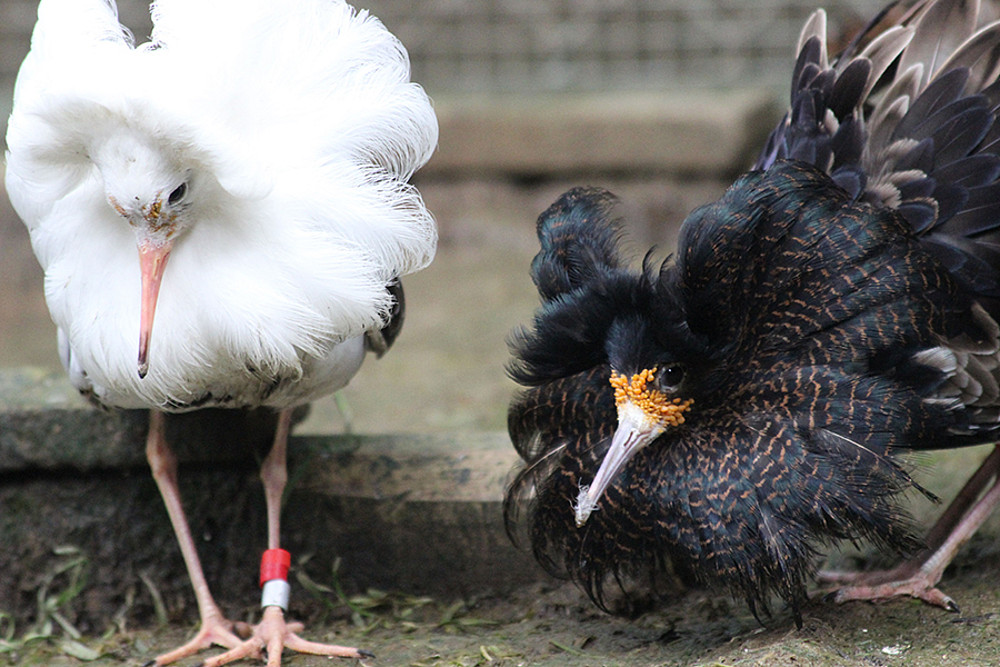
Satelliten zeichnen sich durch auffallend helles Gefieder aus. Faeder wiederum geben sich als Weibchen aus, um von den aggressiven Kämpfern geduldet zu werden. Beide Typen nutzen die Konfusion in den Balzarenen, die bei den häufigen Kämpfen vorherrscht, um sich mit Weibchen zu paaren. „Die Grundlagen für diese drei Formen ist Kampfläufern in ihrer Erbinformation festgeschrieben“, begründet der Forscher und Erstautor der aktuellen Publikation in Nature Genetics.
Als Teil eines internationalen Teams, darunter ForscherInnen der Universitäten Graz, Sheffield und Edinburgh (Großbritannien) sowie der Simon Fraser University in Burnaby (Kanada), hat der Evolutionsbiologe die genetischen Unterschiede zwischen den drei Formen genau unter die Lupe genommen. Küpper und seine KollegInnen konnten eruieren, welcher Abschnitt der DNA für dieses atypische, sanfte Verhalten verantwortlich ist: „Den Unterschieden des Satelliten- und des Faeder-Männchens liegt eine Inversion, das ist eine seltene Umstrukturierung eines Chromosomenabschnitts, zugrunde. Die ursprüngliche, bereits Millionen Jahre alte Veränderung ist durch einen Gen-Defekt in einigen Fällen sogar tödlich. Allerdings scheinen andere Qualitäten der Faeder- und Satelliten-Männchen dieses Manko zu kompensieren. Der von der Inversion betroffene Abschnitt enthält mehrere vielversprechende Kandidaten-Gene für Aggressionsverhalten, die Küpper in Zukunft erforschen will.
Ruff males with genetic handicap pull females without being rough
Aggressive behaviour is genetically determined and important for reproductive success. An international research team including researchers from the Universities of Sheffield and Edinburgh (UK), Simon Fraser University Burnaby, Canada, and the University of Graz, Austria has now described the genetic changes required that in the ruff, a peculiar wading bird, some males can hit it off with females without fighting other males. The research is published today in the journal Nature Genetics.
Like ancient gladiators, ruff males in elaborated plumage meet in mating arenas every spring to fight vigorously their competitors over females. The most successful fighters are rewarded with the hearts of most of the visiting ladies. However, certain males use other strategies to entice the females, explains Clemens Küpper, an author of the study, who works at the Institute of Zoology at the University of Graz. “There are three kinds of ruffs. Most ruffs use an aggressive so-called ‘independent’ strategy to get the best territory and the attention of the females. However, Satellite and Faeder males are competitive without having to fight other males”, Küpper says.
Satellites are characterised by conspicuous light breeding plumage, whereas Faeder males ‘cross-dress’ as females to avoid being hassled by aggressive ruffs. The two alternative male types use the confusion that frequently arises during the fights among Independents in the mating arenas to rapidly mate with present females.
“The strategy that each ruff adopts is determined by its genes”, Küpper states. Funded by a Marie Curie European Fellowship and a grant of the Biotechnology and Biological Sciences Research Council, Küpper and his colleagues analysed genome sequences of Faeder, Satellite and Independent males. They found that an inversion, a rare aberration at one of the chromosomes, is the basis for the behavioural differences between ruff males: “The initial genetic change destroyed one of the genes and can be lethal.” Satellite and Faeder males, however, seem to have evolved other qualities to compensate for this handicap. The inverted part of the chromosome contains several candidate genes for aggressive behaviour, which Küpper plans to study in more detail in the future.