Begin of page section:
Page sections:

  • Go to contents (Accesskey 1)
  • Go to position marker (Accesskey 2)
  • Go to main navigation (Accesskey 3)
  • Go to sub navigation (Accesskey 4)
  • Go to additional information (Accesskey 5)
  • Go to page settings (user/language) (Accesskey 8)
  • Go to search (Accesskey 9)

End of this page section. Go to overview of page sections

Begin of page section:
Page settings:

English en
Deutsch de
Search
Login

End of this page section. Go to overview of page sections

Begin of page section:
Search:

Search for details about Uni Graz
Close

End of this page section. Go to overview of page sections


Search

Begin of page section:
Main navigation:

Page navigation:

  • University

    University
    • About the University
    • Organisation
    • Faculties
    • Library
    • Working at University of Graz
    • Campus
    Developing solutions for the world of tomorrow - that is our mission. Our students and our researchers take on the great challenges of society and carry the knowledge out.
  • Research Profile

    Research Profile
    • Our Expertise
    • Research Questions
    • Research Portal
    • Promoting Research
    • Research Transfer
    • Ethics in Research
    • Commission for Scientific Integrity
    Scientific excellence and the courage to break new ground. Research at the University of Graz creates the foundations for making the future worth living.
  • Studies

    Studies
    • Prospective Students
    • Students
    • Registration for Study Programme (Winter semester 2026/27)
  • Community

    Community
    • International
    • Location
    • Research and Business
    • Alumni
    The University of Graz is a hub for international research and brings together scientists and business experts. Moreover, it fosters the exchange and cooperation in study and teaching.
Topics
  • Sustainable University
  • Researchers answer
  • Work for us
Close menu

End of this page section. Go to overview of page sections

Begin of page section:
You are here:

University of Graz News Schlusslicht

End of this page section. Go to overview of page sections

Tuesday, 02 June 2020

Schlusslicht

Bleibt dieser Platz leer? Der EU-Erweiterungsprozess könnte durch die Corona-Krise wieder einmal ins Stocken geraten, meint Florian Bieber. Die Corona-Pandemie hat in Südosteuropa Demokratiedefizite aufgezeigt. Dennoch spricht sich der Forscher für einen gut durchdachten Reformationsprozess der EU aus, der auch die Aufnahmen neuer Mitglieder einschließen sollte. Foto: Kaboompics.com/pexels.com.

Bleibt dieser Platz leer? Der EU-Erweiterungsprozess könnte durch die Corona-Krise wieder einmal ins Stocken geraten, meint Florian Bieber. Die Corona-Pandemie hat in Südosteuropa Demokratiedefizite aufgezeigt. Dennoch spricht sich der Forscher für einen gut durchdachten Reformationsprozess der EU aus, der auch die Aufnahmen neuer Mitglieder einschließen sollte. Foto: Kaboompics.com/pexels.com.

Folgt dem Virus in Südosteuropa die Autokratie? Die Universität Graz beantwortet Fragen zur Corona-Krise - #34

Im Podcast-Format "Hör-Saal: 15 Minuten Forschung" stehen ForscherInnen der Universität Graz zu verschiedenen Aspekten der Corona-Krise ein Mal pro Woche Rede und Antwort. In der elften Epsiode diskutiert Südosteuropa-Experte Florian Bieber die Lage am Westbalkan: wie dort mit der Pandemie umgegangen wurde, welche Spuren die rigiden, teils autokratischen Maßnahmen der Regierungen in der Region hinterlassen könnten und wie sich das alles auf eine mögliche Erweiterung der EU auswirken wird, sind Teilfragen des Gesprächs. 

Besorgniserregend ist für Florian Bieber der Griff nach der absoluten Macht unter dem Deckmantel der Pandemie-Bekämpfung, so wie es beispielsweise in Ungarn geschehen ist. "Es braucht dringend eine klare Haltung der EU-Mitgliedsstaaten dagegen. Leider war die Kritik, auch seitens Österreich, hierzu relativ still", so Bieber. Als demokratischer Staat gilt es, gerade in solchen Phasen Vorbildwirkung zu zeigen: transparente, zeitlich begrenzte und angemessene Maßnahmen sind dabei das Um und Auf. 

Im Podcast spricht Bieber außerdem über den EU-Erweiterungsprozess, der durch die Corona-Krise vermutlich wieder einmal ins Stocken geraten wird. Dabei wäre es besonders wichtig, so der Forscher, diesen Prozess parallel zu einer jedenfalls notwendigen EU-Reform fortzuführen. "Wir sollten weg von dem Gedanken, eins nach dem anderen erledigen zu wollen, sondern viel mehr das Europa, in dem wir künftig leben wollen, in dem wir gemeinsam stark sind, im Auge behalten", resümiert Florian Bieber. 


>> Zum Podcast


Weitere Veröffentlichungen von Florian Bieber zu diesem Thema:

  • Global Nationalism in Times of the COVID-19 Pandemic
  • Authoritarianism in the Time of the Coronavirus
  • Sarajevo Calling (Podcast)
  • Debating Nationalism (Podcast)


Bisherige Hör-Saal-Folgen zum Nachhören:

>> Episode # 01 (23.03.2020) – "Warum hamstern wir?"
>> Episode # 02 (30.03.2020) – "Was können wir aus Pandemien lernen?"
>> Episode # 03 (06.04.2020) – "Raubt uns die Krise die Menschenwürde?"
>> Episode # 04 (14.04.2020) – "Wie funktioniert ein Wirkstoff-Screening?"
>> Episode # 05 (20.04.2020) – "Was bewirkt flexible Arbeit?"
>> Episode # 06 (27.04.2020) – "Ist die Digitalisierung die Gewinnerin der Krise?"
>> Episode # 07 (04.05.2020) – "Sind Krieg und Krise vergleichbar?"
>> Epsiode # 08 (11.05.2020) – "Braucht der Rechtstaat Krisen?"
>> Episode # 09 (18.05.2020) – "Vergessen wir auf die Klimakrise?"
>> Episode # 10 (25.05.2020) – Wie verändert das Virus unsere Wirtschaft?
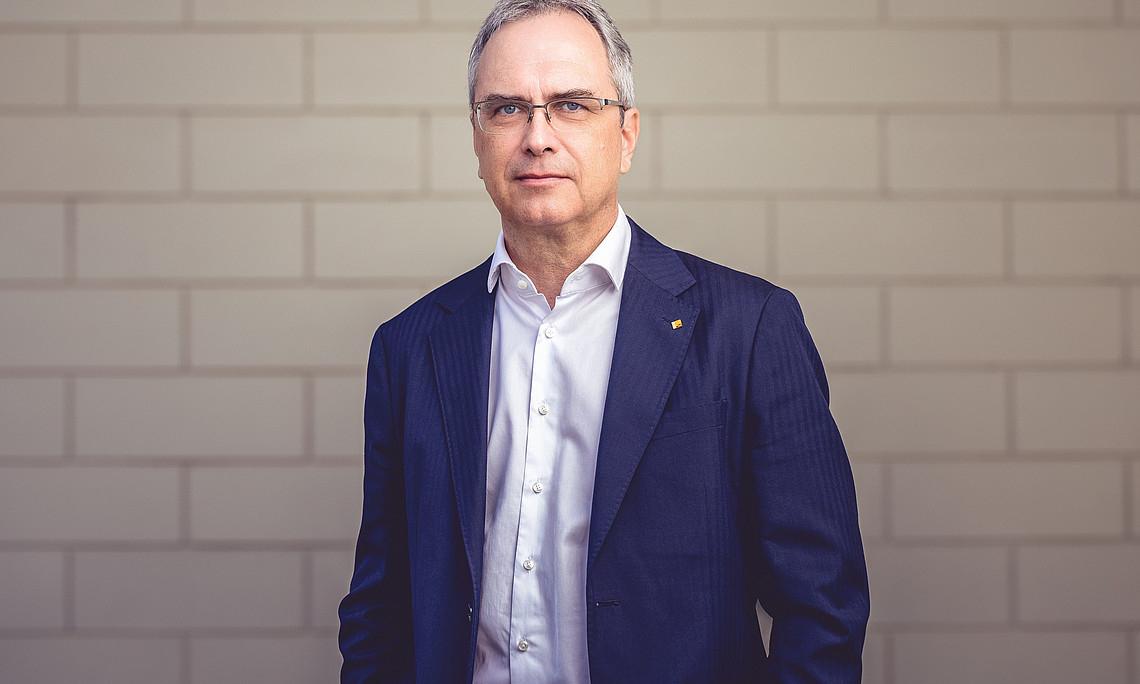

created by Gerhild Leljak

Related news

Staying fit during the holidays: summer sports on the University of Graz campus

The Kleeblattlauf is not the end of the fitness term. Following last year’s successful launch, the University of Graz is once again offering summer sports on campus this year. From 30 June to 16 July 2026, there will be a free exercise programme in the open air. On the shady Südwiese (between the main building and Universitätsplatz 2), anyone interested can get in shape in the afternoons with body workouts, fascia training and yoga.

Getting even hotter: Researchers predict global warming of 1.7 degrees by 2027

While Europe is currently sweltering in the heat, global temperatures are also rising towards concerning record levels. In 2026, Earth’s surface air temperature is expected to reach 1.62 degrees, and in 2027 even 1.71 degrees Celsius above pre-industrial levels. The long-term temperature rise – an average over a 20-year period – is predicted to exceed the 1.5-degree threshold of the Paris Agreement as of 2026 already. For the first time, researchers at the University of Graz have been able to make such a forecast so far in advance. The intensifying El Niño climate event favors forecast skill and thereby facilitates a reliable computation.

Forest fire at Rosenhain: Volunteer fire brigade carried out an evacuation drill at the Jesuit refectory

Thick smoke in the stairwell, flames at the edge of the forest, people missing in the Jesuit refectory at the University of Graz: at Rosenhain, the Graz Volunteer Fire Brigade carried out a drill simulating a scenario that is becoming increasingly realistic given the heat and drought

Full effort in the heat: the Sports Centre was in full swing at the Kleeblattlauf

On 19 June 2026, 2,000 runners and hundreds of supporters made their way to the Rosenhain for a sporting end-of-term event.

Begin of page section:
Additional information:

University of Graz
Universitaetsplatz 3
8010 Graz
Austria
  • Contact
  • Web Editors
  • Moodle
  • UNIGRAZonline
  • Imprint
  • Data Protection Declaration
  • Accessibility Declaration
Weatherstation
Uni Graz

End of this page section. Go to overview of page sections

End of this page section. Go to overview of page sections

Begin of page section:

End of this page section. Go to overview of page sections