Begin of page section:
Page sections:

  • Go to contents (Accesskey 1)
  • Go to position marker (Accesskey 2)
  • Go to main navigation (Accesskey 3)
  • Go to sub navigation (Accesskey 4)
  • Go to additional information (Accesskey 5)
  • Go to page settings (user/language) (Accesskey 8)
  • Go to search (Accesskey 9)

End of this page section. Go to overview of page sections

Begin of page section:
Page settings:

English en
Deutsch de
Search
Login

End of this page section. Go to overview of page sections

Begin of page section:
Search:

Search for details about Uni Graz
Close

End of this page section. Go to overview of page sections


Search

Begin of page section:
Main navigation:

Page navigation:

  • University

    University
    • About the University
    • Organisation
    • Faculties
    • Library
    • Working at University of Graz
    • Campus
    Developing solutions for the world of tomorrow - that is our mission. Our students and our researchers take on the great challenges of society and carry the knowledge out.
  • Research Profile

    Research Profile
    • Our Expertise
    • Research Questions
    • Research Portal
    • Promoting Research
    • Research Transfer
    • Ethics in Research
    Scientific excellence and the courage to break new ground. Research at the University of Graz creates the foundations for making the future worth living.
  • Studies

    Studies
    • Prospective Students
    • Students
  • Community

    Community
    • International
    • Location
    • Research and Business
    • Alumni
    The University of Graz is a hub for international research and brings together scientists and business experts. Moreover, it fosters the exchange and cooperation in study and teaching.
  • Spotlight
Topics
  • Our digital Advent calendar
  • Sustainable University
  • Researchers answer
  • Work for us
Close menu

End of this page section. Go to overview of page sections

Begin of page section:
You are here:

University of Graz News Schlau und gut

End of this page section. Go to overview of page sections

Monday, 21 September 2020

Schlau und gut

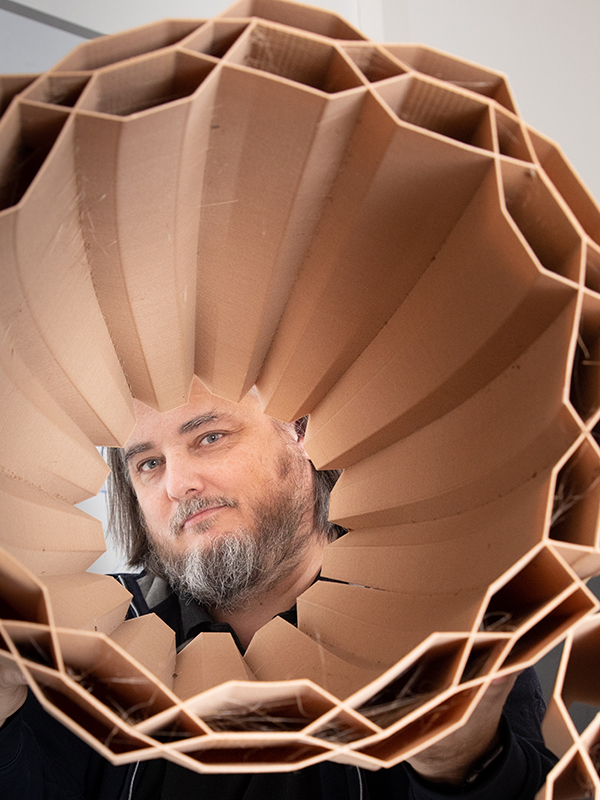
Blick durch den Bienenstock: Der Biologe Thomas Schmickl leitet das Artificial Life Lab der Universität Graz sowie das EU-Großprojekt HIVEOPOLIS und ist Sprecher des Profilbildenden Bereichs Colibri. Foto: Jorg Konstantinov.

Blick durch den Bienenstock: Der Biologe Thomas Schmickl leitet das Artificial Life Lab der Universität Graz sowie das EU-Großprojekt HIVEOPOLIS und ist Sprecher des Profilbildenden Bereichs Colibri. Foto: Jorg Konstantinov.

Erfolgreiches erstes Jahr für das EU-Großprojekt HIVEOPOLIS

Sieben Millionen Euro für fünf Jahre: Das ist die Fördersumme für das EU-Forschungsprojekt HIVEOPOLIS – es ist damit eines der beeindruckendsten Großprojekte der Universität Graz und das erste EU-Projekt des Profilbildenden Bereichs COLIBRI (Complexity of Life in Basic Research and Innovation). Ein internationales Team entwickelt bis zum Frühjahr 2024 einen „smarten“ Bienenstock, der die Tiere bei der Futtersuche unterstützt, sie vor Umweltgiften und Wetterumschwüngen warnt und sogar deren komplexe Kommunikation steuern kann. „Dieses intelligente, bio-hybride System wird es Menschen, Robotern und Bienen ermöglichen, sinnvoll und zielgerichtet zu kooperieren“, erklärt Thomas Schmickl, der nicht nur dieses Projekt, sondern auch das Artifical Life Lab an der Universität Graz leitet.

Nun, nach etwas mehr als einem Jahr Laufzeit, hat HIVEOPOLIS seine erste externe Evaluierung erfolgreich absolviert. Die WissenschafterInnen sind mit dem Fortschritt zufrieden: „In den ersten 12 Monaten haben wir Prototypen für die verschiedenen Subsysteme entwickelt und getestet sowie neuartige Topologien und Materialen für den Bienenstock erforscht“, schildert Projektmitarbeiterin Martina Szopek. Diese Erkenntnisse bilden die Basis für die verschiedenen Komponenten, aus denen der Bienenstock der Zukunft zusammengebaut werden soll. „Natürlich wird es besonders spannend zu beobachten, wie die Bienen mit ihrem neuen Zuhause interagieren werden“, führen Schmickl und Szopek aus. In HIVEOPOLIS sind auch fünf Partnerhochschulen sowie Interessensgruppen aus der Praxis – von ImkerInnen bis zu PädagogInnen – eingebunden.

>> Mehr zum Projekt in der UNIZEIT

Das Team präsentiert die ersten Ergebnisse von HIVEOPOLIS diese Woche auf der Future Tech Week 2020, die, dank Förderungen der Europäischen Kommission, ForscherInnen mit UnternehmerInnen und InnovatorInnen zusammenbringt mit dem Ziel, neue Technologien zu entwickeln. Das brandneue Projekt-Video von HIVEOPOLIS geht dabei auch ins Rennen um das beste seiner Art:

>> YouTube Link


created by Gerhild Leljak

Related news

Chemical Christmas show at the University of Graz: An explosive evening at the Schauspielh

At the beginning of December, the University of Graz transformed the theater into a laboratory: as part of “Chemical Life,” teacher training students staged a chemical Christmas show for Styrian school classes—complete with ethanol rockets, nitrogen snow, and glowing effects. An evening designed to inspire interest in studying chemistry.

Train by train: Koralm railway accelerates exchange between the Universities

Lectures at the University of Klagenfurt in the morning, seminars at the University of Graz in the afternoon: Austria's longest tunnel and a journey time of around 45 minutes make it easy. The Koralm railway increases the speed of networking between the two university locations. The collaboration builds on existing cooperation - for example in the areas of teacher training, Slavic studies and as employers, the universities are well coordinated.

On the trail of the Big Bang: University of Graz receives 1.5 million euros for doctoral programmes

The Austrian Science Fund FWF has selected the Doctoral Programme in Theoretical Particle Physics at the University of Graz for funding from the Doc.funds. Six young scientists will be funded for 3.5 years. They will gain fundamentally new insights into the origins of the world.

Of mice and machines: zoologist Thomas Schmickl researches how robots can save nature

Machines that interact with animals and learn their social behaviour could save biodiversity. Thomas Schmickl and his team from the Artificial Life Lab have recently published several scientific articles on this topic.

Begin of page section:
Additional information:

University of Graz
Universitaetsplatz 3
8010 Graz
Austria
  • Contact
  • Web Editors
  • Moodle
  • UNIGRAZonline
  • Imprint
  • Data Protection Declaration
  • Accessibility Declaration
Weatherstation
Uni Graz

End of this page section. Go to overview of page sections

End of this page section. Go to overview of page sections

Begin of page section:

End of this page section. Go to overview of page sections