



Begin of page section:
Page sections:

  • Go to contents (Accesskey 1)
  • Go to position marker (Accesskey 2)
  • Go to main navigation (Accesskey 3)
  • Go to sub navigation (Accesskey 4)
  • Go to additional information (Accesskey 5)
  • Go to page settings (user/language) (Accesskey 8)
  • Go to search (Accesskey 9)

End of this page section. Go to overview of page sections

Begin of page section:
Page settings:

English en
Deutsch de
Search
Login

End of this page section. Go to overview of page sections

Begin of page section:
Search:

Search for details about Uni Graz
Close

End of this page section. Go to overview of page sections


Search

Begin of page section:
Main navigation:

Page navigation:

  • University

    University
    • About the University
    • Organisation
    • Faculties
    • Library
    • Working at University of Graz
    • Campus
    Developing solutions for the world of tomorrow - that is our mission. Our students and our researchers take on the great challenges of society and carry the knowledge out.
  • Research Profile

    Research Profile
    • Our Expertise
    • Research Questions
    • Research Portal
    • Promoting Research
    • Research Transfer
    • Ethics in Research
    • Commission for Scientific Integrity
    Scientific excellence and the courage to break new ground. Research at the University of Graz creates the foundations for making the future worth living.
  • Studies

    Studies
    • Prospective Students
    • Students
    • Registration for Study Programme (Winter semester 2026/27)
    • Study Days 22-26 June 2026
  • Community

    Community
    • International
    • Location
    • Research and Business
    • Alumni
    The University of Graz is a hub for international research and brings together scientists and business experts. Moreover, it fosters the exchange and cooperation in study and teaching.
Topics
  • Sustainable University
  • Researchers answer
  • Work for us
Close menu

End of this page section. Go to overview of page sections

Begin of page section:
You are here:

University of Graz News Sauber und schnell

End of this page section. Go to overview of page sections

Wednesday, 06 April 2022

Sauber und schnell

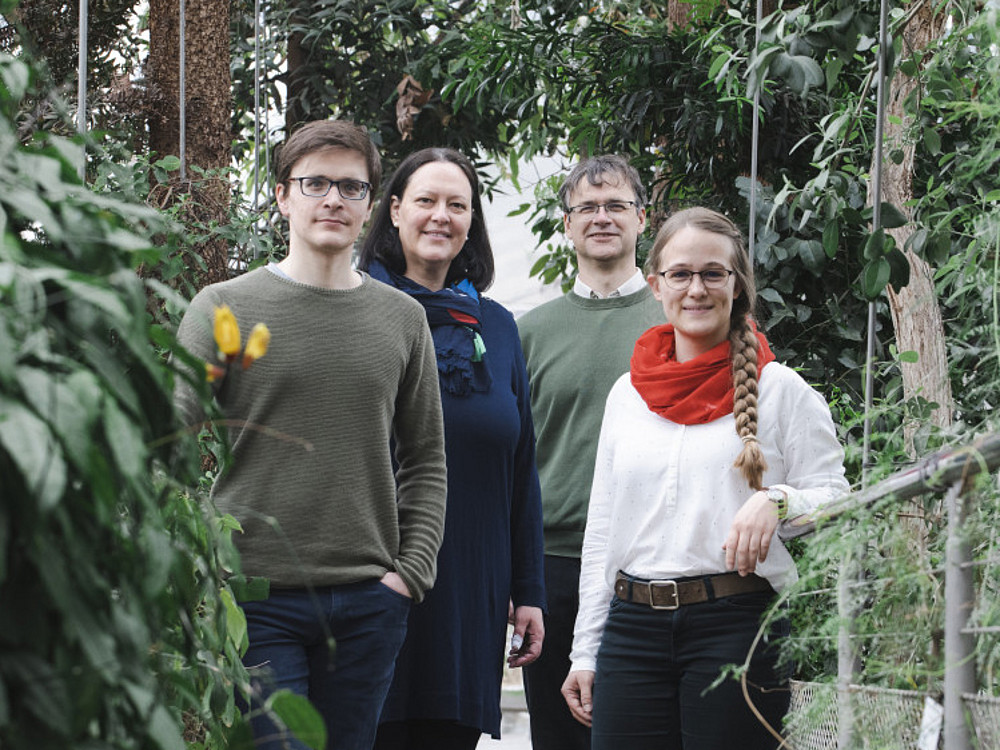
Christoph Winkler, Silvia Glück, Wolfgang Kroutil und Sarah Bierbaumer (v.l.) haben einen grünen Turbo für die Pharmaindustrie entwickelt. Foto: Uni Graz/Tzivanopoulos.

Christoph Winkler, Silvia Glück, Wolfgang Kroutil und Sarah Bierbaumer (v.l.) haben einen grünen Turbo für die Pharmaindustrie entwickelt. Foto: Uni Graz/Tzivanopoulos.

ForscherInnen entwickeln grünen Turbo für die Pharmaindustrie

Fieberhaft sucht die Welt nach sauberer Energie. Der völlige Ausstieg aus Öl, Gas und Kohle wird in vielen Bereichen noch dauern. Für die Herstellung von Medikamenten meldet sich eine tadellose Alternative aber verlässlich jeden Morgen: das Sonnenlicht. ForscherInnen der Universität Graz nutzen diese Energiequelle und steigern damit die Effizienz in der Produktion von Pharmazeutika um 100 Prozent. Im Fachjournal „Angewandte Chemie“ hat das Team rund um Silvia Glück und Wolfgang Kroutil kürzlich diese Ergebnisse veröffentlicht. Sie könnten die Pharmaindustrie bald sehr viel grüner machen.

Manche Moleküle sind wie Bild und Spiegelbild
Bei der Herstellung von Medikamenten wird viel Abfall produziert. Das liegt unter anderem daran, dass in manchen Fällen die Hälfte des Ausgangsmaterials für bestimmte Herstellungsschritte unbrauchbar ist. Schuld daran ist die Struktur der eingesetzten Moleküle. „Manche von ihnen kommen in zwei Formen vor, die einander ähneln wie Bild und Spiegelbild. Während sich die eine Variante als pharmazeutischer Wirkstoff eignet, kann die andere Schaden anrichten“, erklärt Wolfgang Kroutil. Bislang wurde die unerwünschte Molekül-Form deshalb einfach als Müll entsorgt. Gleichzeitig suchen WissenschafterInnen nach Wegen, um auch sie nutzbar zu machen.

Hier kommt Licht in die Sache
Den ChemikerInnen der Uni Graz ist genau das jetzt gelungen. Silvia Glück beschreibt die Methode: „Zunächst beschleunigen wir die Reaktion mit Biokatalysatoren. Diese umweltfreundlichen ‚Turbo‘-Teilchen sind fähig, zwischen den beiden Molekül-Formen zu unterscheiden. Zusammen mit dem zweiten Schritt, in dem mit der Energie des Sonnenlichts Sauerstoff aktiviert wird, kann die unerwünschte Molekül-Form in die gewünschte umgewandelt werden. Das Ergebnis ist zu hundert Prozent brauchbares Material bei einer völlig schadstofffreien, natürlichen Produktionskette.“  

Das Projekt wird vom österreichischen Wissenschaftsfonds FWF gefördert und ist Teil des Profilbildenden Bereichs BioHealth an der Universität Graz.

Publikation: S. Bierbaumer, L. Schmermund, A. List, C. K. Winkler,* S. M. Glueck,* W. Kroutil, Synthesis of Enantiopure Sulfoxides by Concurrent Photocatalytic Oxidation and Biocatalytic Reduction. Angewandte Chemie Internation Edition 2022, e202117103. https://onlinelibrary.wiley.com/doi/full/10.1002/anie.202117103 
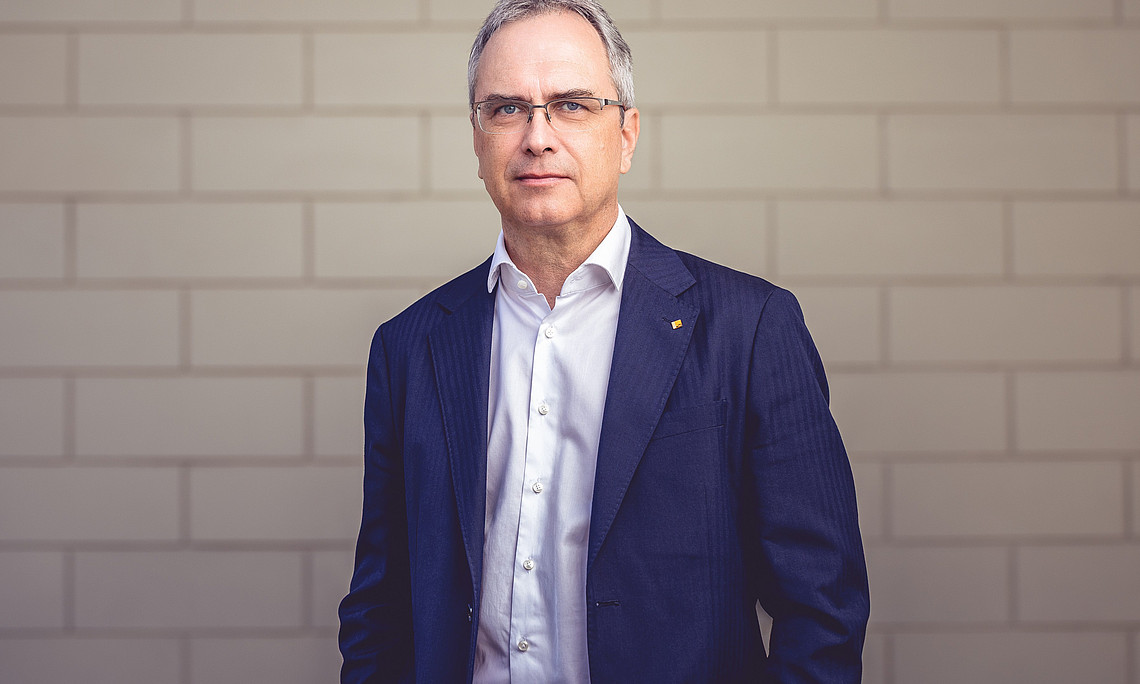
created by Gerhild Leljak

Related news

Full effort in the heat: the Sports Centre was in full swing at the Kleeblattlauf

On 19 June 2026, 2,000 runners and hundreds of supporters made their way to the Rosenhain for a sporting end-of-term event.

Save, invest or guarantee: What Austrians expect from the state

Austria needs to make savings. But where? And what should the Republic actually be spending its money on? The answers are provided by the initial findings of a major study involving the University of Graz. 99 per cent of those surveyed are in favour of the state ensuring healthcare provision. Almost three-quarters would like to see more public funding for education, whilst only around three per cent are in favour of cuts in this sector.

Complying with the norm: Why Do Standards Shape Our Lives, Elisabeth Staudegger?

Standards determine whether a sheet of paper fits in a printer or whether a charging plug can power multiple devices. These standards shape our everyday lives. But who actually sets these standards? Where are the weaknesses, and how could science help to improve them? Elisabeth Staudegger, Head of the ‘Law and IT’ Department at the Institute for Legal Foundations at the University of Graz, host the Academic Standards Day on 16 June. Here she relays how sciences can contribute to the topic of standardisation and reveals her personal favourite standard.

More body awareness than a culture war

In Italy, sex education lessons will in future only be permitted with parental consent, and will be banned entirely in nurseries and primary schools. At the same time, Pride Month highlights why knowledge about the body, relationships, boundaries and diversity is important for young people. A study by the University of Graz shows how important knowledge about the body, contraception, relationship skills and protection against violence is

Begin of page section:
Additional information:

University of Graz
Universitaetsplatz 3
8010 Graz
Austria
  • Contact
  • Web Editors
  • Moodle
  • UNIGRAZonline
  • Imprint
  • Data Protection Declaration
  • Accessibility Declaration
Weatherstation
Uni Graz

End of this page section. Go to overview of page sections

End of this page section. Go to overview of page sections

Begin of page section:

End of this page section. Go to overview of page sections


