Begin of page section:
Page sections:

  • Go to contents (Accesskey 1)
  • Go to position marker (Accesskey 2)
  • Go to main navigation (Accesskey 3)
  • Go to sub navigation (Accesskey 4)
  • Go to additional information (Accesskey 5)
  • Go to page settings (user/language) (Accesskey 8)
  • Go to search (Accesskey 9)

End of this page section. Go to overview of page sections

Begin of page section:
Page settings:

English en
Deutsch de
Search
Login

End of this page section. Go to overview of page sections

Begin of page section:
Search:

Search for details about Uni Graz
Close

End of this page section. Go to overview of page sections


Search

Begin of page section:
Main navigation:

Page navigation:

  • University

    University
    • About the University
    • Organisation
    • Faculties
    • Library
    • Working at University of Graz
    • Campus
    Developing solutions for the world of tomorrow - that is our mission. Our students and our researchers take on the great challenges of society and carry the knowledge out.
  • Research Profile

    Research Profile
    • Our Expertise
    • Research Questions
    • Research Portal
    • Promoting Research
    • Research Transfer
    • Ethics in Research
    • Commission for Scientific Integrity
    Scientific excellence and the courage to break new ground. Research at the University of Graz creates the foundations for making the future worth living.
  • Studies

    Studies
    • Prospective Students
    • Students
    • Welcome Weeks for First Year Students
  • Community

    Community
    • International
    • Location
    • Research and Business
    • Alumni
    The University of Graz is a hub for international research and brings together scientists and business experts. Moreover, it fosters the exchange and cooperation in study and teaching.
Topics
  • Sustainable University
  • Researchers answer
  • Work for us
Close menu

End of this page section. Go to overview of page sections

Begin of page section:
You are here:

University of Graz News Rote Karte fürs Klischee

End of this page section. Go to overview of page sections

Thursday, 02 July 2015

Rote Karte fürs Klischee

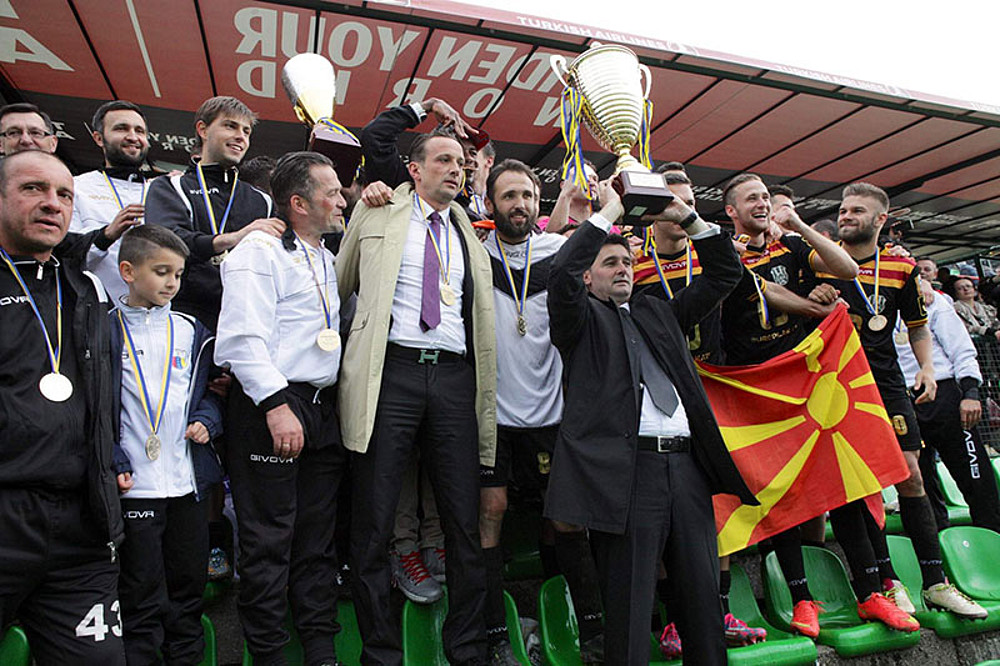
Admir Kozlic (hintere Reihe, 2.v.l.) fand heraus, dass gängigen Fußball-Klischees kaum Wahrheit zugrunde liegt. Foto: F. Foco, www.avaz.ba

Admir Kozlic (hintere Reihe, 2.v.l.) fand heraus, dass gängigen Fußball-Klischees kaum Wahrheit zugrunde liegt. Derzeit ist er Konditionstrainer und Spielanalyst beim FC Olimpic Sarajewo, mit dem er vor wenigen Wochen den Cupsieg in Bosnien fixiert und damit ein Ticket für die Europa-League im nächsten Jahr gelöst hat. Foto: F. Foco, www.avaz.ba

Forscher widerlegen gängige Fußball-Stereotypen

Während in Kanada diesen Sonntag die Frauenfußball-WM zu Ende geht, befördern Wissenschafter der Karl-Franzens-Universität allgemein bekannte Klischees dieser Sportart ins Abseits: „Verschiedene Nationen werden meist mit speziellen Spielarten und Taktiken assoziiert. Wir haben aber herausgefunden, dass es innerhalb der europäischen Ligen bei Weitem nicht so viele Unterschiede gibt, wie landläufig angenommen und medial transportiert wird“, erklärt das wissenschaftliche Trio Admir Kozlic, MSc, Mag. Norbert Schrapf und Univ.-Prof. Dr. Markus Tilp vom Institut für Sportwissenschaft.


Spanien bietet mit dem technisch anspruchsvollen Kurzpassspiel „Tiki-Taka“ Fußballzauber vom Feinsten. Italien schiebt dem Gegner mit dem defensiven „Catenaccio“-System einen Riegel vor. Englands Devise für den schnellen Torerfolg lautet „Kick and Rush“, dabei gehen die Spieler der Insel mit ihren Kontrahenten nicht gerade zärtlich um. Klischees wie diese haben sich festgesetzt, obwohl sich bei genauerer Betrachtung zeigt, dass ihnen kaum Wahrheit zugrunde liegt. Kozlic, der derzeit seine Dissertation im Bereich Sportspielanalyse an der Uni Graz verfasst, hat bereits für seine Masterarbeit die Europameisterschaft 2008 in Österreich und der Schweiz analysiert.

Nun vergleicht er die Taktiken der spanischen, italienischen, englischen, deutschen und österreichischen A-Liga miteinander. Sein Fazit: „In Italien, das angeblich mehr Wert auf Verteidigung als auf Angriff legt, wurden in der vergangenen Saison mehr Tore, es waren insgesamt 1024, als in den anderen untersuchten Ligen erzielt. Deutschlands Spieler gehen genauso oft in Zweikämpfe wie die als ‚körperbetont‘ verrufenen Engländer. Und in Spanien, dem Land, in dem Tiki-Taka angeblich erfunden wurde, erreichen sogar weniger Pässe ihr Ziel als in England, Deutschland oder Italien.“ Gründe für die verstärkte Angleichung der technischen und taktischen Spielweisen innerhalb Europas Fußballnationen sieht Kozlic in der zunehmenden Internationalisierung auf dem Spieler- und Trainermarkt.


Von der Wissenschaft in die Praxis
Kozlic hat für seine Arbeit insgesamt 73 Fußball-Matches mit einer speziellen, an der Uni Graz entwickelten Computer-Software analysiert. „Sie erlaubt uns, verschiedene Aktionen, wie etwa Pässe oder Torschüsse, in einer Datenbank zu speichern und zu klassifizieren. Die Auswertung der Daten gibt Aufschluss darüber, welche Spielzüge erfolgreich abgelaufen sind und warum“, erklären Schrapf und Tilp. Letzterer hat bereits verschiedene, vom österreichischen Wissenschaftsfonds FWF geförderte wissenschaftliche Projekte zur Spielanalyse im Beachvolley- und im Handball geleitet. Die langjährige Kompetenz des Instituts für Sportwissenschaft der Uni Graz in diesem Bereich ist auch in der Praxis sehr gefragt: Mehrere steirische Vereine haben die Software schon genutzt. Unter anderen verwendete sie der FC Kapfenberg bereits für die interne Spielanalyse. In Zukunft ist geplant, die Software als kostenlosen Download zur Verfügung zu stellen, bestätigt Tilp.

Admir Kozlic arbeitet derzeit als Konditionstrainer und Spielanalyst beim FC Olimpic Sarajewo, mit dem er vor wenigen Wochen den Cupsieg in Bosnien fixiert und damit ein Ticket für die Europa-League im nächsten Jahr gelöst hat.


created by Gerhild Kastrun

Related news

Jurassic Sounds: Biologist reconstructs insect songs from 165 million years ago

It was apparently not just the roars of the dinosaurs that made up the soundscape of the animal world during the Jurassic period. Crickets and grasshoppers communicated through a variety of songs and high-pitched sounds, as Thorin Jonsson from the Institute of Biology at the University of Graz discovered together with colleagues from the universities of Lincoln, Bristol (UK), Beijing (China) and Tempe (USA). The findings on what are so far the oldest traces of sound on Earth have just been published in the journal PNAS.

EU funding boosts international exchange between universities

The University of Graz is further expanding its international study opportunities through the European university alliance Arqus and is taking the lead in two key projects. In future, students will benefit from even more joint degree programmes and from simplified recognition of academic achievements through the Joint European Degree Label.

Rescue and risks: Researchers have surveyed public perceptions of AI

The use of artificial intelligence has had to be made transparent since 2 August 2026. The EU’s AI Act, which has been in force since then, also sets out how risky an application is and which security measures apply as a result. However, the assessment of risks by the legislation differs in some cases significantly from the perceptions of the Austrian public. This is the finding of a representative study carried out by data scientist Stefan Thalmann from the University of Graz and his team.

The Healing Sea: Researchers discover new approaches to treating chronic inflammation in sponges

Chronic inflammation plays a key role in many diseases, ranging from metabolic disorders and cardiovascular diseases to tissue damage following injuries or infections. “Normally, the body is able to resolve inflammation on its own. If this process becomes unbalanced, immune cells remain permanently active and continue to drive negative changes in the tissue,” explains Andreas Koeberle, a pharmacist at the University of Graz.

Begin of page section:
Additional information:

University of Graz
Universitaetsplatz 3
8010 Graz
Austria
  • Contact
  • Web Editors
  • Moodle
  • UNIGRAZonline
  • Imprint
  • Data Protection Declaration
  • Accessibility Declaration
Weatherstation
Uni Graz

End of this page section. Go to overview of page sections

End of this page section. Go to overview of page sections

Begin of page section:

End of this page section. Go to overview of page sections