Begin of page section:
Page sections:

  • Go to contents (Accesskey 1)
  • Go to position marker (Accesskey 2)
  • Go to main navigation (Accesskey 3)
  • Go to sub navigation (Accesskey 4)
  • Go to additional information (Accesskey 5)
  • Go to page settings (user/language) (Accesskey 8)
  • Go to search (Accesskey 9)

End of this page section. Go to overview of page sections

Begin of page section:
Page settings:

English en
Deutsch de
Search
Login

End of this page section. Go to overview of page sections

Begin of page section:
Search:

Search for details about Uni Graz
Close

End of this page section. Go to overview of page sections


Search

Begin of page section:
Main navigation:

Page navigation:

  • University

    University
    • About the University
    • Organisation
    • Faculties
    • Library
    • Working at University of Graz
    • Campus
    Developing solutions for the world of tomorrow - that is our mission. Our students and our researchers take on the great challenges of society and carry the knowledge out.
  • Research Profile

    Research Profile
    • Our Expertise
    • Research Questions
    • Research Portal
    • Promoting Research
    • Research Transfer
    • Ethics in Research
    Scientific excellence and the courage to break new ground. Research at the University of Graz creates the foundations for making the future worth living.
  • Studies

    Studies
    • Prospective Students
    • Students
  • Community

    Community
    • International
    • Location
    • Research and Business
    • Alumni
    The University of Graz is a hub for international research and brings together scientists and business experts. Moreover, it fosters the exchange and cooperation in study and teaching.
  • Spotlight
Topics
  • Sustainable University
  • Researchers answer
  • Work for us
Close menu

End of this page section. Go to overview of page sections

Begin of page section:
You are here:

University of Graz News Rot sehen

End of this page section. Go to overview of page sections

Wednesday, 30 June 2021

Rot sehen

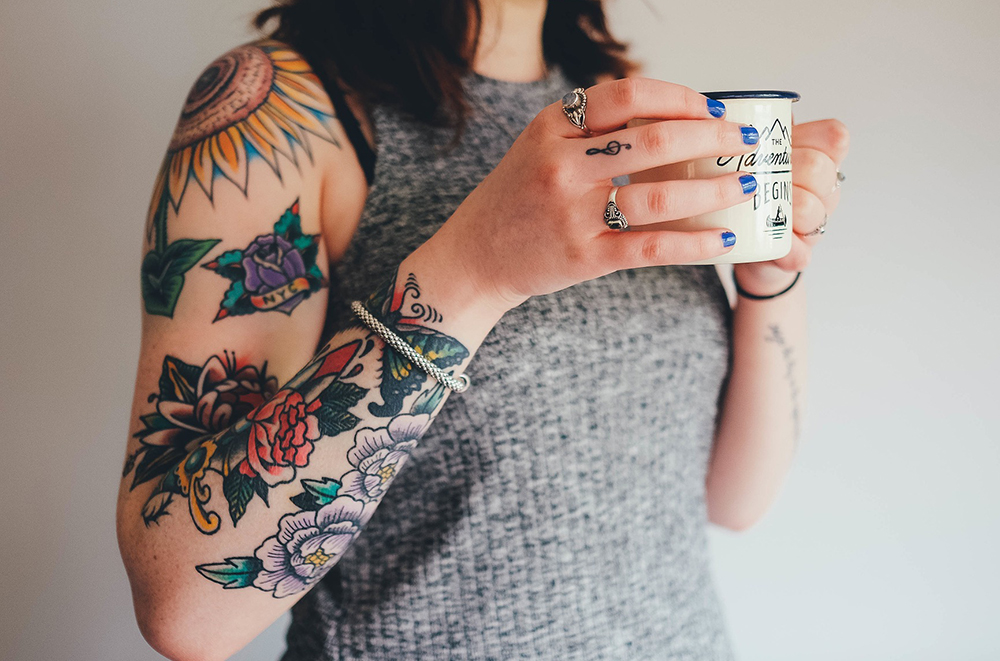
ChemikerInnen der Uni Graz haben Tattoo-Farben untersucht: Neun von zehn Proben erfüllten nicht alle gesetzlichen Bestimmungen. Foto: Annie Spratt - Pixabay

ChemikerInnen der Uni Graz haben Tattoo-Farben untersucht: Neun von zehn Proben erfüllten nicht alle gesetzlichen Bestimmungen. Foto: Annie Spratt - Pixabay

Gefährlicher Körperkult: Uni-Graz-ChemikerInnen decken schädliche Tattoo-Farben auf

Die Haut wird zur Leinwand: prachtvolle Porträts, farbige Fabelwesen oder bunte Bänder. Und der Sommer zeigt’s: Tätowierungen werden immer häufiger, aber auch gefährlicher. ChemikerInnen der Universität Graz haben gemeinsam mit ForscherInnen aus Schweden und Kanada mehr als 70 gängige Tattoo-Farben untersucht. Die Studie kommt zu einem alarmierenden Ergebnis: Neun von zehn Farben erfüllen nicht alle gesetzlichen Bestimmungen. In jeder zweiten Probe wurden falsche Pigmente nachgewiesen. Und mit Chrom und Nickel waren alle belastet.

Der Körperkult nimmt zu, damit das Risiko von Nebenwirkungen. Grund genug für ein internationales ForscherInnen-Team, Tattoo-Farben genauer unter die Lupe zu nehmen. Walter Gössler vom Institut für Chemie der Universität Graz hat dazu in Zusammenarbeit mit dem KTH Royal Institute of Technology in Stockholm (Schweden), dem Stockholmer Zentrum für Arbeits- und Umweltmedizin und der University of Western Ontario (Kanada) 73 häufig verwendete Farben analysiert.

Gefährliche Pigmente in greller Pracht
„93 Prozent der Proben verstießen mindestens gegen ein gesetzlich vorgegebenes Kriterium. 50 Prozent hatten falsche Pigmente als Inhaltsstoffe angegeben“, fasst Gössler die Ergebnisse zusammen.
Auf einigen Produkten wurde ein Allergietest empfohlen, der jedoch gänzlich gegen den Rat von HautärztInnen sei. „Im schlimmsten Fall könnte ein solcher Selbsttest dazu führen, dass man Allergien entwickelt“, warnt Gössler.
Zwar herrschten unter den Hersteller-Firmen große Unterschiede, dennoch haben die ForscherInnen zahlreiche schädliche Substanzen entdeckt: Spuren der oft unverträglichen Metalle Nickel und Chrom wurden in allen Proben gefunden. Mehrere Pigmente, die entweder verboten oder als bedenklich eingestuft sind, wurden in 61 Prozent der untersuchten Farben festgestellt.
Arsen, Quecksilber und Blei förderten die ChemikerInnen in jeweils einer Probe zu Tage.
Kupfer kam vor allem in grünen und blauen Farben vor und überschritt in drei Proben den Grenzwert. Walter Gössler: „Die häufigsten Verunreinigungen enthielten rote Farbstoffe, die niedrigsten Schwarz und Weiß.“

Das Fazit: Die ForscherInnen fordern, dass – zusätzlich zu den gesetzlichen Bestimmungen – die Farben verstärkt sowohl kontrolliert als auch KonsumentInnen über mögliche Risiken aufgeklärt werden müssten.

Die Studie ist im Fachjournal „Contact Dermatitis“ erschienen.

created by Andreas Schweiger

Related news

Cosmetics in the environment: University of Graz proves danger to ants

Titanium dioxide, which is found in cosmetics, for example, is increasingly entering the environment in the form of nanoparticles. This could also put insects at risk. If ants ingest the substance in combination with the pesticide glyphosate, it disturbs the development of their offspring. Scientists at the University of Graz are drawing attention to the negative consequences of this toxic cocktail.

How are tech companies changing democracy? Uni Graz designs exhibition for schools

Filtered information, conspiracy theories, fake news – certain groups and corporations are using social media and algorithms to try to influence public opinion in their favour. Their goal: to weaken fundamental rights and diversity of opinion and seize power. In a new exhibition, researchers at the University of Graz are working with pupils to explore the impact of social media and AI on democracy. In accompanying workshops, the scientists want to encourage young people to develop their own ideas for a socially and ecologically viable future and to actively help shape it. The exhibition, designed as a travelling exhibition for schools, will open on 9 March 2026 at the Dreihackengasse Gymnasium in Graz.

Step by step: What motivates Mireille van Poppel as a scientist and vice-rector

Improving people's health and eliminating inequalities: Mireille van Poppel pursues these goals both as a public health researcher and as vice-rector for Internationalisation and Equality. In both roles, she pays particular attention to individual needs.

Master's degree in psychotherapy in Graz: registration opens in March

Graz is becoming a hotspot for psychotherapy: from 2026, the University of Graz and the Medical University of Graz will jointly offer the new master's programme. Registration for the admission procedure for the 140 study places will start in March.

Begin of page section:
Additional information:

University of Graz
Universitaetsplatz 3
8010 Graz
Austria
  • Contact
  • Web Editors
  • Moodle
  • UNIGRAZonline
  • Imprint
  • Data Protection Declaration
  • Accessibility Declaration
Weatherstation
Uni Graz

End of this page section. Go to overview of page sections

End of this page section. Go to overview of page sections

Begin of page section:

End of this page section. Go to overview of page sections