



Begin of page section:
Page sections:

  • Go to contents (Accesskey 1)
  • Go to position marker (Accesskey 2)
  • Go to main navigation (Accesskey 3)
  • Go to sub navigation (Accesskey 4)
  • Go to additional information (Accesskey 5)
  • Go to page settings (user/language) (Accesskey 8)
  • Go to search (Accesskey 9)

End of this page section. Go to overview of page sections

Begin of page section:
Page settings:

English en
Deutsch de
Search
Login

End of this page section. Go to overview of page sections

Begin of page section:
Search:

Search for details about Uni Graz
Close

End of this page section. Go to overview of page sections


Search

Begin of page section:
Main navigation:

Page navigation:

  • University

    University
    • About the University
    • Organisation
    • Faculties
    • Library
    • Working at University of Graz
    • Campus
    Developing solutions for the world of tomorrow - that is our mission. Our students and our researchers take on the great challenges of society and carry the knowledge out.
  • Research Profile

    Research Profile
    • Our Expertise
    • Research Questions
    • Research Portal
    • Promoting Research
    • Research Transfer
    • Ethics in Research
    • Commission for Scientific Integrity
    Scientific excellence and the courage to break new ground. Research at the University of Graz creates the foundations for making the future worth living.
  • Studies

    Studies
    • Prospective Students
    • Students
    • Registration for Study Programme (Winter semester 2026/27)
  • Community

    Community
    • International
    • Location
    • Research and Business
    • Alumni
    The University of Graz is a hub for international research and brings together scientists and business experts. Moreover, it fosters the exchange and cooperation in study and teaching.
Topics
  • Sustainable University
  • Researchers answer
  • Work for us
Close menu

End of this page section. Go to overview of page sections

Begin of page section:
You are here:

University of Graz News Rettung für 40 Millionen Kulturgüter

End of this page section. Go to overview of page sections

Wednesday, 06 April 2016

Rettung für 40 Millionen Kulturgüter
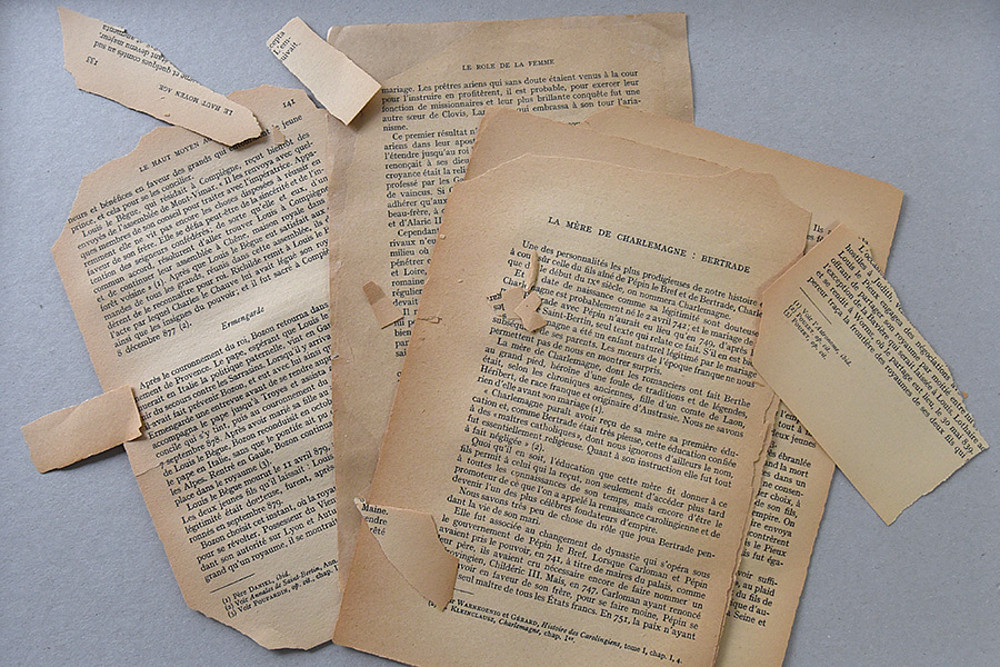
Ein durch Säureabbau beschädigtes Buch: Ein nanotechnologisches Verfahren der Uni Graz kann wertvolle Kulturgüter retten. Foto: Uni Graz/Schweiger

Ein durch Säureabbau beschädigtes Buch: Ein nanotechnologisches Verfahren der Uni Graz kann wertvolle Kulturgüter retten. Foto: Uni Graz/Schweiger

Nanotechnologisches Verfahren der Uni Graz bewahrt Papier vor Zerfall

Einem Großteil des kulturellen Erbes an Büchern, Dokumenten und Kunstwerken zwischen 1850 und 1950 droht der Zerfall. Der Grund: Das in diesem Zeitraum produzierte Papier zersetzt sich. Die Erfindung eines Forscherteams der Uni Graz kann den Verfall stoppen. Nun entwickelt es in Kooperation mit einer Restaurations-Expertin der Donau-Universität Krems und mit Unterstützung des Wissenschaftsministeriums eine Anlage, die schon bald die Kulturgüter großflächig und kostengünstig vor der Zerstörung retten wie auch reinigen soll.

„Eine Kombination aus Nanopartikeln aus Magnesium- und Calciumverbindungen mit einer aus einer Zellulose-Verbindung bestehenden Hülle durchdringt unter Druck das ganze Buch“, bringt Ao.Univ.-Prof.i.R. Dr. Volker Ribitsch das von ihm erfundene und von der Uni Graz patentierte Verfahren auf den Punkt. Sowohl gedruckte Buchstaben als auch Bilder bleiben unverändert. Da keine wässrigen Lösungsmittel verwendet werden, ist anschließend weder ein langwieriger noch kostspieliger Trockenprozess notwendig, erklärt der Chemiker an der Uni Graz.

Gemeinsam mit dr hab. Patricia Engel, Expertin für Konservierung und Restaurierung von Buch und Papier an der Donau-Universität Krems, bereitet Ribitsch das Verfahren für die großflächige Anwendung vor und arbeitet an der Entwicklung eines Gerätes. Das Ministerium für Wissenschaft, Forschung und Wirtschaft unterstützt die Entwicklung eines Prototypen im Rahmen der Förderschiene PRIZE mit 150.000 Euro. Läuft alles nach Plan, soll die erste Anlage bis zum kommenden Herbst fertiggestellt sein. „Es soll ein mobiles Gerät werden, das den Einsatz vor Ort ermöglicht und die Methode einfacher, nachhaltiger sowie günstiger gestaltet als andere“, schildert Volker Ribitsch.

Der Bedarf gibt den ForscherInnen recht: Mehr als 100 Jahre lang wurde ab der Mitte des 19. Jahrhunderts Alaun als Hilfsmittel in der westlichen Papierproduktion eingesetzt – mit Spätfolgen: Die chemische Verbindung zerfällt, eines der Zerfallsprodukte ist Schwefelsäure, die wiederum die Zellulose zerstört. Allein in österreichischen Archiven wartet Schätzungen zufolge ein Bestand von etwa 1,3 Millionen Exponaten auf eine baldige „Entsäuerung“, darunter wertvolle Bücher und unwiederbringbare historische Dokumente aus dem Ersten und Zweiten Weltkrieg. In ganz Europa dürften rund 40 Millionen Artefakte bedroht sein. Auch einzigartige auf Papier gemalte Kunstwerke sowie Objekte aus Holz können mit dem nanotechnologischen Verfahren für die Nachwelt bewahrt werden.

created by Andreas Schweiger

Related news

The Nazi elite school Napola: Historian seeks memories and personal documents

They were to be brought up to become the future elite of National Socialism: boys and girls aged ten and over who, following the ‘Anschluss’ of Austria to the German Reich, attended a so-called Napola (short for Nationalpolitische Lehranstalt; also known as NPEA, Nationalpolitische Erziehungsanstalt). There were nine such institutions in what is now Austria between 1939 and 1945.

Heat-resistant: Eva Preinfalk explains how cities can protect their residents

Certain demographic and some occupational groups are particularly vulnerable to high temperatures. A range of measures is needed to provide relief for everyone, explains climate economist Eva Preinfalk.

Baby health: University of Graz is seeking study participants to investigate early risk factors

Why does the body composition of babies vary so much? Some children gain a significant amount of fat mass within a few weeks, whilst others show hardly any change over the same period. “At the same time, initial observations suggest that fat distribution in all babies may follow a similar pattern, regardless of their total body fat,” explains Marco Höfler from the Institute of Movement Sciences, Sport and Health at the University of Graz. He is coordinating the research project ‘Small Bodies – Big Questions’, for which participants are currently still being sought: pregnant women and babies up to four weeks old.

In hot water: New Report reveals record losses in glaciers, permafrost and snow cover

Climate change is driving up temperatures not only in summer. Winters are also getting warmer – with dramatic consequences for glaciers, permafrost, snow cover and the freezing of lakes. The recently published cryosphere report provides specific figures for Austria. “Our monitoring shows a clear trend with record losses of ice and snow,” says project leader Wolfgang Schöner from the University of Graz.

Begin of page section:
Additional information:

University of Graz
Universitaetsplatz 3
8010 Graz
Austria
  • Contact
  • Web Editors
  • Moodle
  • UNIGRAZonline
  • Imprint
  • Data Protection Declaration
  • Accessibility Declaration
Weatherstation
Uni Graz

End of this page section. Go to overview of page sections

End of this page section. Go to overview of page sections

Begin of page section:

End of this page section. Go to overview of page sections