Begin of page section:
Page sections:

  • Go to contents (Accesskey 1)
  • Go to position marker (Accesskey 2)
  • Go to main navigation (Accesskey 3)
  • Go to sub navigation (Accesskey 4)
  • Go to additional information (Accesskey 5)
  • Go to page settings (user/language) (Accesskey 8)
  • Go to search (Accesskey 9)

End of this page section. Go to overview of page sections

Begin of page section:
Page settings:

English en
Deutsch de
Search
Login

End of this page section. Go to overview of page sections

Begin of page section:
Search:

Search for details about Uni Graz
Close

End of this page section. Go to overview of page sections


Search

Begin of page section:
Main navigation:

Page navigation:

  • University

    University
    • About the University
    • Organisation
    • Faculties
    • Library
    • Working at University of Graz
    • Campus
    Developing solutions for the world of tomorrow - that is our mission. Our students and our researchers take on the great challenges of society and carry the knowledge out.
  • Research Profile

    Research Profile
    • Our Expertise
    • Research Questions
    • Research Portal
    • Promoting Research
    • Research Transfer
    • Ethics in Research
    • Commission for Scientific Integrity
    Scientific excellence and the courage to break new ground. Research at the University of Graz creates the foundations for making the future worth living.
  • Studies

    Studies
    • Prospective Students
    • Students
  • Community

    Community
    • International
    • Location
    • Research and Business
    • Alumni
    The University of Graz is a hub for international research and brings together scientists and business experts. Moreover, it fosters the exchange and cooperation in study and teaching.
  • Spotlight
Topics
  • Sustainable University
  • Researchers answer
  • Work for us
Close menu

End of this page section. Go to overview of page sections

Begin of page section:
You are here:

University of Graz News Rettung für 40 Millionen Kulturgüter

End of this page section. Go to overview of page sections

Wednesday, 06 April 2016

Rettung für 40 Millionen Kulturgüter
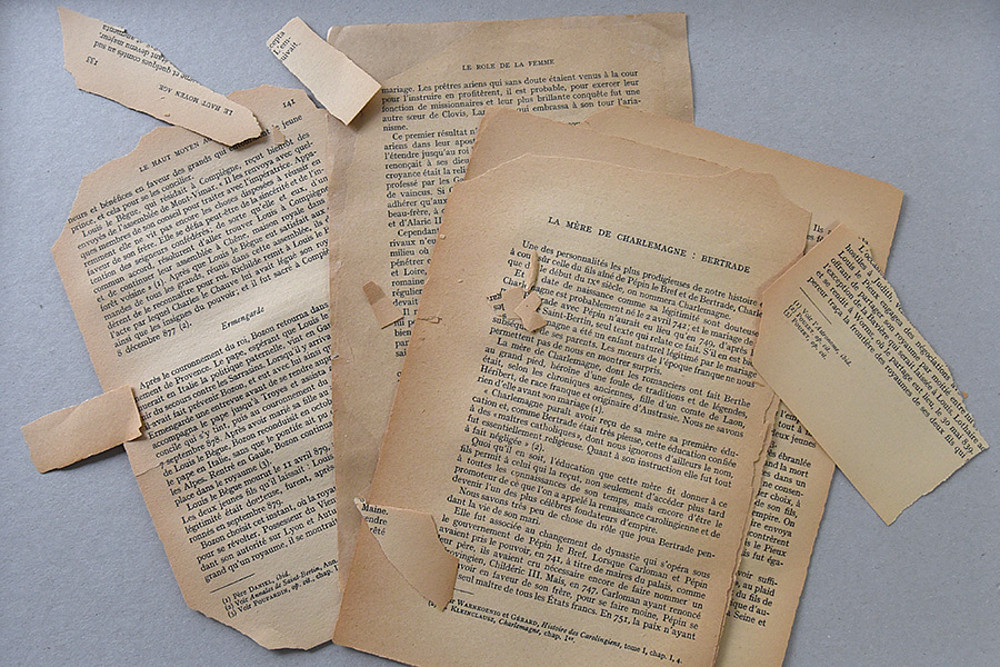
Ein durch Säureabbau beschädigtes Buch: Ein nanotechnologisches Verfahren der Uni Graz kann wertvolle Kulturgüter retten. Foto: Uni Graz/Schweiger

Ein durch Säureabbau beschädigtes Buch: Ein nanotechnologisches Verfahren der Uni Graz kann wertvolle Kulturgüter retten. Foto: Uni Graz/Schweiger

Nanotechnologisches Verfahren der Uni Graz bewahrt Papier vor Zerfall

Einem Großteil des kulturellen Erbes an Büchern, Dokumenten und Kunstwerken zwischen 1850 und 1950 droht der Zerfall. Der Grund: Das in diesem Zeitraum produzierte Papier zersetzt sich. Die Erfindung eines Forscherteams der Uni Graz kann den Verfall stoppen. Nun entwickelt es in Kooperation mit einer Restaurations-Expertin der Donau-Universität Krems und mit Unterstützung des Wissenschaftsministeriums eine Anlage, die schon bald die Kulturgüter großflächig und kostengünstig vor der Zerstörung retten wie auch reinigen soll.

„Eine Kombination aus Nanopartikeln aus Magnesium- und Calciumverbindungen mit einer aus einer Zellulose-Verbindung bestehenden Hülle durchdringt unter Druck das ganze Buch“, bringt Ao.Univ.-Prof.i.R. Dr. Volker Ribitsch das von ihm erfundene und von der Uni Graz patentierte Verfahren auf den Punkt. Sowohl gedruckte Buchstaben als auch Bilder bleiben unverändert. Da keine wässrigen Lösungsmittel verwendet werden, ist anschließend weder ein langwieriger noch kostspieliger Trockenprozess notwendig, erklärt der Chemiker an der Uni Graz.

Gemeinsam mit dr hab. Patricia Engel, Expertin für Konservierung und Restaurierung von Buch und Papier an der Donau-Universität Krems, bereitet Ribitsch das Verfahren für die großflächige Anwendung vor und arbeitet an der Entwicklung eines Gerätes. Das Ministerium für Wissenschaft, Forschung und Wirtschaft unterstützt die Entwicklung eines Prototypen im Rahmen der Förderschiene PRIZE mit 150.000 Euro. Läuft alles nach Plan, soll die erste Anlage bis zum kommenden Herbst fertiggestellt sein. „Es soll ein mobiles Gerät werden, das den Einsatz vor Ort ermöglicht und die Methode einfacher, nachhaltiger sowie günstiger gestaltet als andere“, schildert Volker Ribitsch.

Der Bedarf gibt den ForscherInnen recht: Mehr als 100 Jahre lang wurde ab der Mitte des 19. Jahrhunderts Alaun als Hilfsmittel in der westlichen Papierproduktion eingesetzt – mit Spätfolgen: Die chemische Verbindung zerfällt, eines der Zerfallsprodukte ist Schwefelsäure, die wiederum die Zellulose zerstört. Allein in österreichischen Archiven wartet Schätzungen zufolge ein Bestand von etwa 1,3 Millionen Exponaten auf eine baldige „Entsäuerung“, darunter wertvolle Bücher und unwiederbringbare historische Dokumente aus dem Ersten und Zweiten Weltkrieg. In ganz Europa dürften rund 40 Millionen Artefakte bedroht sein. Auch einzigartige auf Papier gemalte Kunstwerke sowie Objekte aus Holz können mit dem nanotechnologischen Verfahren für die Nachwelt bewahrt werden.

created by Andreas Schweiger

Related news

Studying at the University of Graz: How to enrol

Ready for a new chapter in your life with the start of your studies at the University of Graz in the winter semester 2026/27? Here you will find information on deadlines, admission procedures, registration, and everything else you need to successfully start your studies in the fall.

Interpreting data: Why studies sometimes get it wrong

Hilmar Brohmer and Ziva Korda from the Institute of Psychology, together with 500 international colleagues, have re-evaluated a hundred scientific publications and have often come to different conclusions.

Crystal-clear: AI method revolutionises solar observation

The Sun makes life on Earth possible. However, its magnetic fields can also cause massive disruption. This makes it all the more important to gain a better understanding of the processes taking place on our nearest star. A research team from the University of Graz and the High Altitude Observatory in Boulder (USA) has succeeded in doing just that. The astrophysicists have developed an AI-supported method that makes even the smallest structures on the Sun visible. The scientists are convinced that this will bring about a lasting change in solar observation and that the new method can be used for the planned European Solar Telescope.

Long Night of Research: How many languages are there in the world?

From a linguistic perspective, there are worlds of difference between Bern, Berlin and Vienna. A dialect impersonator will demonstrate live just how varied German can sound. How many languages are there in the world? What are their distinctive features? Which of these are spoken in Austria? These and other questions will be answered during the Long Night of Research at the University of Graz: on Friday, 24 April 2025, from 5 pm to 11 pm, in the University Library. Visitors can immerse themselves in the diversity of languages without travelling far by taking part in a quiz at the station.

Begin of page section:
Additional information:

University of Graz
Universitaetsplatz 3
8010 Graz
Austria
  • Contact
  • Web Editors
  • Moodle
  • UNIGRAZonline
  • Imprint
  • Data Protection Declaration
  • Accessibility Declaration
Weatherstation
Uni Graz

End of this page section. Go to overview of page sections

End of this page section. Go to overview of page sections

Begin of page section:

End of this page section. Go to overview of page sections