



Begin of page section:
Page sections:

  • Go to contents (Accesskey 1)
  • Go to position marker (Accesskey 2)
  • Go to main navigation (Accesskey 3)
  • Go to sub navigation (Accesskey 4)
  • Go to additional information (Accesskey 5)
  • Go to page settings (user/language) (Accesskey 8)
  • Go to search (Accesskey 9)

End of this page section. Go to overview of page sections

Begin of page section:
Page settings:

English en
Deutsch de
Search
Login

End of this page section. Go to overview of page sections

Begin of page section:
Search:

Search for details about Uni Graz
Close

End of this page section. Go to overview of page sections


Search

Begin of page section:
Main navigation:

Page navigation:

  • University

    University
    • About the University
    • Organisation
    • Faculties
    • Library
    • Working at University of Graz
    • Campus
    Developing solutions for the world of tomorrow - that is our mission. Our students and our researchers take on the great challenges of society and carry the knowledge out.
  • Research Profile

    Research Profile
    • Our Expertise
    • Research Questions
    • Research Portal
    • Promoting Research
    • Research Transfer
    • Ethics in Research
    • Commission for Scientific Integrity
    Scientific excellence and the courage to break new ground. Research at the University of Graz creates the foundations for making the future worth living.
  • Studies

    Studies
    • Prospective Students
    • Students
  • Community

    Community
    • International
    • Location
    • Research and Business
    • Alumni
    The University of Graz is a hub for international research and brings together scientists and business experts. Moreover, it fosters the exchange and cooperation in study and teaching.
Topics
  • Sustainable University
  • Researchers answer
  • Work for us
Close menu

End of this page section. Go to overview of page sections

Begin of page section:
You are here:

University of Graz News Quartier Leech bezogen

End of this page section. Go to overview of page sections

Monday, 07 October 2013

Quartier Leech bezogen
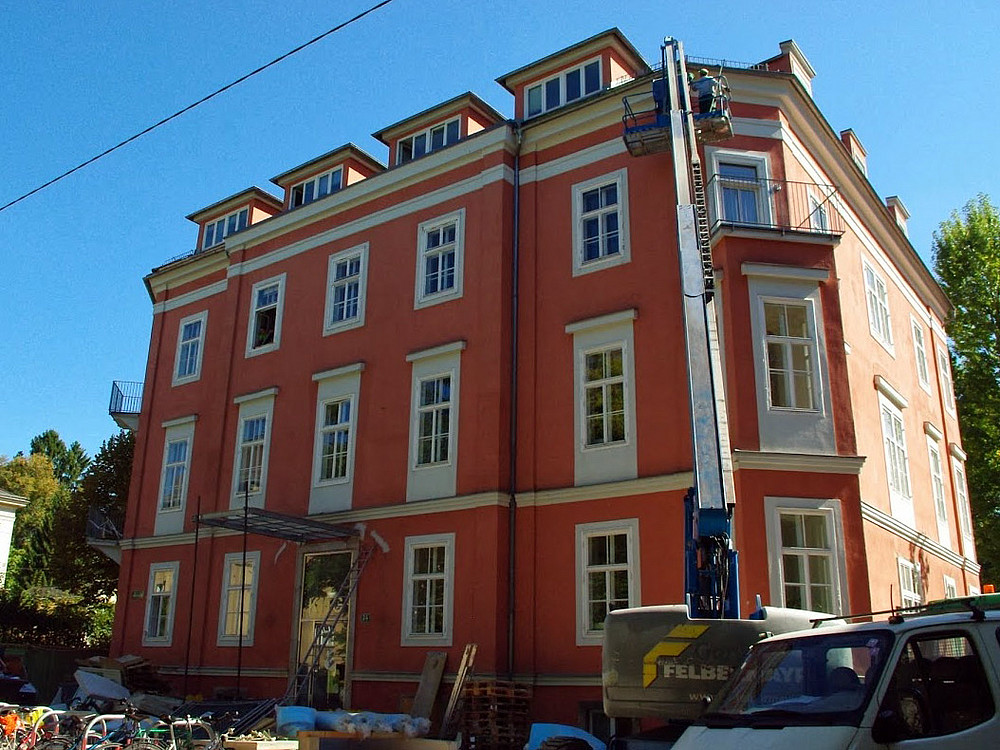
Nach großem Umbau nun wieder geöffnet: Das Quartier Leech als gemeinsames Heim von Afro-Asiatischem Institut und Katholischer Hochschulgemeind

Nach großem Umbau nun wieder geöffnet: das Quartier Leech als gemeinsames Heim von Afro-Asiatischem Institut und Katholischer Hochschulgemeinde (Foto: Sofia Pinaeva)

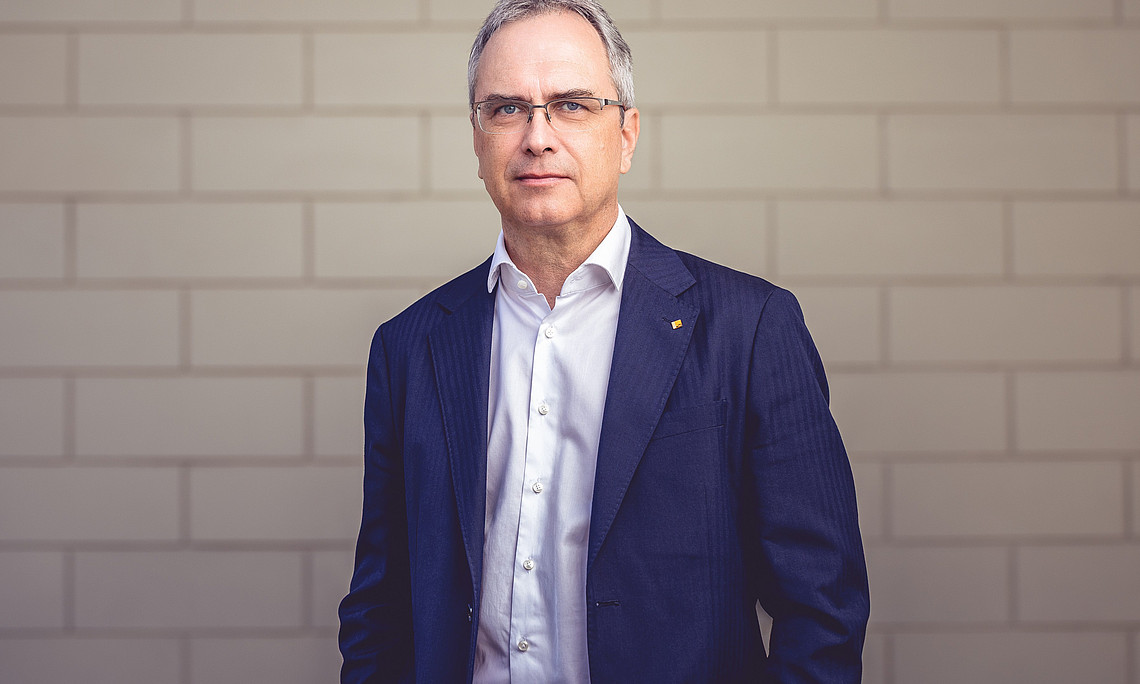
Heute Tag der offenen Tür im neuen Heim des Afro-Asiatischen Instituts und der Katholischen Hochschulgemeinde

Heute, Montag, um 11 Uhr öffnet das „Quartier Leech“ der Katholischen Hochschulgemeinde und des Afro-Asiatischen Institutes nach intensiven Umbauarbeiten wieder seine Pforten. Mit neuen Außenanlagen, die mit viel Grün das Uni-Viertel als Kommunikations- und Erholungsraum beleben sollen, Gastronomie, Veranstaltungs- und Büroräumen ist unweit des Campus ein neuer Ort des interkulturellen und (inter-)religiösen Gelingens entstanden. Außerdem bietet das Quartier Leech nun 170 Studierenden – 30 mehr als bisher – eine Wohngelegenheit. Ein Ensemble von fünf Gebäuden unterschiedlicher Epochen von der Gründerzeit bis in die sechziger Jahre des vorigen Jahrhunderts wurde vom Team des Grazer Büros bramberger architekten sensibel für heutige Nutzung und Funktionalität adaptiert.
Nach der feierlichen Eröffnung mit Diözesanbischof Egon Kapellari, Landeshauptmann Franz Voves und Bürgermeister Siegfried Nagl können die neuen Räumlichkeiten besichtigt werden. Um 18 Uhr findet in Gedenken an den im März dieses Jahres verstorbenen Künstler Gerhardt Moswitzer in der von ihm mitgestalteten Hauskapelle eine Messe statt. Um 19:30 Uhr wird in der QL-Galerie zur Ausstellung „TERRA INCOGNITa“ der aus Israel stammenden Künstlerin Daphna Weinstein eröffnet. Außerdem gibt es auf dem gesamten Gelände Fotoarbeiten der iranischen Künstlerin Maryam Mohammadi zu sehen.

created by Dagmar Eklaude

Related news

Complying with the norm: Why Do Standards Shape Our Lives, Elisabeth Staudegger?

Standards determine whether a sheet of paper fits in a printer or whether a charging plug can power multiple devices. These standards shape our everyday lives. But who actually sets these standards? Where are the weaknesses, and how could science help to improve them? Elisabeth Staudegger, Head of the ‘Law and IT’ Department at the Institute for Legal Foundations at the University of Graz, host the Academic Standards Day on 16 June. Here she relays how sciences can contribute to the topic of standardisation and reveals her personal favourite standard.

More body awareness than a culture war

In Italy, sex education lessons will in future only be permitted with parental consent, and will be banned entirely in nurseries and primary schools. At the same time, Pride Month highlights why knowledge about the body, relationships, boundaries and diversity is important for young people. A study by the University of Graz shows how important knowledge about the body, contraception, relationship skills and protection against violence is

Will Austria win the World Cup? Mathematician reveals calculation method

Michael Fischer uses the football tournament as a practical example for highschool lessons.

Survival strategies: How plants respond to drought

According to Geosphere Austria, this spring was the driest in Austria since records began around 170 years ago. The low rainfall put particular pressure on the agricultural sector. And climate change is set to make the situation even worse in the coming decades. We asked Johannes Liesche, a professor at the Department of Biology at the University of Graz, how plants react to water shortages and how they survive periods of drought.

Begin of page section:
Additional information:

University of Graz
Universitaetsplatz 3
8010 Graz
Austria
  • Contact
  • Web Editors
  • Moodle
  • UNIGRAZonline
  • Imprint
  • Data Protection Declaration
  • Accessibility Declaration
Weatherstation
Uni Graz

End of this page section. Go to overview of page sections

End of this page section. Go to overview of page sections

Begin of page section:

End of this page section. Go to overview of page sections

