Begin of page section:
Page sections:

  • Go to contents (Accesskey 1)
  • Go to position marker (Accesskey 2)
  • Go to main navigation (Accesskey 3)
  • Go to sub navigation (Accesskey 4)
  • Go to additional information (Accesskey 5)
  • Go to page settings (user/language) (Accesskey 8)
  • Go to search (Accesskey 9)

End of this page section. Go to overview of page sections

Begin of page section:
Page settings:

English en
Deutsch de
Search
Login

End of this page section. Go to overview of page sections

Begin of page section:
Search:

Search for details about Uni Graz
Close

End of this page section. Go to overview of page sections


Search

Begin of page section:
Main navigation:

Page navigation:

  • University

    University
    • About the University
    • Organisation
    • Faculties
    • Library
    • Working at University of Graz
    • Campus
    Developing solutions for the world of tomorrow - that is our mission. Our students and our researchers take on the great challenges of society and carry the knowledge out.
  • Research Profile

    Research Profile
    • Our Expertise
    • Research Questions
    • Research Portal
    • Promoting Research
    • Research Transfer
    • Ethics in Research
    Scientific excellence and the courage to break new ground. Research at the University of Graz creates the foundations for making the future worth living.
  • Studies

    Studies
    • Prospective Students
    • Students
  • Community

    Community
    • International
    • Location
    • Research and Business
    • Alumni
    The University of Graz is a hub for international research and brings together scientists and business experts. Moreover, it fosters the exchange and cooperation in study and teaching.
  • Spotlight
Topics
  • Sustainable University
  • Researchers answer
  • Work for us
Close menu

End of this page section. Go to overview of page sections

Begin of page section:
You are here:

University of Graz News Putins Kult

End of this page section. Go to overview of page sections

Thursday, 03 March 2022

Putins Kult

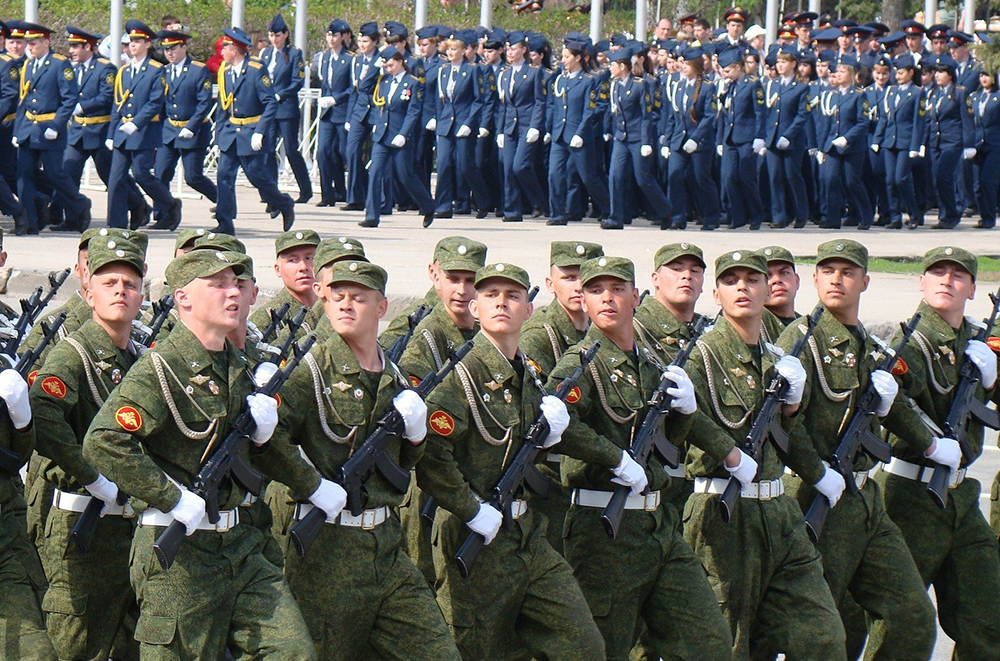
Die heutigen russischen Soldaten werden als Nachfolger der Helden des Zweiten Weltkrieges inszeniert. Foto: pixabay

Die heutigen russischen Soldaten werden als Nachfolger der Helden des Zweiten Weltkrieges inszeniert. Foto: pixabay

Russlands Heldenverehrung und Ukraine-Krieg: Miriam Finkelstein vom Institut für Slawistik über Zusammenhänge

Was haben die Tradition der Heldenverehrung, die in Russland stark ausgeprägt ist, und der Ukraine-Krieg miteinander zu tun? Heute wird insbesondere die russische Armee als heldenhaft verehrt, meint Miriam Finkelstein. Die Universitätsassistentin im Bereich Literatur- und Kulturwissenschaft am Institut für Slawistik an der Universität Graz beschäftigt sich mit der russischen Heroismuskultur:
 
„Vladimir Putin hat den Kult der Helden des Zweiten Weltkriegs in den vergangenen 20 Jahren intensiviert. Diese Verehrung zeigt sich zum Beispiel bei der alljährlichen Militärparade am 9. Mai, mit der des Sieges über Nazi-Deutschland gedacht wird. Daran knüpft die Inszenierung der heutigen russischen Soldaten an, die als Nachfolger der damaligen Kriegshelden dargestellt werden. Sie sollen die gleiche Hochachtung und den gleichen Respekt genießen wie ihre Vorgänger. Gleichzeitig zählt das Wort ‚Faschist‘ im russischen Sprachgebrauch zu den schlimmsten Schimpfwörtern. An diese Inszenierungen und an diese Rhetorik, die der russischen Öffentlichkeit seit Jahrzehnten vertraut ist, knüpft Putin bei seiner Wortwahl an, die er im Krieg gegen die Ukraine benutzt. Er verunglimpft die ukrainische Regierung und zahlreiche UkrainerInnen als ‚Faschisten‘ und begründet den Angriff mit der ‚Entnazifizierung‘ und ‚Demilitarisierung‘ des Landes.“


created by Andreas Schweiger

Related news

Cosmetics in the environment: University of Graz proves danger to ants

Titanium dioxide, which is found in cosmetics, for example, is increasingly entering the environment in the form of nanoparticles. This could also put insects at risk. If ants ingest the substance in combination with the pesticide glyphosate, it disturbs the development of their offspring. Scientists at the University of Graz are drawing attention to the negative consequences of this toxic cocktail.

How are tech companies changing democracy? Uni Graz designs exhibition for schools

Filtered information, conspiracy theories, fake news – certain groups and corporations are using social media and algorithms to try to influence public opinion in their favour. Their goal: to weaken fundamental rights and diversity of opinion and seize power. In a new exhibition, researchers at the University of Graz are working with pupils to explore the impact of social media and AI on democracy. In accompanying workshops, the scientists want to encourage young people to develop their own ideas for a socially and ecologically viable future and to actively help shape it. The exhibition, designed as a travelling exhibition for schools, will open on 9 March 2026 at the Dreihackengasse Gymnasium in Graz.

Step by step: What motivates Mireille van Poppel as a scientist and vice-rector

Improving people's health and eliminating inequalities: Mireille van Poppel pursues these goals both as a public health researcher and as vice-rector for Internationalisation and Equality. In both roles, she pays particular attention to individual needs.

Master's degree in psychotherapy in Graz: registration opens in March

Graz is becoming a hotspot for psychotherapy: from 2026, the University of Graz and the Medical University of Graz will jointly offer the new master's programme. Registration for the admission procedure for the 140 study places will start in March.

Begin of page section:
Additional information:

University of Graz
Universitaetsplatz 3
8010 Graz
Austria
  • Contact
  • Web Editors
  • Moodle
  • UNIGRAZonline
  • Imprint
  • Data Protection Declaration
  • Accessibility Declaration
Weatherstation
Uni Graz

End of this page section. Go to overview of page sections

End of this page section. Go to overview of page sections

Begin of page section:

End of this page section. Go to overview of page sections