



Begin of page section:
Page sections:

  • Go to contents (Accesskey 1)
  • Go to position marker (Accesskey 2)
  • Go to main navigation (Accesskey 3)
  • Go to sub navigation (Accesskey 4)
  • Go to additional information (Accesskey 5)
  • Go to page settings (user/language) (Accesskey 8)
  • Go to search (Accesskey 9)

End of this page section. Go to overview of page sections

Begin of page section:
Page settings:

English en
Deutsch de
Search
Login

End of this page section. Go to overview of page sections

Begin of page section:
Search:

Search for details about Uni Graz
Close

End of this page section. Go to overview of page sections


Search

Begin of page section:
Main navigation:

Page navigation:

  • University

    University
    • About the University
    • Organisation
    • Faculties
    • Library
    • Working at University of Graz
    • Campus
    Developing solutions for the world of tomorrow - that is our mission. Our students and our researchers take on the great challenges of society and carry the knowledge out.
  • Research Profile

    Research Profile
    • Our Expertise
    • Research Questions
    • Research Portal
    • Promoting Research
    • Research Transfer
    • Ethics in Research
    • Commission for Scientific Integrity
    Scientific excellence and the courage to break new ground. Research at the University of Graz creates the foundations for making the future worth living.
  • Studies

    Studies
    • Prospective Students
    • Students
  • Community

    Community
    • International
    • Location
    • Research and Business
    • Alumni
    The University of Graz is a hub for international research and brings together scientists and business experts. Moreover, it fosters the exchange and cooperation in study and teaching.
  • Spotlight
Topics
  • Sustainable University
  • Researchers answer
  • Work for us
Close menu

End of this page section. Go to overview of page sections

Begin of page section:
You are here:

University of Graz News Plagiat im Fokus

End of this page section. Go to overview of page sections

Monday, 28 October 2013

Plagiat im Fokus

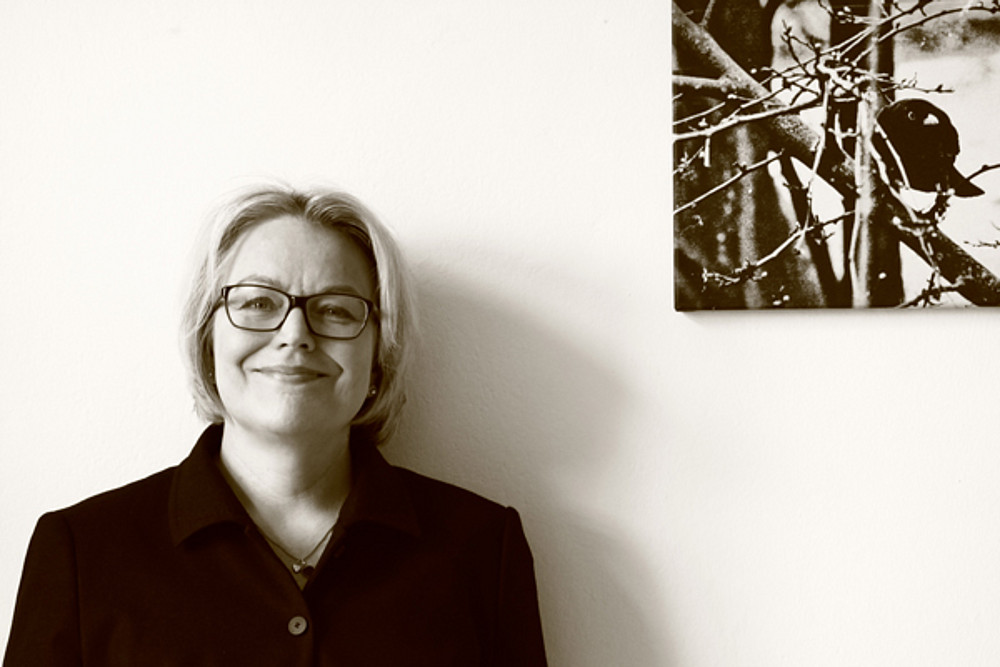
Die Literaturprofessorin Anne-Kathrin Reulecke lehrt am Institut für Germanistik. Foto: Schomberg.

Die Literaturprofessorin Anne-Kathrin Reulecke lehrt am Institut für Germanistik. Foto: Schomberg.

Anne-Kathrin Reulecke ist Professorin am Institut für Germanistik

Hamburg – Berlin – USA – Graz: Das sind die Forschungs- und Lehr-Stationen von Frau Univ.-Prof. Dr. Anne-Kathrin Reulecke der vergangenen Jahre. Seit 2012 ist die gebürtige Deutsche – sie kommt aus der Umgebung von Hannover – am Institut für Germanistik der Karl-Franzens-Universität Graz tätig. Im April letzten Jahres hat sie hier die Universitätsprofessur für Neuere deutschsprachige Literatur mit dem Schwerpunkt „Literaturtheorie und Geschichte und Theorie der literarischen Ästhetik“ angetreten. 

„Gerade dieser besondere Fokus der Professur hat mich gereizt, an die Karl-Franzens-Universität kommen“, erzählt Reulecke, die auch noch einen Ruf an die Uni Siegen hatte, sich aber letztlich „auch der interessanten Stadt und ihrer Umgebung wegen“ für Graz entschieden hat. Dazu gehören auch die literarischen Traditionen der Stadt, wie das legendäre Forum Stadtpark und die Zeitschrift Manuskripte oder die Reihe Dossier. Denn die hier gelebte Gegenwartsliteratur ist ein Forschungsgebiet der Professorin. 


Gegenwartsliteratur

„Gemeinsam mit dem Grazer Literaturhaus plant unser Institut im Frühjahr 2014 die Veranstaltungsreihe ‚Zur Aktualität der Gegenwartsliteratur: Grenzen des Humanen‘. Dort wollen wir beleuchten, wie die Errungenschaften der modernen Biotechnologien und der Medizin unser Leben tangieren und wie sie in der zeitgenössischen Literatur von AutorInnen, wie David Wagner, Arno Geiger, Juli Zeh oder Ulrike Draesner, verhandelt werden“, erklärt sie. 

„Meine Arbeit bewegt sich stets zwischen Philologie und Kulturwissenschaften“, führt Reulecke aus. Neben dem Thema „Literature and Science“ sind die Arbeitsschwerpunkte breit gefächert: Medien und Intermedialität in der Literatur des 18. bis 21. Jahrhunderts – „meine Doktorarbeit habe ich zum Verhältnis von Literatur und bildender Kunst geschrieben“ –,Visualität und Blindheit in Literatur und Film – „ein Forschungsgebiet, das ich aus Berlin nach Graz mitgenommen habe“. Ihre aktuellen Lehrveranstaltungen behandeln den Realismus des 19. Jahrhunderts und Kafkas Tiererzählungen, aber auch Theorien der Autorschaft, der Fälschung und des Plagiats – das ist auch das große Forschungsgebiet ihrer Habilitation.

„Mich beschäftigen hierbei die Fragen: Wann taucht das Plagiat in unserer Kulturgeschichte als Figur auf, was unterscheidet eigentlich Fälschung und Plagiat, und was sagen diese beiden ‚Störfälle’ über die ‚normale’ Konstitution von Wissen aus.“ Die Antworten liefert die Professorin in einem neuen Band, der Ende des Jahres erscheint.


created by Konstantinos Tzivanopoulos

Related news

Higher Education Strategy 2040: Austria’s universities on course for the future

Austria has 77 higher education institutions, which is above the EU average – but does this really make sense? The new Higher Education Strategy 2040 focuses on cooperation rather than mergers. As one of the six largest universities in Austria, the University of Graz plays a central role in this.

Climate research in Greenland: Old data provides new insights

The polar explorer and University of Graz professor Alfred Wegener left behind a unique collection of climate data from Greenland. A research team from the University of Graz is now analysing this 100-year-old treasure trove of data and comparing it with current measurements.

Diversity in nature and science: How we talk about plants and each other

Ginkgo, kiwi, hemp: they exist as male and female plants. Anyone who paid attention in biology class will confirm this. But is this categorisation, established by Carl von Linné almost 300 years ago, still valid today? An interdisciplinary team at the University of Graz is questioning these attributions and using this as a starting point to provide food for thought for gender-sensitive interaction between students, scientific and teaching staff.

Around the world in eight stops: the Long Night of Research at the University of Graz

On 24 April from 5 pm, you can take a short trip around the globe at the University of Graz, discovering pecularities of foreign countries or new local features in the entrance hall of the University Library. The itinerary takes you through introduced animal species, political attitudes and the omnipotence of algorithms. There will also be a programme in the historic reading hall, as well as at the UniGraz@Museum and the University Archive.

Begin of page section:
Additional information:

University of Graz
Universitaetsplatz 3
8010 Graz
Austria
  • Contact
  • Web Editors
  • Moodle
  • UNIGRAZonline
  • Imprint
  • Data Protection Declaration
  • Accessibility Declaration
Weatherstation
Uni Graz

End of this page section. Go to overview of page sections

End of this page section. Go to overview of page sections

Begin of page section:

End of this page section. Go to overview of page sections

