Begin of page section:
Page sections:

  • Go to contents (Accesskey 1)
  • Go to position marker (Accesskey 2)
  • Go to main navigation (Accesskey 3)
  • Go to sub navigation (Accesskey 4)
  • Go to additional information (Accesskey 5)
  • Go to page settings (user/language) (Accesskey 8)
  • Go to search (Accesskey 9)

End of this page section. Go to overview of page sections

Begin of page section:
Page settings:

English en
Deutsch de
Search
Login

End of this page section. Go to overview of page sections

Begin of page section:
Search:

Search for details about Uni Graz
Close

End of this page section. Go to overview of page sections


Search

Begin of page section:
Main navigation:

Page navigation:

  • University

    University
    • About the University
    • Organisation
    • Faculties
    • Library
    • Working at University of Graz
    • Campus
    Developing solutions for the world of tomorrow - that is our mission. Our students and our researchers take on the great challenges of society and carry the knowledge out.
  • Research Profile

    Research Profile
    • Our Expertise
    • Research Questions
    • Research Portal
    • Promoting Research
    • Research Transfer
    • Ethics in Research
    • Commission for Scientific Integrity
    Scientific excellence and the courage to break new ground. Research at the University of Graz creates the foundations for making the future worth living.
  • Studies

    Studies
    • Prospective Students
    • Students
    • Registration for Study Programme (Winter semester 2026/27)
  • Community

    Community
    • International
    • Location
    • Research and Business
    • Alumni
    The University of Graz is a hub for international research and brings together scientists and business experts. Moreover, it fosters the exchange and cooperation in study and teaching.
Topics
  • Sustainable University
  • Researchers answer
  • Work for us
Close menu

End of this page section. Go to overview of page sections

Begin of page section:
You are here:

University of Graz News Pionierarbeit

End of this page section. Go to overview of page sections

Wednesday, 10 January 2018

Pionierarbeit

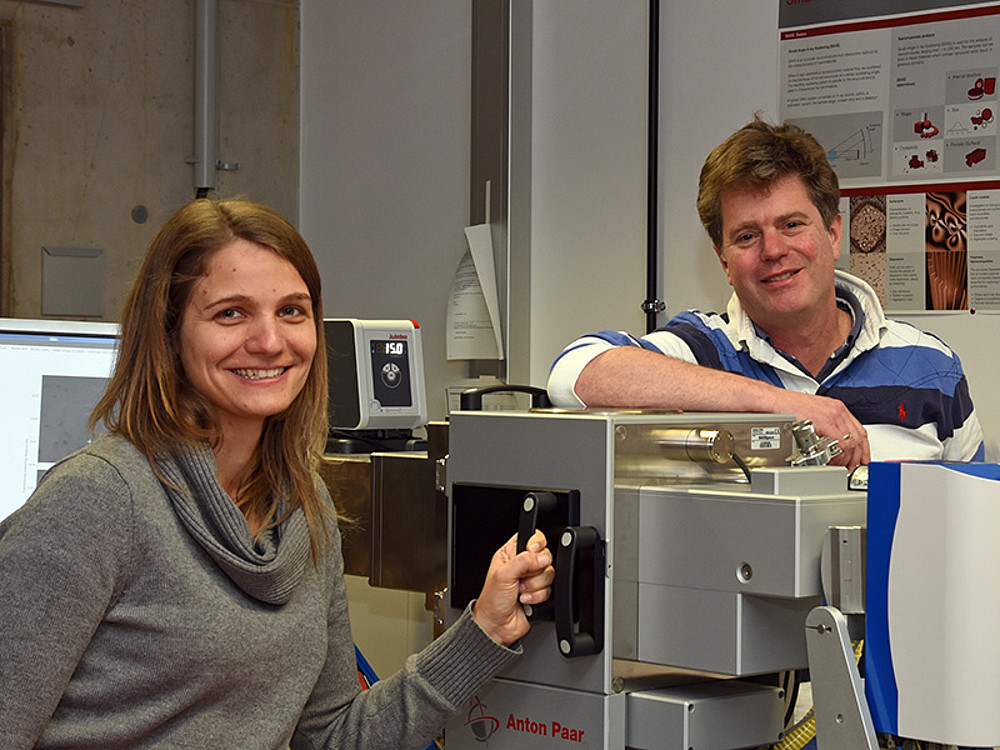
Barbara Eicher und Georg Pabst haben eine Methode zum Nachbau von Zellmembranen gefunden. Foto: Uni Graz/Eklaude ©Uni Graz/Eklaude
©Uni Graz/Eklaude

Barbara Eicher und Georg Pabst haben eine Methode zum Nachbau von Zellmembranen gefunden. Foto: Uni Graz/Eklaude
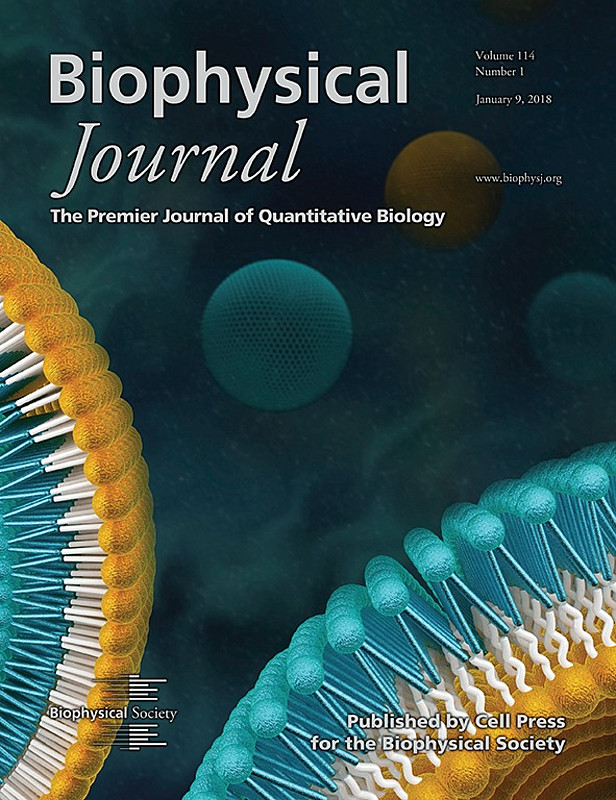
Die Forschungsergebnisse sind in der aktuellen Ausgabe des Biophysical Journal erschienen.
Die Forschungsergebnisse sind in der aktuellen Ausgabe des Biophysical Journal erschienen.

Team der Uni Graz gelingt naturnaher Nachbau von Zellmembranen

Menschliche Zellen – aber auch die von verschiedenen Krankheitserregern – sind von Hüllen umgeben, denen eine wesentliche Rolle beim Weitertransport von Informationen oder Stoffen zukommt. Wie diese Vorgänge genau vonstattengehen und warum die zweischichtigen Membranen so komplex aufgebaut sind, konnte bislang noch nicht restlos geklärt werden. Dr. Barbara Eicher und Assoz. Prof. Dr. Georg Pabst vom Institut für Molekulare Biowissenschaften der Karl-Franzens-Universität Graz ist es mit einem internationalen Team nun gelungen, die Zellhüllen wesentlich naturnaher nachzubauen, um sie genauer erforschen zu können. Damit eröffnen sich zahlreichen Bereichen – unter anderem der Entwicklung von Medikamenten – neue Dimensionen. Die Forschungsergebnisse wurden soeben im „Biophysical Journal“ publiziert.

Schon eine einzige Art von Lipiden – also Fettbausteinen – kann eine Zellmembran bilden. Dennoch verwendet die Natur rund tausend verschiedene dafür und ordnet sie in zwei Schichten asymmetrisch an, obwohl die Bestandteile von sich aus immer einen Ausgleich anstreben. Eigene Proteine müssen die Lipide ständig auf die „richtige“ Seite schaufeln. „Um diesen ungleichen Aufbau aufrecht erhalten zu können, ist sehr viel chemische Energie nötig. Uns treibt die Frage an, warum die Hüllen so komplex gestaltet sind“, schildert Pabst. Bislang war es unmöglich, im Labor asymmetrische Zellmembranen herzustellen. Eine Methode, dank der das funktioniert, hat der Biophysiker nun in Zusammenarbeit mit Grazer KollegInnen sowie ForscherInnen aus den USA, Kanada und Deutschland gefunden. „Wir haben ein wesentliches Lipid auf die innere Seite der Zellmembran gesetzt und festgestellt, dass in dieser Konstellation die beiden Schichten auch miteinander kommunizieren“, so Pabst. Das ist wichtig, weil einerseits Signale von außen ans Innere der Zelle weitergegeben werden sollen, andererseits auch ein Austausch von Stoffen stattfinden muss – wenn etwa Medikamente an ihr Ziel gelangen sollen.

Mit dem Modell, das nach und nach erweitert werden soll, können ForscherInnen nun die Prozesse an der Zellmembran und die Funktionen der vielen Komponenten untersuchen. „Wir betreten hier völliges wissenschaftliches Neuland“, betont Pabst. Weltweit arbeitet derzeit nur ein knappes Dutzend Personen mit künstlichen asymmetrischen Membranen. Die Erkenntnisse sind aber für viele Bereiche relevant, allen voran für die Entwicklung von neuen Wirkstoffen für Medikamente, die über Zellmembranen wirken. Das können etwa Mittel gegen Krebs sein oder solche, die die Zellhüllen von krankheitserregenden Bakterien zerstören. „Darüber hinaus könnten unsere Forschungen neue Wege für Drug-Delivery-Systeme auftun oder in fernerer Zukunft sogar technologisch genutzt werden, zum Beispiel für Bio-Sensoren“, führt der Wissenschafter aus.

Publikation:
Barbara Eicher, Drew Marquardt, Frederick A. Heberle, Ilse Letofky-Papst, Gerald N. Rechberger, Marie-Sousai Appavou, John Katsaras, and Georg Pabst. Instrinsic Curvature-Mediated Transbilayer Coupling in Asymmetric Lipid Vesicles, Biophysical Journal, 114 (2018)

created by Dagmar Eklaude

Related news

When stress melts away in your mouth: nicotine pouches are widespread among Styrian students

Sociologists at the University of Graz, in collaboration with VIVID – the Centre for Addiction Prevention, have carried out a survey involving more than 600 participants. Around a quarter of them use these products. The ability to use them discreetly and flexibly is a key motivation.

Desert sand, microplastics, cancer cells: David Clases awarded ERC grant for analytical method

Nanoparticles trapped in polar ice can reveal a great deal about the climate 100,000 years ago. Chemist David Clases is developing unique methods to analyse them in detail. He will now adapt these methods for use with larger particles in order to glean even more information about Earth’s history. The method can be used for a wide range of other purposes – for example, in medical diagnostics or the investigation of environmental pollution. Clases has been awarded a Proof-of-Concept Grant by the European Research Council (ERC) for this work.

Staying fit during the holidays: summer sports on the University of Graz campus

The Kleeblattlauf is not the end of the fitness term. Following last year’s successful launch, the University of Graz is once again offering summer sports on campus this year. From 30 June to 16 July 2026, there will be a free exercise programme in the open air. On the shady Südwiese (between the main building and Universitätsplatz 2), anyone interested can get in shape in the afternoons with body workouts, fascia training and yoga.

Getting even hotter: Researchers predict global warming of 1.7 degrees by 2027

While Europe is currently sweltering in the heat, global temperatures are also rising towards concerning record levels. In 2026, Earth’s surface air temperature is expected to reach 1.62 degrees, and in 2027 even 1.71 degrees Celsius above pre-industrial levels. The long-term temperature rise – an average over a 20-year period – is predicted to exceed the 1.5-degree threshold of the Paris Agreement as of 2026 already. For the first time, researchers at the University of Graz have been able to make such a forecast so far in advance. The intensifying El Niño climate event favors forecast skill and thereby facilitates a reliable computation.

Begin of page section:
Additional information:

University of Graz
Universitaetsplatz 3
8010 Graz
Austria
  • Contact
  • Web Editors
  • Moodle
  • UNIGRAZonline
  • Imprint
  • Data Protection Declaration
  • Accessibility Declaration
Weatherstation
Uni Graz

End of this page section. Go to overview of page sections

End of this page section. Go to overview of page sections

Begin of page section:

End of this page section. Go to overview of page sections