



Begin of page section:
Page sections:

  • Go to contents (Accesskey 1)
  • Go to position marker (Accesskey 2)
  • Go to main navigation (Accesskey 3)
  • Go to sub navigation (Accesskey 4)
  • Go to additional information (Accesskey 5)
  • Go to page settings (user/language) (Accesskey 8)
  • Go to search (Accesskey 9)

End of this page section. Go to overview of page sections

Begin of page section:
Page settings:

English en
Deutsch de
Search
Login

End of this page section. Go to overview of page sections

Begin of page section:
Search:

Search for details about Uni Graz
Close

End of this page section. Go to overview of page sections


Search

Begin of page section:
Main navigation:

Page navigation:

  • University

    University
    • About the University
    • Organisation
    • Faculties
    • Library
    • Working at University of Graz
    • Campus
    Developing solutions for the world of tomorrow - that is our mission. Our students and our researchers take on the great challenges of society and carry the knowledge out.
  • Research Profile

    Research Profile
    • Our Expertise
    • Research Questions
    • Research Portal
    • Promoting Research
    • Research Transfer
    • Ethics in Research
    Scientific excellence and the courage to break new ground. Research at the University of Graz creates the foundations for making the future worth living.
  • Studies

    Studies
    • Prospective Students
    • Students
  • Community

    Community
    • International
    • Location
    • Research and Business
    • Alumni
    The University of Graz is a hub for international research and brings together scientists and business experts. Moreover, it fosters the exchange and cooperation in study and teaching.
  • Spotlight
Topics
  • StudiGPT is here! Try it out!
  • Sustainable University
  • Researchers answer
  • Work for us
Close menu

End of this page section. Go to overview of page sections

Begin of page section:
You are here:

University of Graz News Sebastian Preissl researches mechanisms of cardiovascular diseases

End of this page section. Go to overview of page sections

Friday, 31 October 2025

Sebastian Preissl researches mechanisms of cardiovascular diseases

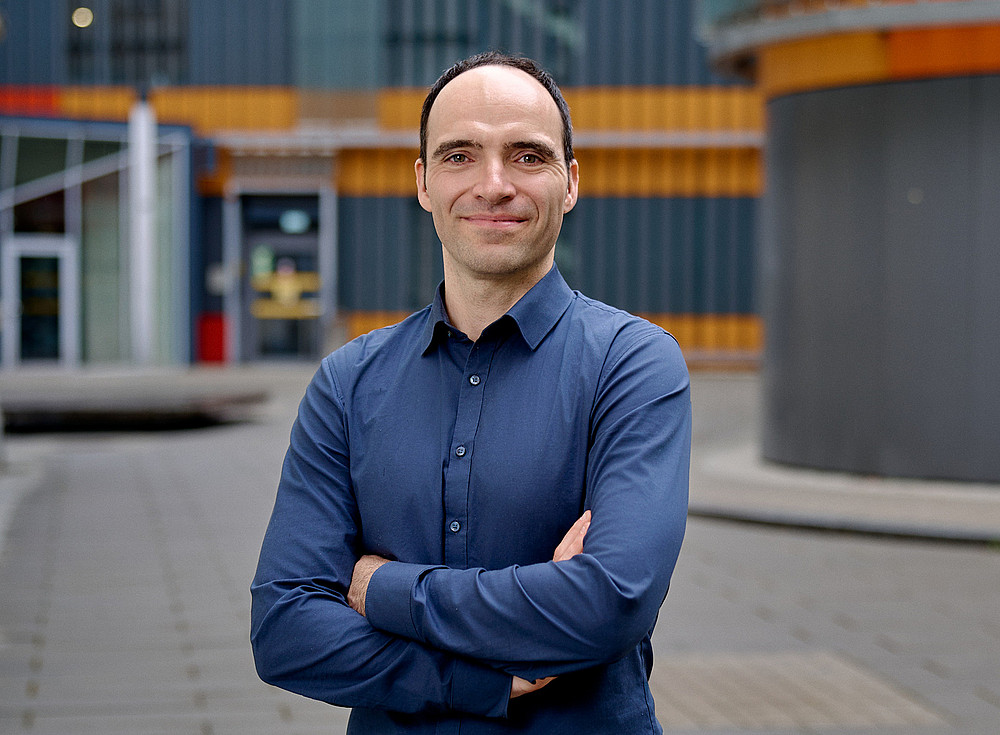
Sebastian Preissl with arms crossed, chest portrait, in the background the Centre for Molecular Biosciences at the University of Graz ©University of Graz / wildundwunderbar

Sebastian Preissl is researching how errors in gene activation can contribute to the development of diseases. Photo: University of Graz / wildundwunderbar

They are among the most common causes of death worldwide: cardiovascular diseases. Both genetic factors and lifestyle can be responsible for changes in the cells of the heart, thereby impairing the function of the organ. Sebastian Preissl, who has been Professor of Pharmacology and Toxicology at the University of Graz for a year, is researching how molecular mechanisms alter gene activity and what role this plays in the development of diseases.


What processes cause heart cells to change in the course of a disease, ultimately leading to a loss of organ function? How could this malformation be stopped or even reversed? Sebastian Preissl is seeking answers to these and similar questions about the development of diseases, focusing his attention on epigenetics and the interaction of different cells. Epigenetics describes changes in gene activity influenced by environmental factors such as nutrition, lifestyle or stress. Preissl is the head of the division Pharmacology and Toxicology at the Department of Pharmaceutical Sciences at the University of Graz.

“Tissues such as the heart consist of many different cell types with different functions. Epigenetic mechanisms, in interaction with other molecular processes, control which genes in the DNA are read, i.e. activated, in the different cell types,” explains Preissl. He is researching how this reading is regulated and which changes contribute to genes being activated too strongly or too weakly, leading to malfunctions. The aim is to better understand the molecular mechanisms involved in the development of diseases in order to develop innovative approaches for prevention and therapy.

“We are also interested in the links between cardiovascular diseases and metabolic disorders such as diabetes or the natural ageing process,” reports Preissl. “In addition, we are investigating how the interaction between heart muscle cells and other cell types in the tissue contributes to the development of disease and how this interaction changes as a result,” adds the pharmacologist. In doing so, he always keeps an eye on possible differences between the sexes.

Preissl and his team are also focusing on hereditary polycystic kidney disease, which affects over twelve million people, and on the development of skin macrophages before and after birth. These immune cells perform numerous tasks, from defending against pathogens to repairing tissue.

The aim of basic research is to gain insights that open up new possibilities for prevention, diagnosis and therapy. Sebastian Preissl studied pharmacy and obtained his doctorate at the University of Freiburg in Germany.

After six and a half years at the Ludwig Institute for Cancer Research and the University of California San Diego, both in La Jolla/USA, he took up a temporary professorship at the Institute of Experimental and Clinical Pharmacology and Toxicology at the University of Freiburg in 2021. Since October 2024, he has been Professor of Pharmacology and Toxicology at the University of Graz. He continues to lead a research group at the University of Freiburg. In Graz, Preissl appreciates the excellent research environment. He also enjoys the quality of life, which is similar in many ways to that in the university city of Freiburg.


Anyone interested in the chemical processes and molecular mechanisms in the body, as well as the mode of action and manufacture of medicines, can study Pharmaceutical Sciences at the University of Graz.

created by Gudrun Pichler

Related news

Consequences of climate change for Austria's water: Uni Graz is partner in new study

It remains to be seen what goals the international community will agree on at the current UN Climate Change Conference in Brazil. One thing is certain: global warming continues to increase. A large-scale study commissioned by the Federal Ministry of Agriculture and Forestry, Climate and Environmental Protection, Regions and Water Management (BMLUK) launched today is investigating what this means for our water. One of the project partners is the University of Graz. Wolfgang Schöner and his team from the Department of Geography and Regional Science are contributing the latest findings on the influence of ice and snow on the water balance.

Constructively creative: Graz universities honour their inventors

No fewer than 186 patents have been registered by researchers at Graz universities in the last two years. On 11 November, the most innovative of them were honoured at the Congress.

Minister Eva-Maria Holzleitner visits the University of Graz

Eva-Maria Holzleitner, the Federal Minister for Women, Science and Research, visited the University of Graz on 11 November with great interest and in a very good atmosphere. Her discussions with Rector Peter Riedler, members of the Rectorate and students focused on current challenges in the area of university funding, the training of elementary school teachers and issues relating to the organisation of teacher training courses.

Bio-plastics and baroque theatre: Awards for two researchers from the University of Graz

Chemist Katalin Barta Weissert received this year's "Forschungspreis des Landes Steiermark", while Germanist Christian Neuhuber received the "Erzherzog-Johann-Forschungspreis". The awards are endowed with 12,000 euros each and are presented for outstanding achievements in the field of science and research. Provincial Councillor Willibald Ehrenhöfer presented the awards on 7 November 2025 in the White Hall of Graz Castle.

Begin of page section:
Additional information:

University of Graz
Universitaetsplatz 3
8010 Graz
Austria
  • Contact
  • Web Editors
  • Moodle
  • UNIGRAZonline
  • Imprint
  • Data Protection Declaration
  • Accessibility Declaration
Weatherstation
Uni Graz

End of this page section. Go to overview of page sections

End of this page section. Go to overview of page sections

Begin of page section:

End of this page section. Go to overview of page sections