Begin of page section:
Page sections:

  • Go to contents (Accesskey 1)
  • Go to position marker (Accesskey 2)
  • Go to main navigation (Accesskey 3)
  • Go to sub navigation (Accesskey 4)
  • Go to additional information (Accesskey 5)
  • Go to page settings (user/language) (Accesskey 8)
  • Go to search (Accesskey 9)

End of this page section. Go to overview of page sections

Begin of page section:
Page settings:

English en
Deutsch de
Search
Login

End of this page section. Go to overview of page sections

Begin of page section:
Search:

Search for details about Uni Graz
Close

End of this page section. Go to overview of page sections


Search

Begin of page section:
Main navigation:

Page navigation:

  • University

    University
    • About the University
    • Organisation
    • Faculties
    • Library
    • Working at University of Graz
    • Campus
    Developing solutions for the world of tomorrow - that is our mission. Our students and our researchers take on the great challenges of society and carry the knowledge out.
  • Research Profile

    Research Profile
    • Our Expertise
    • Research Questions
    • Research Portal
    • Promoting Research
    • Research Transfer
    • Ethics in Research
    Scientific excellence and the courage to break new ground. Research at the University of Graz creates the foundations for making the future worth living.
  • Studies

    Studies
    • Prospective Students
    • Students
  • Community

    Community
    • International
    • Location
    • Research and Business
    • Alumni
    The University of Graz is a hub for international research and brings together scientists and business experts. Moreover, it fosters the exchange and cooperation in study and teaching.
  • Spotlight
Topics
  • Sustainable University
  • Researchers answer
  • Work for us
Close menu

End of this page section. Go to overview of page sections

Begin of page section:
You are here:

University of Graz News Neues Feature

End of this page section. Go to overview of page sections

Thursday, 23 June 2022

Neues Feature

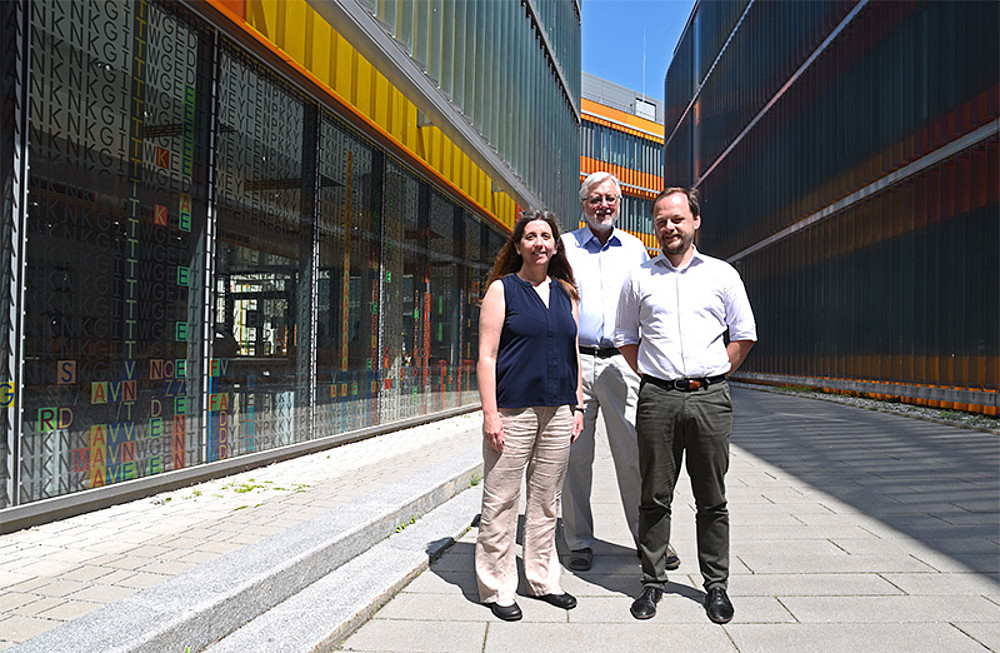
Monika Oberer, Rudolf Zechner und Peter Hofer (v.l.) haben gemeinsam mit ForscherInnen der Harvard Medical School herausgefunden, dass das Enzym ATGL Fett nicht nur spalten, sondern auch wieder verbinden kann. Foto: Uni Graz/Leljak.

Monika Oberer, Rudolf Zechner und Peter Hofer (v.l.) haben gemeinsam mit ForscherInnen der Harvard Medical School herausgefunden, dass das Enzym ATGL Fett nicht nur spalten, sondern auch wieder verbinden kann. Foto: Uni Graz/Leljak.

Fett spalten, Fett verbinden – das Enzym ATGL schafft beides. Die Erfolgsstory eines Multitaskers

Es ist ein Enzym, das lange im Verborgenen gewirkt hat. Erst 2004 entdeckten Rudolf Zechner, Biochemiker an der Uni Graz, und sein Team, dass ATGL (kurz für Adipose Triglyceride Lipase) hauptverantwortlich für die Spaltung von Triglyzeriden („Fett“) im Fettgewebe ist. „Bis dahin war nicht klar, welches Enzym diese Spaltung steuert“, schildert Zechner.

Ein gestörter Fettabbau steht in direktem Zusammenhang mit vielen Stoffwechselerkrankungen, einigen seltenen Erbkrankheiten sowie Adipositas, Diabetes oder Kachexie, einer lebensbedrohlichen Abmagerung als Folge von Krebs. Die Erforschung des Enzyms, das den Fettabbau kontrolliert, ist daher für viele Bereiche wesentlich. Und je länger die Untersuchung der ATGL fortschreitet, desto mehr ihrer Wirkweisen kommen ans Licht.

Neue Behandlungswege für Typ II Diabetes

Die neueste Erkenntnis eines internationalen Forschungsteams fassen Monika Oberer und Peter Hofer vom Institut für Molekulare Biowissenschaften der Uni Graz zusammen: „ATGL spaltet Fett nicht nur, sie kann auch die Reaktionsprodukte wieder zusammenführen.“ Diese neu entdeckte, synthetische Funktion des Enzyms macht die ATGL zu einem möglichen Angriffspunkt bei der Behandlung von Typ II Diabetes oder anderen Erkrankungen, die mit Insulinresistenz zusammenhängen. Ein Forschungsteam um Barbara Kahn vom Beth Israel Deaconess Medical Center der Harvard Medical School hat jetzt in Zusammenarbeit mit den Grazer ForscherInnen die Ergebnisse im renommierten Journal „Nature“ publiziert.

Was sind FAHFAs?

In der Veröffentlichung zeigen die ForscherInnen, wie ATGL eine spezielle Lipidklasse synthetisiert, nämlich die so genannten FAHFAs (kurz für Fatty Acid Esters of Hydroxy Fatty Acids). Die physiologische Bedeutung dieser Lipide ist vielfältig und nur teilweise bekannt. Sie wurden erst 2014 von der Gruppe von Barbara Kahn an der Harvard University entdeckt und als wichtige Signalmoleküle im Energiestoffwechsel erkannt. Eine Reihe von Arbeiten zeigen, dass FAHFAs den Glukosestoffwechsel positiv beeinflussen und Entzündungsprozesse hemmen können. „Wenn sich diese positiven Effekte  bestätigen, dann ist die ATGL wichtiges pharmakologisches ‚Target‘ zur Behandlung von Stoffwechselerkrankungen“, erklärt Peter Hofer.

Teamwork vor Ort, Teamwork weltweit

Das aktuelle Paper zeigt, wie wichtig fokussiertes langfristiges Arbeiten zu einem relevanten Forschungsthema ist, und wie viel Neues die Wissenschaft durch internationale Kooperationen entdecken kann. „Das Institut für Molekulare Biowissenschaften der Universität Graz ist international mit seiner Expertise im Fettstoffwechsel hoch anerkannt und damit als Kooperationspartner sehr gefragt“, freut sich Monika Oberer.

Spezialforschungsbereich Lipidhydrolyse

Die Fettstoffwechselforschung der Universität Graz ist in ein großes Forschungsnetzwerk im Rahmen des vom österreichischen Wissenschaftsfonds FWF geförderten Spezialforschungsbereich (SFB) Lipidhydrolyse integriert. In diesem kollaborieren WissenschafterInnen der Uni Graz, Med Uni Graz, Med Uni Wien und TU Wien, um die Struktur, Funktion und Bedeutung fettspaltender Enzyme besser zu verstehen und die Basis für neue Behandlungsstrategien verschiedener Stoffwechselerkrankungen zu legen. Derzeit steht eine mögliche Verlängerung des SFBs für weitere vier Jahre im Raum. An der Universität Graz sorgt das Exzellenzfeld BioHealth dafür, dass die WissenschafterInnen über die notwendige Infrastruktur verfügen, um ihre aufwendigen Forschungsarbeiten durchführen zu können.


Publikation: Patel R, Santoro A, Hofer P, Tan D, Oberer M, Nelson AT, Konduri S, Siegel D, Zechner R, Saghatelian A, Kahn BB. ATGL is a biosynthetic enzyme for fatty acid esters of hydroxy fatty acids. Nature. 2022 Jun 8. DOI: 10.1038/s41586-022-04787-x. https://www.nature.com/articles/s41586-022-04787-x

created by Gerhild Leljak

Related news

Cosmetics in the environment: University of Graz proves danger to ants

Titanium dioxide, which is found in cosmetics, for example, is increasingly entering the environment in the form of nanoparticles. This could also put insects at risk. If ants ingest the substance in combination with the pesticide glyphosate, it disturbs the development of their offspring. Scientists at the University of Graz are drawing attention to the negative consequences of this toxic cocktail.

How are tech companies changing democracy? Uni Graz designs exhibition for schools

Filtered information, conspiracy theories, fake news – certain groups and corporations are using social media and algorithms to try to influence public opinion in their favour. Their goal: to weaken fundamental rights and diversity of opinion and seize power. In a new exhibition, researchers at the University of Graz are working with pupils to explore the impact of social media and AI on democracy. In accompanying workshops, the scientists want to encourage young people to develop their own ideas for a socially and ecologically viable future and to actively help shape it. The exhibition, designed as a travelling exhibition for schools, will open on 9 March 2026 at the Dreihackengasse Gymnasium in Graz.

Step by step: What motivates Mireille van Poppel as a scientist and vice-rector

Improving people's health and eliminating inequalities: Mireille van Poppel pursues these goals both as a public health researcher and as vice-rector for Internationalisation and Equality. In both roles, she pays particular attention to individual needs.

Master's degree in psychotherapy in Graz: registration opens in March

Graz is becoming a hotspot for psychotherapy: from 2026, the University of Graz and the Medical University of Graz will jointly offer the new master's programme. Registration for the admission procedure for the 140 study places will start in March.

Begin of page section:
Additional information:

University of Graz
Universitaetsplatz 3
8010 Graz
Austria
  • Contact
  • Web Editors
  • Moodle
  • UNIGRAZonline
  • Imprint
  • Data Protection Declaration
  • Accessibility Declaration
Weatherstation
Uni Graz

End of this page section. Go to overview of page sections

End of this page section. Go to overview of page sections

Begin of page section:

End of this page section. Go to overview of page sections