Begin of page section:
Page sections:

  • Go to contents (Accesskey 1)
  • Go to position marker (Accesskey 2)
  • Go to main navigation (Accesskey 3)
  • Go to sub navigation (Accesskey 4)
  • Go to additional information (Accesskey 5)
  • Go to page settings (user/language) (Accesskey 8)
  • Go to search (Accesskey 9)

End of this page section. Go to overview of page sections

Begin of page section:
Page settings:

English en
Deutsch de
Search
Login

End of this page section. Go to overview of page sections

Begin of page section:
Search:

Search for details about Uni Graz
Close

End of this page section. Go to overview of page sections


Search

Begin of page section:
Main navigation:

Page navigation:

  • University

    University
    • About the University
    • Organisation
    • Faculties
    • Library
    • Working at University of Graz
    • Campus
    Developing solutions for the world of tomorrow - that is our mission. Our students and our researchers take on the great challenges of society and carry the knowledge out.
  • Research Profile

    Research Profile
    • Our Expertise
    • Research Questions
    • Research Portal
    • Promoting Research
    • Research Transfer
    • Ethics in Research
    Scientific excellence and the courage to break new ground. Research at the University of Graz creates the foundations for making the future worth living.
  • Studies

    Studies
    • Prospective Students
    • Students
  • Community

    Community
    • International
    • Location
    • Research and Business
    • Alumni
    The University of Graz is a hub for international research and brings together scientists and business experts. Moreover, it fosters the exchange and cooperation in study and teaching.
  • Spotlight
Topics
  • Our digital Advent calendar
  • Sustainable University
  • Researchers answer
  • Work for us
Close menu

End of this page section. Go to overview of page sections

Begin of page section:
You are here:

University of Graz News IPCC Climate Report

End of this page section. Go to overview of page sections

Tuesday, 01 March 2022

IPCC Climate Report

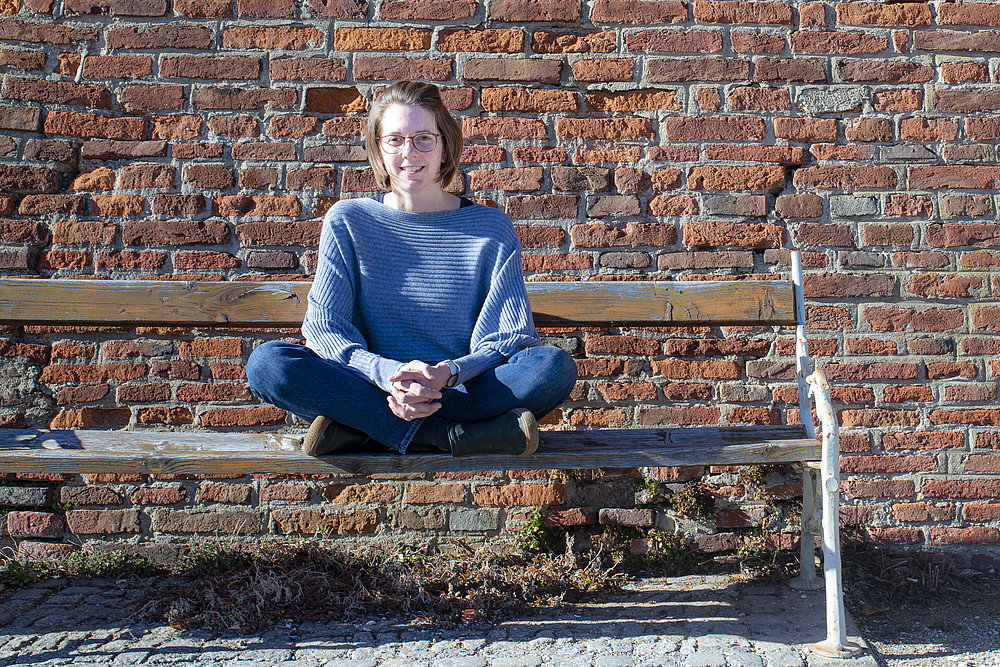
Climate economist Birgit Bednar-Friedl is coordinating lead author of the chapter on Europe in the new IPCC Assessment Report “Climate Change 2022: Impacts, Adaptation and Vulnerability”. Photo: Uni Graz/Tzivanopoulos ©Uni Graz/Tzivanopoulos

Climate economist Birgit Bednar-Friedl is coordinating lead author of the chapter on Europe in the new IPCC Assessment Report “Climate Change 2022: Impacts, Adaptation and Vulnerability”. Photo: Uni Graz/Tzivanopoulos

Europe must prepare for heat, droughts, water shortages and floods, says Birgit Bednar-Friedl from the University of Graz

"According to the current state of scientific knowledge, heat, droughts, water scarcity and floods are the key climate risks we will have to face in the coming decades," says Birgit Bednar-Friedl, an economist at the University of Graz. The researcher is coordinating lead author of the 6th IPCC Assessment Report “Climate Change 2022: Impacts, Adaptation and Vulnerability”, which has been published today. She has been responsible for the contributions to the chapter on Europe, which deals with the ecological and societal impacts of climate change from the Atlantic to the Ural and assesses possible strategies for adaptation and increasing resilience.

Water scarcity
One problem that has intensified in recent years is water scarcity. "Droughts are increasing in duration and intensity over large areas, not only in the Mediterranean region, but also in Central Europe," the researcher reports. "In order to cope well with the expected changes, we need more comprehensive solutions than before," says Bednar-Friedl and gives an example: "In agriculture, irrigation is a good strategy to cope with a drought, but if water is scarce, it will be lacking elsewhere. So we need to think about how to use this resource well overall so that all sectors get the maximum benefit." Growing drought-resistant fruits, vegetables and grains would be an alternative for agriculture.

Urban hotspots
Places where climate impacts are particularly felt are cities. One solution that could mitigate several impacts at the same time is called greening. "Overgrown facades help to lower the temperature inside buildings and increase humidity so that houses cool down better at night. Lawns in courtyards can allow water to seep away during heavy rains," Bednar-Friedl explains. In addition, multifunctional flooding areas could be created, such as a lowered playground that can absorb water if necessary.
It is also important to establish comprehensive early warning systems and to raise awareness and knowledge among citizens on how to deal with various threats. For example, if there is a risk of flooding, they should secure their own flat entrances with sandbags in good time.

Thinking globally
Climate impacts in one region often have cascading effects in other parts of the world. This domino effect is highlighted for the first time in the current report. One example: in 2011, a major flood in Thailand paralysed the production of semiconductor components for months, resulting in high prices worldwide for computer hard drives, among other things. "To minimise such risks, countries on all continents that are particularly affected by climate change must become more resilient. This requires international cooperation in the form of investments and technology transfer as help for self-help," says Bednar-Friedl.

Climate protection
"We in Europe are in the fortunate position of being able to mitigate much of the damage caused by climate change, but here too there is cultural heritage that is being lost because ecosystems are being destroyed," says the researcher, pointing to traditional forms of agriculture such as reindeer husbandry in the Arctic or migrating flocks of sheep in the Pyrenees. Coastal cities, Venice in particular, are facing rising sea levels and an increase in extreme weather events. "These examples highlight the need for climate action alongside adaptation if we are to avoid losing more of what we hold dear."

Background information
The Intergovernmental Panel on Climate Change (IPCC) is an institution of the United Nations. On its behalf, experts worldwide regularly compile the current state of knowledge on climate change and evaluate it from a scientific perspective. The IPCC report is published every four years and provides a basis for political decisions by highlighting different options for action and their significance, but without proposing concrete solutions or making recommendations for action.

>> 6th IPCC Assessment Report Climate Change 2022: Impacts, Adaptation and Vulnerability

>> More information on Birgit Bednar-Friedl and her research

created by Gudrun Pichler

Related news

Semester abroad without barriers: University of Graz wins award for promoting inclusion

The University of Graz has been awarded the Internationalization Award for its new inclusion initiative. Students with fewer opportunities now also receive financial support for their semester abroad outside Europe.

Fair distribution: Researchers determine just greenhouse gas budgets for all EU regions

Ten years ago, on 12 December 2015, the Paris Climate Agreement was signed at the UN Climate Conference. In order to limit global warming to well below two degrees, only a certain amount of CO2 may be emitted worldwide. While the focus was originally on national emission targets, more than 200 subnational regions and almost 300 cities have now adopted their own targets. But how many emissions are they fairly entitled to? Researchers at the University of Graz have now developed transparent criteria for fair distribution at the subnational level for the first time and determined corresponding greenhouse gas budgets for all European regions. The paper was published today in the scientific journal Nature Communications.

Chemical Christmas show at the University of Graz: An explosive evening at the Schauspielh

At the beginning of December, the University of Graz transformed the theater into a laboratory: as part of “Chemical Life,” teacher training students staged a chemical Christmas show for Styrian school classes—complete with ethanol rockets, nitrogen snow, and glowing effects. An evening designed to inspire interest in studying chemistry.

Train by train: Koralm railway accelerates exchange between the Universities

Lectures at the University of Klagenfurt in the morning, seminars at the University of Graz in the afternoon: Austria's longest tunnel and a journey time of around 45 minutes make it easy. The Koralm railway increases the speed of networking between the two university locations. The collaboration builds on existing cooperation - for example in the areas of teacher training, Slavic studies and as employers, the universities are well coordinated.

Begin of page section:
Additional information:

University of Graz
Universitaetsplatz 3
8010 Graz
Austria
  • Contact
  • Web Editors
  • Moodle
  • UNIGRAZonline
  • Imprint
  • Data Protection Declaration
  • Accessibility Declaration
Weatherstation
Uni Graz

End of this page section. Go to overview of page sections

End of this page section. Go to overview of page sections

Begin of page section:

End of this page section. Go to overview of page sections