"Our observations indicate that Flade Isblink is losing more and more ice and is therefore contributing to rising sea levels," reports Jonathan Fipper from the Department of Geography and Regional Science at the University of Graz. However, until now there have been few local measurements of air temperature at different altitudes to help better understand the glacier and climate changes. The scientists used uncrewed aerial vehicles to determine 130 vertical temperature profiles over various terrain surfaces. "Up to an altitude of around 100 metres, the surface cover type - i.e. ice, rock or water - has a significant influence on the air temperature," says Fipper, summarising the results.
The team used the data collected to investigate the relationship between glacier melt and temperature conditions. "As the ice cap is comparatively flat, it can melt particularly strongly due to global warming," adds the researcher. The insights gained from the study are a first step towards better understanding the development. Further studies on the changing environmental conditions in the region are now needed.
Thursday, 29 January 2026
New measurements: University of Graz researchers show what causes Greenland's glaciers to melt
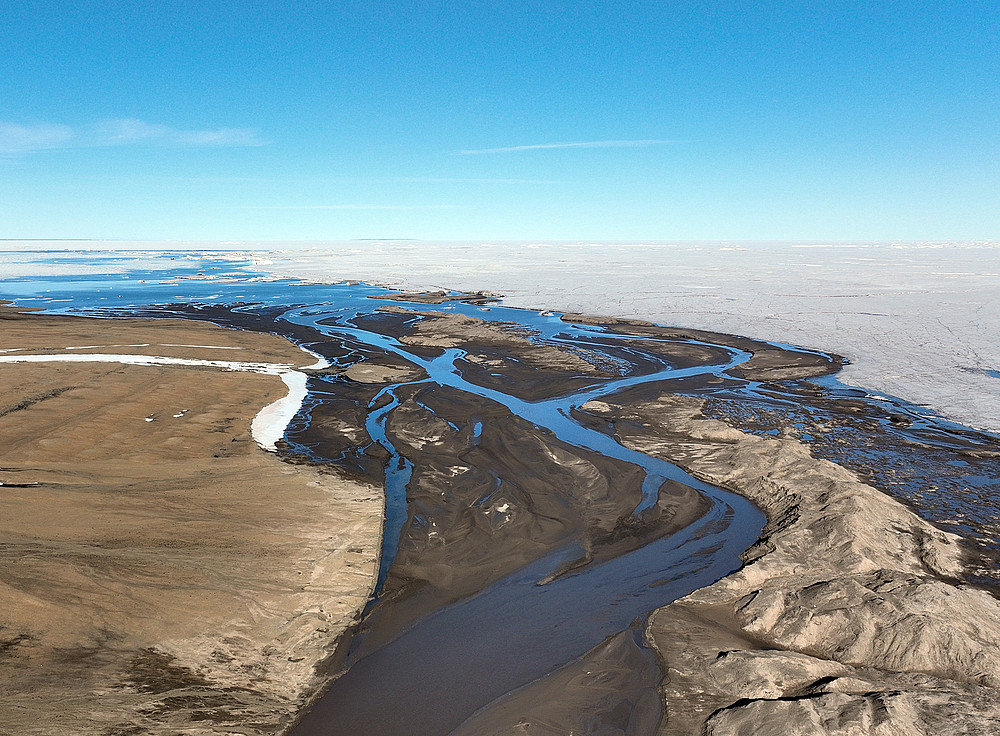
The glaciers on the Flade Isblink ice cap in northern Greenland are melting at an exceptionally rapid rate. A team from the University of Graz has collected initial data to investigate the phenomenon in more detail. Photo: University of Graz/Jonathan Fipper