



Begin of page section:
Page sections:

  • Go to contents (Accesskey 1)
  • Go to position marker (Accesskey 2)
  • Go to main navigation (Accesskey 3)
  • Go to sub navigation (Accesskey 4)
  • Go to additional information (Accesskey 5)
  • Go to page settings (user/language) (Accesskey 8)
  • Go to search (Accesskey 9)

End of this page section. Go to overview of page sections

Begin of page section:
Page settings:

English en
Deutsch de
Search
Login

End of this page section. Go to overview of page sections

Begin of page section:
Search:

Search for details about Uni Graz
Close

End of this page section. Go to overview of page sections


Search

Begin of page section:
Main navigation:

Page navigation:

  • University

    University
    • About the University
    • Organisation
    • Faculties
    • Library
    • Working at University of Graz
    • Campus
    Developing solutions for the world of tomorrow - that is our mission. Our students and our researchers take on the great challenges of society and carry the knowledge out.
  • Research Profile

    Research Profile
    • Our Expertise
    • Research Questions
    • Research Portal
    • Promoting Research
    • Research Transfer
    • Ethics in Research
    • Commission for Scientific Integrity
    Scientific excellence and the courage to break new ground. Research at the University of Graz creates the foundations for making the future worth living.
  • Studies

    Studies
    • Prospective Students
    • Students
  • Community

    Community
    • International
    • Location
    • Research and Business
    • Alumni
    The University of Graz is a hub for international research and brings together scientists and business experts. Moreover, it fosters the exchange and cooperation in study and teaching.
  • Spotlight
Topics
  • Sustainable University
  • Researchers answer
  • Work for us
Close menu

End of this page section. Go to overview of page sections

Begin of page section:
You are here:

University of Graz News Nachschub

End of this page section. Go to overview of page sections

Monday, 30 March 2020

Nachschub

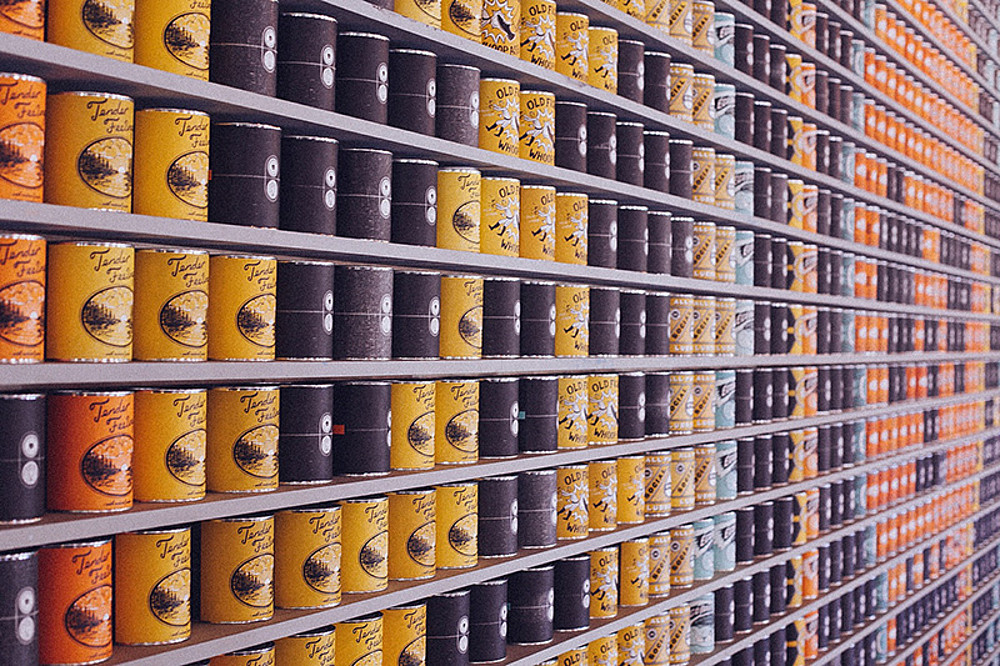
Wie der Nachschub für leere Supermarkt-Regale sichergestellt werden kann, erklärt Logistik-Experte Marc Reimann. Foto: Pixabay

Wie der Nachschub für leere Supermarkt-Regale sichergestellt werden kann, erklärt Logistik-Experte Marc Reimann. Foto: Pixabay

Wie werden die Regale wieder voll? Die Universität Graz beantwortet Fragen zur Corona-Krise #7

Grenzen sind dicht, Transport-MitarbeiterInnen in Quarantäne, weltweit die Produktion gedrosselt. Wie kommen Krankenhäuser zu dringend benötigter Ausstattung, Apotheken zu Medikamenten und Supermärkte zu frischer Ware? Marc Reimann, Leiter des Instituts für Produktion und Logistik der Universität Graz sieht mehrere Wege.
„Das Hauptproblem jetzt ist wohl, dass alle Prozesse und alle Handelspartner weltweit betroffen sind“, beurteilt er die außergewöhnliche Situation. Die Produktionsausfälle in China, wo die Betriebe erst langsam wieder öffnen, könnten zu weiten Teilen durch Leerung der bestehenden Lager abgefangen werden. Da dafür das nötige Personal fehlt, springen lokal Freiwillige und die Miliz ein. Die Schließung der Grenzen wird allerdings auch in den nächsten Wochen die Lieferzeiten verlängern. Eine Verteilung der Produktions- und Lagerstätten auf mehrere Standorte könnten diese Probleme im Prinzip lösen. Sie würden aber höhere Betriebskosten und komplexere Logistik verursachen. „Folglich sind sie in Nicht-Krisenzeiten teurer und damit weniger effizient“, so Reimann.
 
Chance im Kreislauf
Selbst wenn die Produktion dezentralisiert wird, sind weiterhin Anlieferungen – etwa von Rohstoffen – nötig. „Durch die Kreislaufwirtschaft könnte dieses Problem im großen Stil abgeschwächt werden“, betont der Forscher. Am besten wäre es, zumindest einzelne Teile und Komponenten von nicht mehr verwendeten Produkten systematisch wiederzuverwenden. Damit stünden sie als Sekundärrohstoffquellen für die Herstellung neuer Dinge zur Verfügung. „Um das zu erreichen, sind gemeinsame Anstrengungen aller nötig“, meint Reimann. Die KonsumentInnen müssten überzeugt werden, mitzumachen, eine Sammellogistik muss aufgesetzt werden, außerdem braucht es noch effektivere Prozesse für die Zerlegung, die Wiederaufarbeitung und das Recycling der Komponenten und Rohstoffe. „Erste Ansätze dazu gab es bereits vor der Krise. Jetzt, wo die herkömmlichen Lieferketten nicht mehr funktionieren, wären Investitionen in diesem Bereich eine einmalige Möglichkeit, für eine bessere Zukunft vorzusorgen“, ist der Wissenschafter überzeugt.


Fragen zur Corona-Krise und die Antworten der Uni-Graz-ExpertInnen
 

created by Dagmar Eklaude

Related news

Long Night of Research: How many languages are there in the world?

From a linguistic perspective, there are worlds of difference between Bern, Berlin and Vienna. A dialect impersonator will demonstrate live just how varied German can sound. How many languages are there in the world? What are their distinctive features? Which of these are spoken in Austria? These and other questions will be answered during the Long Night of Research at the University of Graz: on Friday, 24 April 2025, from 5 pm to 11 pm, in the University Library. Visitors can immerse themselves in the diversity of languages without travelling far by taking part in a quiz at the station.

Dual role: Researchers show that platelets can worsen disease

Platelets are best known as rapid responders in the event of injury. They stop bleeding and are indispensable for wound healing. “However, thrombocytes can also aggravate diseases, especially when inflammatory processes are involved,” explains Marion Mußbacher, a pharmacist at the University of Graz. She investigated the “dual role” of platelets in relation to fatty liver disease, a condition closely linked to obesity and type 2 diabetes.

Forscher:innen entdecken natürlichen Wirkstoff zum Schutz vor Lebererkrankungen

Die Leber leidet still. „Fetteinlagerungen, strukturelle Zerstörung des Gewebes oder mutierende Tumorzellen – all das fliegt eine Weile unter dem Radar. Begleitet werden diese Veränderungen oft von leichten, jedoch chronischen Entzündungen“, erklärt Andreas Koeberle, Pharmazeut an der Universität Graz. Er hat mit seinem Team und Kolleg:innen der Universität Innsbruck den Wirkstoff Mitrephoron B untersucht, der neue Behandlungsansätze ermöglicht. Die Ergebnisse der Studie wurden kürzlich in der Open-Access-Fachzeitschrift „Theranostics“ veröffentlicht.

Climate at the cliffs: Researchers unravel the evolution of the Greenland ice margin

Vertical ice walls, up to 40 metres high: in "Game of Thrones" they were dramatised as fortifications; during the Cold War, they were studied with great interest. How these imposing walls along Greenland’s 80,000-kilometre-long ice margin formed, how they are evolving, and what impact they have on the climate is not yet fully understood. Researchers from the Universities of Graz and Innsbruck have come one step closer to solving the mystery. The results of their latest study have been published in the journal The Cryosphere.

Begin of page section:
Additional information:

University of Graz
Universitaetsplatz 3
8010 Graz
Austria
  • Contact
  • Web Editors
  • Moodle
  • UNIGRAZonline
  • Imprint
  • Data Protection Declaration
  • Accessibility Declaration
Weatherstation
Uni Graz

End of this page section. Go to overview of page sections

End of this page section. Go to overview of page sections

Begin of page section:

End of this page section. Go to overview of page sections


