Begin of page section:
Page sections:

  • Go to contents (Accesskey 1)
  • Go to position marker (Accesskey 2)
  • Go to main navigation (Accesskey 3)
  • Go to sub navigation (Accesskey 4)
  • Go to additional information (Accesskey 5)
  • Go to page settings (user/language) (Accesskey 8)
  • Go to search (Accesskey 9)

End of this page section. Go to overview of page sections

Begin of page section:
Page settings:

English en
Deutsch de
Search
Login

End of this page section. Go to overview of page sections

Begin of page section:
Search:

Search for details about Uni Graz
Close

End of this page section. Go to overview of page sections


Search

Begin of page section:
Main navigation:

Page navigation:

  • University

    University
    • About the University
    • Organisation
    • Faculties
    • Library
    • Working at University of Graz
    • Campus
    Developing solutions for the world of tomorrow - that is our mission. Our students and our researchers take on the great challenges of society and carry the knowledge out.
  • Research Profile

    Research Profile
    • Our Expertise
    • Research Questions
    • Research Portal
    • Promoting Research
    • Research Transfer
    • Ethics in Research
    Scientific excellence and the courage to break new ground. Research at the University of Graz creates the foundations for making the future worth living.
  • Studies

    Studies
    • Prospective Students
    • Students
  • Community

    Community
    • International
    • Location
    • Research and Business
    • Alumni
    The University of Graz is a hub for international research and brings together scientists and business experts. Moreover, it fosters the exchange and cooperation in study and teaching.
  • Spotlight
Topics
  • Our digital Advent calendar
  • Sustainable University
  • Researchers answer
  • Work for us
Close menu

End of this page section. Go to overview of page sections

Begin of page section:
You are here:

University of Graz News Nachschub

End of this page section. Go to overview of page sections

Monday, 30 March 2020

Nachschub

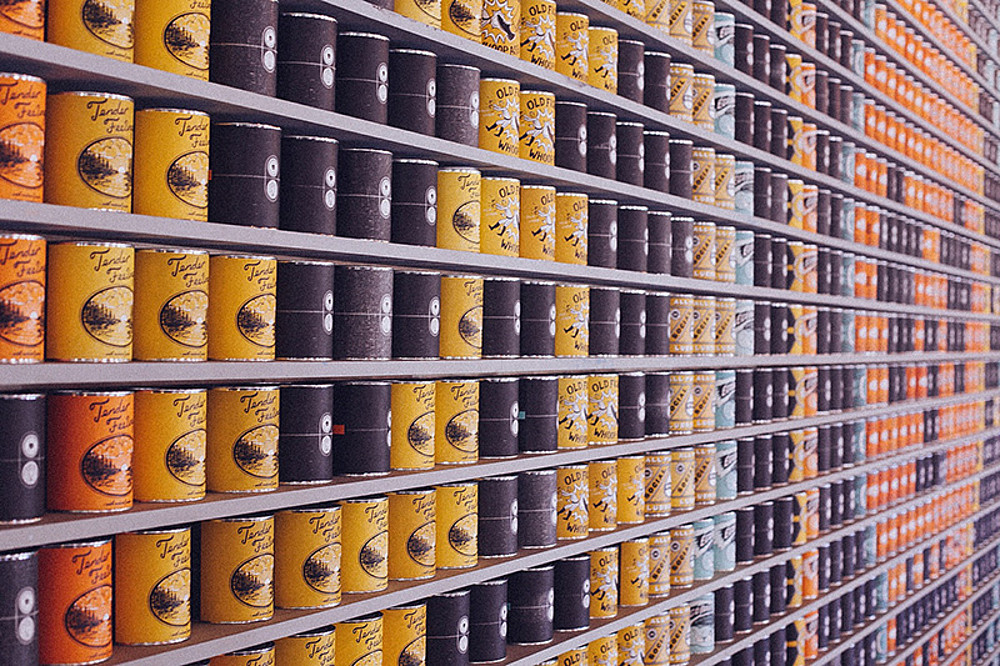
Wie der Nachschub für leere Supermarkt-Regale sichergestellt werden kann, erklärt Logistik-Experte Marc Reimann. Foto: Pixabay

Wie der Nachschub für leere Supermarkt-Regale sichergestellt werden kann, erklärt Logistik-Experte Marc Reimann. Foto: Pixabay

Wie werden die Regale wieder voll? Die Universität Graz beantwortet Fragen zur Corona-Krise #7

Grenzen sind dicht, Transport-MitarbeiterInnen in Quarantäne, weltweit die Produktion gedrosselt. Wie kommen Krankenhäuser zu dringend benötigter Ausstattung, Apotheken zu Medikamenten und Supermärkte zu frischer Ware? Marc Reimann, Leiter des Instituts für Produktion und Logistik der Universität Graz sieht mehrere Wege.
„Das Hauptproblem jetzt ist wohl, dass alle Prozesse und alle Handelspartner weltweit betroffen sind“, beurteilt er die außergewöhnliche Situation. Die Produktionsausfälle in China, wo die Betriebe erst langsam wieder öffnen, könnten zu weiten Teilen durch Leerung der bestehenden Lager abgefangen werden. Da dafür das nötige Personal fehlt, springen lokal Freiwillige und die Miliz ein. Die Schließung der Grenzen wird allerdings auch in den nächsten Wochen die Lieferzeiten verlängern. Eine Verteilung der Produktions- und Lagerstätten auf mehrere Standorte könnten diese Probleme im Prinzip lösen. Sie würden aber höhere Betriebskosten und komplexere Logistik verursachen. „Folglich sind sie in Nicht-Krisenzeiten teurer und damit weniger effizient“, so Reimann.
 
Chance im Kreislauf
Selbst wenn die Produktion dezentralisiert wird, sind weiterhin Anlieferungen – etwa von Rohstoffen – nötig. „Durch die Kreislaufwirtschaft könnte dieses Problem im großen Stil abgeschwächt werden“, betont der Forscher. Am besten wäre es, zumindest einzelne Teile und Komponenten von nicht mehr verwendeten Produkten systematisch wiederzuverwenden. Damit stünden sie als Sekundärrohstoffquellen für die Herstellung neuer Dinge zur Verfügung. „Um das zu erreichen, sind gemeinsame Anstrengungen aller nötig“, meint Reimann. Die KonsumentInnen müssten überzeugt werden, mitzumachen, eine Sammellogistik muss aufgesetzt werden, außerdem braucht es noch effektivere Prozesse für die Zerlegung, die Wiederaufarbeitung und das Recycling der Komponenten und Rohstoffe. „Erste Ansätze dazu gab es bereits vor der Krise. Jetzt, wo die herkömmlichen Lieferketten nicht mehr funktionieren, wären Investitionen in diesem Bereich eine einmalige Möglichkeit, für eine bessere Zukunft vorzusorgen“, ist der Wissenschafter überzeugt.


Fragen zur Corona-Krise und die Antworten der Uni-Graz-ExpertInnen


created by Dagmar Eklaude

Related news

Semester abroad without barriers: University of Graz wins award for promoting inclusion

The University of Graz has been awarded the Internationalization Award for its new inclusion initiative. Students with fewer opportunities now also receive financial support for their semester abroad outside Europe.

Fair distribution: Researchers determine just greenhouse gas budgets for all EU regions

Ten years ago, on 12 December 2015, the Paris Climate Agreement was signed at the UN Climate Conference. In order to limit global warming to well below two degrees, only a certain amount of CO2 may be emitted worldwide. While the focus was originally on national emission targets, more than 200 subnational regions and almost 300 cities have now adopted their own targets. But how many emissions are they fairly entitled to? Researchers at the University of Graz have now developed transparent criteria for fair distribution at the subnational level for the first time and determined corresponding greenhouse gas budgets for all European regions. The paper was published today in the scientific journal Nature Communications.

Chemical Christmas show at the University of Graz: An explosive evening at the Schauspielh

At the beginning of December, the University of Graz transformed the theater into a laboratory: as part of “Chemical Life,” teacher training students staged a chemical Christmas show for Styrian school classes—complete with ethanol rockets, nitrogen snow, and glowing effects. An evening designed to inspire interest in studying chemistry.

Train by train: Koralm railway accelerates exchange between the Universities

Lectures at the University of Klagenfurt in the morning, seminars at the University of Graz in the afternoon: Austria's longest tunnel and a journey time of around 45 minutes make it easy. The Koralm railway increases the speed of networking between the two university locations. The collaboration builds on existing cooperation - for example in the areas of teacher training, Slavic studies and as employers, the universities are well coordinated.

Begin of page section:
Additional information:

University of Graz
Universitaetsplatz 3
8010 Graz
Austria
  • Contact
  • Web Editors
  • Moodle
  • UNIGRAZonline
  • Imprint
  • Data Protection Declaration
  • Accessibility Declaration
Weatherstation
Uni Graz

End of this page section. Go to overview of page sections

End of this page section. Go to overview of page sections

Begin of page section:

End of this page section. Go to overview of page sections