Begin of page section:
Page sections:

  • Go to contents (Accesskey 1)
  • Go to position marker (Accesskey 2)
  • Go to main navigation (Accesskey 3)
  • Go to sub navigation (Accesskey 4)
  • Go to additional information (Accesskey 5)
  • Go to page settings (user/language) (Accesskey 8)
  • Go to search (Accesskey 9)

End of this page section. Go to overview of page sections

Begin of page section:
Page settings:

English en
Deutsch de
Search
Login

End of this page section. Go to overview of page sections

Begin of page section:
Search:

Search for details about Uni Graz
Close

End of this page section. Go to overview of page sections


Search

Begin of page section:
Main navigation:

Page navigation:

  • University

    University
    • About the University
    • Organisation
    • Faculties
    • Library
    • Working at University of Graz
    • Campus
    Developing solutions for the world of tomorrow - that is our mission. Our students and our researchers take on the great challenges of society and carry the knowledge out.
  • Research Profile

    Research Profile
    • Our Expertise
    • Research Questions
    • Research Portal
    • Promoting Research
    • Research Transfer
    • Ethics in Research
    Scientific excellence and the courage to break new ground. Research at the University of Graz creates the foundations for making the future worth living.
  • Studies

    Studies
    • Prospective Students
    • Students
  • Community

    Community
    • International
    • Location
    • Research and Business
    • Alumni
    The University of Graz is a hub for international research and brings together scientists and business experts. Moreover, it fosters the exchange and cooperation in study and teaching.
  • Spotlight
Topics
  • Our digital Advent calendar
  • Sustainable University
  • Researchers answer
  • Work for us
Close menu

End of this page section. Go to overview of page sections

Begin of page section:
You are here:

University of Graz News Multitalent Graphen

End of this page section. Go to overview of page sections

Thursday, 17 March 2016

Multitalent Graphen

Foto: Wikipedia.org

Foto: Wikipedia.org

PhysikerInnen der Uni Graz entdecken neue Möglichkeiten für Licht-Technologien

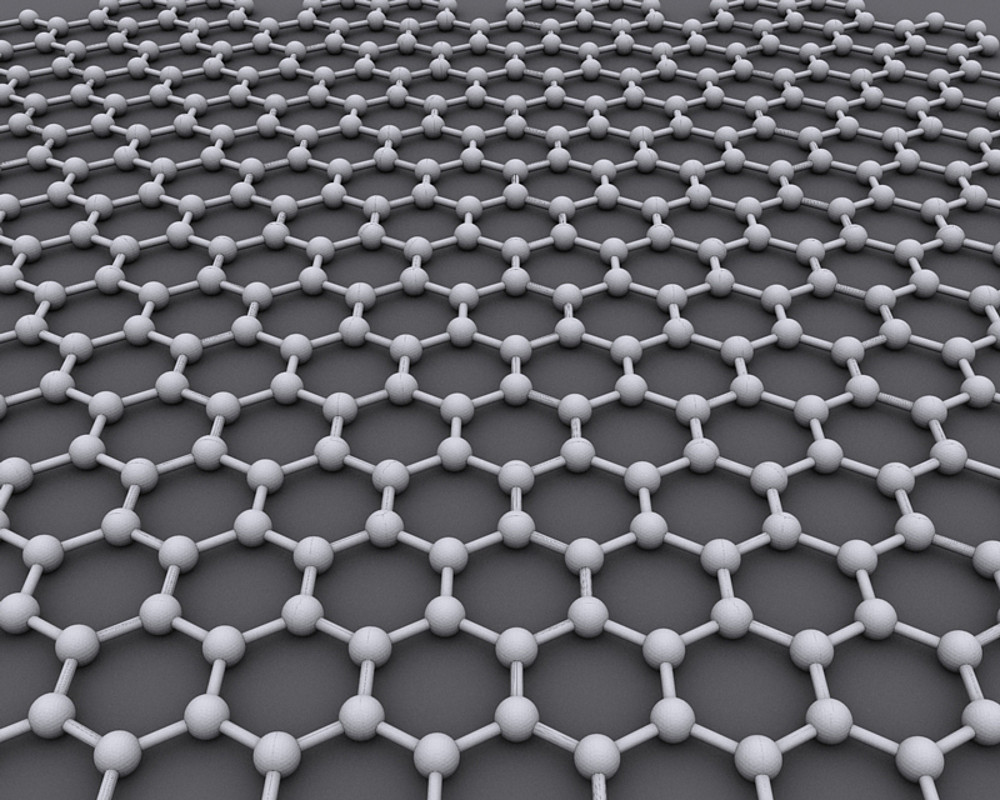
Am Institut für Physik der Karl-Franzens-Universität Graz wurde in Kooperation mit internationalen PartnerInnen ein neuartiges Verfahren entwickelt, das es ermöglicht, das Halbmetall Graphen mit Funktionen optischer Halbleiter auszustatten. „Graphen wird dadurch für den Einsatz in optischen Bausteinen, wie etwa bei LED-, Laser- und Solarzellen-Technologien, geeignet, ohne dass die einzigartigen mechanischen und elektrischen Eigenschaften verloren gehen“, erklärt Ao. Univ.-Prof. Dr. Ulrich Hohenester, der die Grazer Forschungsgruppe leitet. Die Ergebnisse dieses Grundlagenexperiments sind kürzlich in der renommierten Zeitschrift „Nature Communications“ erschienen.

„Wir schneiden aus Graphen extrem schmale Bänder – so genannte graphene nano ribbons (GNRs) – aus. Dadurch wird eine Bandlücke geöffnet, die für optische Anwendungen von zentraler Bedeutung ist, während gleichzeitig viele positive Materialeigenschaften des Halbmetalls beibehalten werden“, erklärt Hohenester das Verfahren. In den Experimenten wurden GNR mit ultrakurzen Laserpulsen angeregt: Das stimulierte Elektron wandert vom Valenzband in das Leitungsband. Was zurückbleibt ist ein Loch. Nun kommt es zu einer Bindung zwischen dem Elektron und dem Loch, ähnlich wie bei einem Wasserstoffatom. Das Ergebnis ist ein so genanntes Exziton. „Wir konnten in unseren Simulationen hier in Graz zeigen, dass bei einer stärkeren optischen Anregung zwei Exzitonen einen weiteren Bindungszustand – ein sogenanntes Biexziton – eingehen. Diese sind zum Beispiel auch zur Ladungsträgervervielfältigung in Solarzellen von großer Wichtigkeit“, führt der Wissenschafter aus. Die Änderung des optischen Spektrums wurde mit einer Zeitverzögerung von wenigen Pikosekunden - 0,000.000.000.001 Sekunden – gemessen. Durch eine zunehmende Anregungsleistung und somit höherer Zahl von angeregten Elektronen und Löchern taucht in den Spektren eine Änderung aufgrund der Bindung von Biexzitonen auf. Überraschenderweise ist diese Bindungsenergie extrem groß, was wiederum für viele optische Elemente extrem vorteilhaft sein könnte.

Die Arbeit entspringt einer Kooperation mit mehreren internationalen Forschungsgruppen und ist in den universitären Forschungsschwerpunkt „Modelle und Simulation“ sowie in den Sonderforschungsbereich NextLite des FWF, der sich mit der Erforschung von neuartigen Lichtquellen sowie mit Licht-Materie-Wechselwirkung beschäftigt, eingebunden.


Publikation:

Giancarlo Soavi, Stefano Dal Conte, Cristian Manzoni, Daniele Viola, Akimitsu Narita, Yunbin Hu, Xinliang Feng, Ulrich Hohenester, Elisa Molinari, Deborah Prezzi, Klaus Müllen, Giulio Cerullo: Exciton-exciton annihilation and biexciton stimulated emission in graphene nanoribbons, Nature Communications, DOI: 10.1038/ncomms11010

created by Konstantinos Tzivanopoulos

Related news

Setback: Austria's greenhouse gas emissions rise in 2025

Climate protection is currently facing an uphill battle. The United Nations have recently been unable to agree on a roadmap for phasing out fossil fuels, even though global warming continues to accelerate. Also Austria still does not have a national climate law with a clear target path for reducing emissions. This is evidently taking its toll: Austria’s greenhouse gas emissions rose again in 2025 for the first time in years, by around two and a half percent, according to calculations by researchers at the University of Graz. In addition to overly cautious climate action measures, this is due to somewhat colder winter months compared to 2024, which are driving up natural gas consumption.

Profound: Geoscientist Marko Bermanec deciphers processes of the Earth's plates

What happens deep down is very important to us above ground. Especially when hidden chemical processes between tectonic plates have serious consequences. Earth scientist Marko Bermanec investigates these processes in depth.

Kink in the curve: Eleonore Faber researches the "fuzzy" parts of algebra

How can the movements of robotic arms be described using maths? And what does a computer need to understand in order to function? The magic word to answer these questions is algebra. Eleonore Faber has been a professor of this branch of mathematics at the University of Graz for two years. She is particularly interested in complex phenomena that cannot be fully understood using conventional rules or laws - where algebra becomes "fuzzy".

Jurist Jürgen Pirker erhält den Wissenschaftspreises der Margaretha Lupac-Stiftung

Wie kann der Staat nationale Minderheiten schützen? Wie kann er darauf achten, dass Mitglieder einer bestimmten ethnischen oder religiösen Gruppe nicht gezwungen werden, ihre persönlichen Freiheiten aufgrund dieser Zugehörigkeit aufzugeben? Und wie ging Österreich in den vergangenen 180 Jahren mit dieser Frage um?

Begin of page section:
Additional information:

University of Graz
Universitaetsplatz 3
8010 Graz
Austria
  • Contact
  • Web Editors
  • Moodle
  • UNIGRAZonline
  • Imprint
  • Data Protection Declaration
  • Accessibility Declaration
Weatherstation
Uni Graz

End of this page section. Go to overview of page sections

End of this page section. Go to overview of page sections

Begin of page section:

End of this page section. Go to overview of page sections