



Begin of page section:
Page sections:

  • Go to contents (Accesskey 1)
  • Go to position marker (Accesskey 2)
  • Go to main navigation (Accesskey 3)
  • Go to sub navigation (Accesskey 4)
  • Go to additional information (Accesskey 5)
  • Go to page settings (user/language) (Accesskey 8)
  • Go to search (Accesskey 9)

End of this page section. Go to overview of page sections

Begin of page section:
Page settings:

English en
Deutsch de
Search
Login

End of this page section. Go to overview of page sections

Begin of page section:
Search:

Search for details about Uni Graz
Close

End of this page section. Go to overview of page sections


Search

Begin of page section:
Main navigation:

Page navigation:

  • University

    University
    • About the University
    • Organisation
    • Faculties
    • Library
    • Working at University of Graz
    • Campus
    Developing solutions for the world of tomorrow - that is our mission. Our students and our researchers take on the great challenges of society and carry the knowledge out.
  • Research Profile

    Research Profile
    • Our Expertise
    • Research Questions
    • Research Portal
    • Promoting Research
    • Research Transfer
    • Ethics in Research
    • Commission for Scientific Integrity
    Scientific excellence and the courage to break new ground. Research at the University of Graz creates the foundations for making the future worth living.
  • Studies

    Studies
    • Prospective Students
    • Students
    • Registration for Study Programme (Winter semester 2026/27)
  • Community

    Community
    • International
    • Location
    • Research and Business
    • Alumni
    The University of Graz is a hub for international research and brings together scientists and business experts. Moreover, it fosters the exchange and cooperation in study and teaching.
Topics
  • Sustainable University
  • Researchers answer
  • Work for us
Close menu

End of this page section. Go to overview of page sections

Begin of page section:
You are here:

University of Graz News Multitalent Graphen

End of this page section. Go to overview of page sections

Thursday, 17 March 2016

Multitalent Graphen

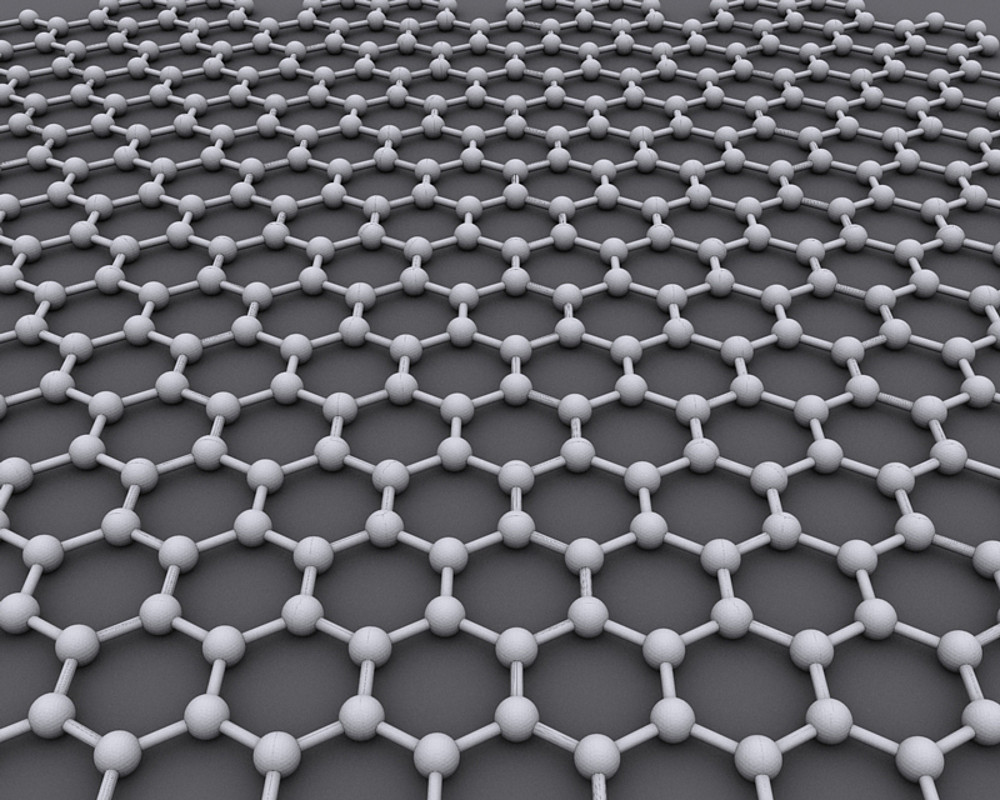
Foto: Wikipedia.org

Foto: Wikipedia.org

PhysikerInnen der Uni Graz entdecken neue Möglichkeiten für Licht-Technologien

Am Institut für Physik der Karl-Franzens-Universität Graz wurde in Kooperation mit internationalen PartnerInnen ein neuartiges Verfahren entwickelt, das es ermöglicht, das Halbmetall Graphen mit Funktionen optischer Halbleiter auszustatten. „Graphen wird dadurch für den Einsatz in optischen Bausteinen, wie etwa bei LED-, Laser- und Solarzellen-Technologien, geeignet, ohne dass die einzigartigen mechanischen und elektrischen Eigenschaften verloren gehen“, erklärt Ao. Univ.-Prof. Dr. Ulrich Hohenester, der die Grazer Forschungsgruppe leitet. Die Ergebnisse dieses Grundlagenexperiments sind kürzlich in der renommierten Zeitschrift „Nature Communications“ erschienen.

„Wir schneiden aus Graphen extrem schmale Bänder – so genannte graphene nano ribbons (GNRs) – aus. Dadurch wird eine Bandlücke geöffnet, die für optische Anwendungen von zentraler Bedeutung ist, während gleichzeitig viele positive Materialeigenschaften des Halbmetalls beibehalten werden“, erklärt Hohenester das Verfahren. In den Experimenten wurden GNR mit ultrakurzen Laserpulsen angeregt: Das stimulierte Elektron wandert vom Valenzband in das Leitungsband. Was zurückbleibt ist ein Loch. Nun kommt es zu einer Bindung zwischen dem Elektron und dem Loch, ähnlich wie bei einem Wasserstoffatom. Das Ergebnis ist ein so genanntes Exziton. „Wir konnten in unseren Simulationen hier in Graz zeigen, dass bei einer stärkeren optischen Anregung zwei Exzitonen einen weiteren Bindungszustand – ein sogenanntes Biexziton – eingehen. Diese sind zum Beispiel auch zur Ladungsträgervervielfältigung in Solarzellen von großer Wichtigkeit“, führt der Wissenschafter aus. Die Änderung des optischen Spektrums wurde mit einer Zeitverzögerung von wenigen Pikosekunden - 0,000.000.000.001 Sekunden – gemessen. Durch eine zunehmende Anregungsleistung und somit höherer Zahl von angeregten Elektronen und Löchern taucht in den Spektren eine Änderung aufgrund der Bindung von Biexzitonen auf. Überraschenderweise ist diese Bindungsenergie extrem groß, was wiederum für viele optische Elemente extrem vorteilhaft sein könnte.

Die Arbeit entspringt einer Kooperation mit mehreren internationalen Forschungsgruppen und ist in den universitären Forschungsschwerpunkt „Modelle und Simulation“ sowie in den Sonderforschungsbereich NextLite des FWF, der sich mit der Erforschung von neuartigen Lichtquellen sowie mit Licht-Materie-Wechselwirkung beschäftigt, eingebunden.


Publikation:

Giancarlo Soavi, Stefano Dal Conte, Cristian Manzoni, Daniele Viola, Akimitsu Narita, Yunbin Hu, Xinliang Feng, Ulrich Hohenester, Elisa Molinari, Deborah Prezzi, Klaus Müllen, Giulio Cerullo: Exciton-exciton annihilation and biexciton stimulated emission in graphene nanoribbons, Nature Communications, DOI: 10.1038/ncomms11010

created by Konstantinos Tzivanopoulos

Related news

"Mathematics explains the world"

How can life be quantified? And what can science reveal that remains hidden from the naked eye? The 14th European Conference on Mathematical and Theoretical Biology at the University of Graz is dedicated to these questions. From 13 to 17 July, around 1,300 researchers from all over the world will gather on campus to discuss models, biological processes and the future of data-driven medicine. Klemens Fellner, Dean of the Faculty of Natural Sciences and Mathematics and a mathematician, talks about the language that explains the world

Internationally up-to-date: University of Graz offers new degree programmes in art studies

From the Old Masters to AI art – three newly designed degree programmes offer students at the University of Graz fresh perspectives on artistic production. In addition to historical art, the programmes place a greater emphasis on contemporary and global developments. The registration period is open.

The Nazi elite school Napola: Historian seeks memories and personal documents

They were to be brought up to become the future elite of National Socialism: boys and girls aged ten and over who, following the ‘Anschluss’ of Austria to the German Reich, attended a so-called Napola (short for Nationalpolitische Lehranstalt; also known as NPEA, Nationalpolitische Erziehungsanstalt). There were nine such institutions in what is now Austria between 1939 and 1945.

Heat-resistant: Eva Preinfalk explains how cities can protect their residents

Certain demographic and some occupational groups are particularly vulnerable to high temperatures. A range of measures is needed to provide relief for everyone, explains climate economist Eva Preinfalk.

Begin of page section:
Additional information:

University of Graz
Universitaetsplatz 3
8010 Graz
Austria
  • Contact
  • Web Editors
  • Moodle
  • UNIGRAZonline
  • Imprint
  • Data Protection Declaration
  • Accessibility Declaration
Weatherstation
Uni Graz

End of this page section. Go to overview of page sections

End of this page section. Go to overview of page sections

Begin of page section:

End of this page section. Go to overview of page sections