Begin of page section:
Page sections:

  • Go to contents (Accesskey 1)
  • Go to position marker (Accesskey 2)
  • Go to main navigation (Accesskey 3)
  • Go to sub navigation (Accesskey 4)
  • Go to additional information (Accesskey 5)
  • Go to page settings (user/language) (Accesskey 8)
  • Go to search (Accesskey 9)

End of this page section. Go to overview of page sections

Begin of page section:
Page settings:

English en
Deutsch de
Search
Login

End of this page section. Go to overview of page sections

Begin of page section:
Search:

Search for details about Uni Graz
Close

End of this page section. Go to overview of page sections


Search

Begin of page section:
Main navigation:

Page navigation:

  • University

    University
    • About the University
    • Organisation
    • Faculties
    • Library
    • Working at University of Graz
    • Campus
    Developing solutions for the world of tomorrow - that is our mission. Our students and our researchers take on the great challenges of society and carry the knowledge out.
  • Research Profile

    Research Profile
    • Our Expertise
    • Research Questions
    • Research Portal
    • Promoting Research
    • Research Transfer
    • Ethics in Research
    Scientific excellence and the courage to break new ground. Research at the University of Graz creates the foundations for making the future worth living.
  • Studies

    Studies
    • Prospective Students
    • Students
  • Community

    Community
    • International
    • Location
    • Research and Business
    • Alumni
    The University of Graz is a hub for international research and brings together scientists and business experts. Moreover, it fosters the exchange and cooperation in study and teaching.
  • Spotlight
Topics
  • Sustainable University
  • Researchers answer
  • Work for us
Close menu

End of this page section. Go to overview of page sections

Begin of page section:
You are here:

University of Graz News Mode – Geschmack – Distinktion

End of this page section. Go to overview of page sections

Monday, 18 May 2015

Mode – Geschmack – Distinktion

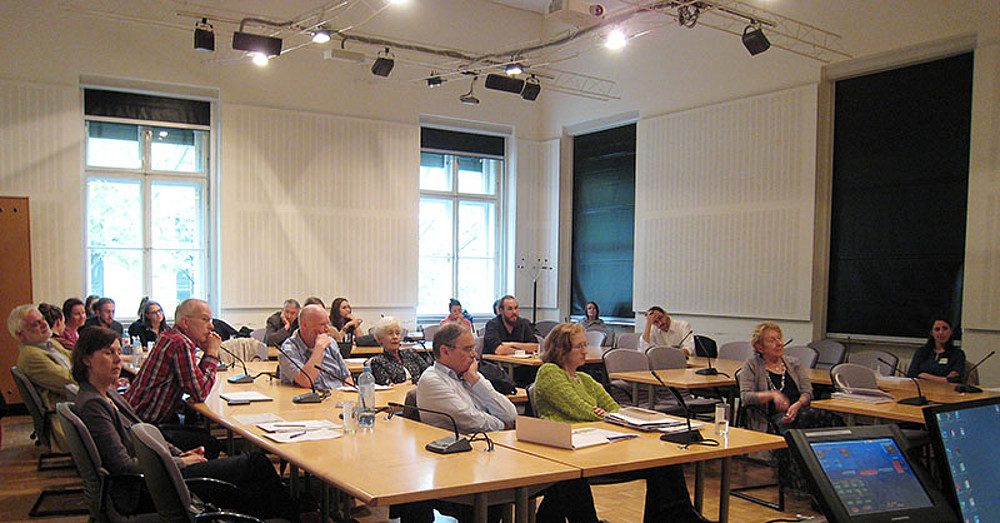
Beatrix Müller-Kampel (2. Reihe, 2.v.l.) lud zur fünften LiTheS-Tagung. Foto: KK.

Beatrix Müller-Kampel (2. Reihe, 2.v.l.) lud zur fünften LiTheS-Tagung. Foto: KK.

ExpertInnen aus verschiedenen Disziplinen untersuchten kultursoziologische und kulturwissenschaftliche Zusammhänge zwischen Mode und Geschmack. Foto: KK.

ExpertInnen aus verschiedenen Disziplinen untersuchten kultursoziologische und kulturwissenschaftliche Zusammhänge zwischen Mode und Geschmack. Foto: KK.

Die fünfte LiTheS-Tagung widmete sich verschiedenen Aspekten der Mode

Während die vierte Tagung des Schwerpunktbereichs "LiTheS: Literatur- und Theatersoziologie" am Institut für Germanistik der Uni Graz im Mai 2013 sich Typen in Theater und Film gewidmet hatte, luden die Veranstalterinnen der fünften Tagung, Ao. Univ.-Prof. Dr. Beatrix Müller-Kampel und Prof. Dr. Marion Linhardt, Fachgruppe MusikTheater der Universität Bayreuth, dieses Jahr unter dem Motto "Mode – Geschmack – Distinktion" von 14. bis 16. Mai 2015 nach Graz.


Die Zeiten, da "Mode" sich auf Kleidung, Einrichtung oder Sport bezogen, sind längst vorbei. Mittlerweile sind nahezu alle Lebensbereichen Strukturmustern und Handlungsmotiven, die sich um Mode, Geschmack und sozialer "Distinktion" drehen, unterworfen. "Die Allgegenwärtigkeit dieser Mechanismen verleiten oft dazu, kritische Reflexion hintenan zu stellen", erklärt Beatrix Müller-Kampel. Die zur Tagung geladenen ExpertInnen aus der Soziologie und der Kulturwissenschaft, der Germanistik, Romanistik und Slawistik, der Musik-, Theater- und Sprachwissenschaft, aber auch der Fashion Studies, unternahmen den Versuch einer soziologischen und kulturwissenschaftlichen Entzauberung und wiesen in ihren Vorträgen außerdem auch auf neue Gegenstandsbereiche und Funktionszusammenhänge hin.


Die Vortragenden nahmen "Mode – Geschmack – Distinktion" von vier Seiten ins Visier: Erstens, den Begriffen und Konzepten, zweitens, den Kleidermoden, drittens, den Moden in (Kultur-)Wissenschaft und Universität sowie viertens, dem "Geschmack" und den "Moden" als Kategorien und Funktionen sozialen Kapitals. Den großen Bogen schlug einleitend wie abschließend Manfred Prisching mit Thesen zur "Vertracktheit modischer Kommunikation". Nach dem Prinzip der Einheit von Forschung und Lehre war die Tagung Teil des von Co-Tagungsorganisatorin Ao. Univ.-Prof. Dr. Beatrix Müller-Kampel gemeinsam mit dem Kabarettisten und studierten Theaterwissenschaftler Dr. Alfred Dorfer im Sommersemester 2015 angebotenen Moduls "Literatursoziologie und Theatersoziologie"


Mit der Tagung konnte auch ein Jubiläum begangen werden: Handelte es sich doch um die nunmehr fünfte Tagung aus dem 2007 gegründeten und am Institut für Germanistik angesiedelten Forschungs-, Dokumentations- und Lehrschwerpunkt "LiTheS. Literatur- und Theatersoziologie". Die Erträge der Tagung werden in zwei Heften der Zeitschrift "LiTheS" gedruckt und online erscheinen.


created by Beatrix Müller-Kampel & Gerhild Kastrun

Related news

Diversity buddies at the University of Graz: Support on equal terms

The University of Graz is strengthening its commitment to equal opportunities with its new Diversity Buddies. University members can find easily accessible contact persons here for questions relating to equality and diversity. All employees can get involved and take action.

When parents find it difficult to have a say

In her dissertation, translation scholar Marie Tschurtschenthaler examines how communication between compulsory schools and parents whose first language is not German works – and what role professional language mediation plays in this. Initial insights show that it is not just about language, but also about resources, responsibilities and the institutional framework.

AI in schools: Maria Bertel drafts legal guidelines for teachers

The legal expert and her team analysed the legal situation regarding the use of artificial intelligence in education as part of an EU project and answered open questions from practice.

Cosmetics in the environment: University of Graz proves danger to ants

Titanium dioxide, which is found in cosmetics, for example, is increasingly entering the environment in the form of nanoparticles. This could also put insects at risk. If ants ingest the substance in combination with the pesticide glyphosate, it disturbs the development of their offspring. Scientists at the University of Graz are drawing attention to the negative consequences of this toxic cocktail.

Begin of page section:
Additional information:

University of Graz
Universitaetsplatz 3
8010 Graz
Austria
  • Contact
  • Web Editors
  • Moodle
  • UNIGRAZonline
  • Imprint
  • Data Protection Declaration
  • Accessibility Declaration
Weatherstation
Uni Graz

End of this page section. Go to overview of page sections

End of this page section. Go to overview of page sections

Begin of page section:

End of this page section. Go to overview of page sections