Begin of page section:
Page sections:

  • Go to contents (Accesskey 1)
  • Go to position marker (Accesskey 2)
  • Go to main navigation (Accesskey 3)
  • Go to sub navigation (Accesskey 4)
  • Go to additional information (Accesskey 5)
  • Go to page settings (user/language) (Accesskey 8)
  • Go to search (Accesskey 9)

End of this page section. Go to overview of page sections

Begin of page section:
Page settings:

English en
Deutsch de
Search
Login

End of this page section. Go to overview of page sections

Begin of page section:
Search:

Search for details about Uni Graz
Close

End of this page section. Go to overview of page sections


Search

Begin of page section:
Main navigation:

Page navigation:

  • University

    University
    • About the University
    • Organisation
    • Faculties
    • Library
    • Working at University of Graz
    • Campus
    Developing solutions for the world of tomorrow - that is our mission. Our students and our researchers take on the great challenges of society and carry the knowledge out.
  • Research Profile

    Research Profile
    • Our Expertise
    • Research Questions
    • Research Portal
    • Promoting Research
    • Research Transfer
    • Ethics in Research
    • Commission for Scientific Integrity
    Scientific excellence and the courage to break new ground. Research at the University of Graz creates the foundations for making the future worth living.
  • Studies

    Studies
    • Prospective Students
    • Students
  • Community

    Community
    • International
    • Location
    • Research and Business
    • Alumni
    The University of Graz is a hub for international research and brings together scientists and business experts. Moreover, it fosters the exchange and cooperation in study and teaching.
  • Spotlight
Topics
  • Sustainable University
  • Researchers answer
  • Work for us
Close menu

End of this page section. Go to overview of page sections

Begin of page section:
You are here:

University of Graz News Mit Hertz und ohne Viren prüfen

End of this page section. Go to overview of page sections

Monday, 29 June 2015

Mit Hertz und ohne Viren prüfen
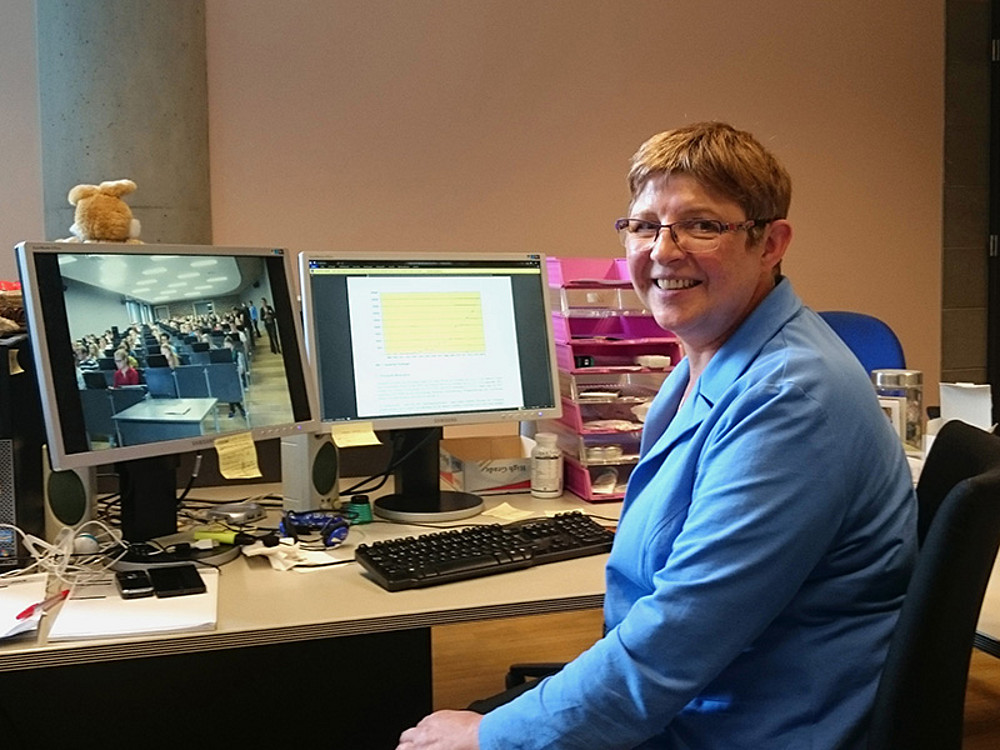
Christine Kapper ist Expertin für elektronische Prüfungen an der UNi Graz. Foto: Uni Graz/Schweiger
Christine Kapper ist Expertin für elektronische Prüfungen an der UNi Graz. Foto: Uni Graz/Schweiger

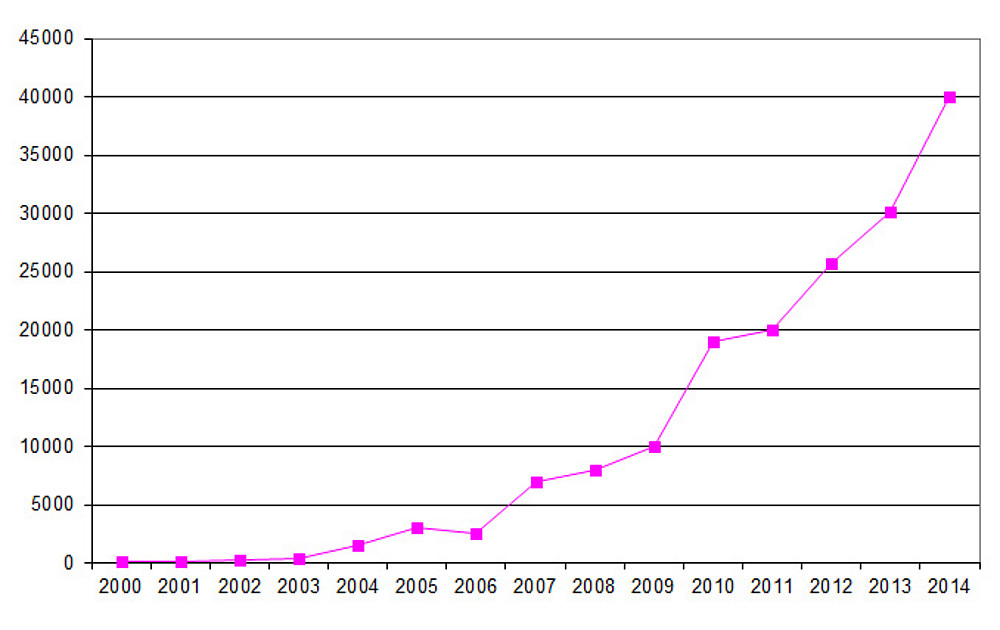
Seit 2011 hat sich die Anzahl elektronischer Prüfungen an der Graz verdoppelt. Grafik: Kapper


Seit 2011 hat sich die Anzahl elektronischer Prüfungen an der Graz verdoppelt. Grafik: Kapper
Elektronisches Verfahren boomt an der Uni Graz

Die Konzentration ist fast spürbar, die Lernplätze sind voll belegt und die Studierenden eilen von Hörsaal zu Hörsaal: Es ist Prüfungszeit an der Uni Graz. Und es rauchen dabei nicht nur die Köpfe, es glühen auch die Computer. Denn mittlerweile werden knapp 40.000 Prüfungen pro Jahr, das ist jede sechste Prüfung an der Karl-Franzens-Universität, elektronisch durchgeführt. „Seit 2011 hat sich die Anzahl verdoppelt, wir liegen damit im deutschsprachigen Raum im Spitzenfeld“, weiß Christine Kapper von der Abteilung Lehr- und Forschungsunterstützung bei UNI-IT.
Elektronische Prüfungen – etwa 350 können derzeit gleichzeitig abgehalten werden – ziehen sich quer durch alle Studien. Die Rechtswissenschaftliche Fakultät hat zuletzt die Aktivitäten auf diesem Gebiet verstärkt. >> Mehr Info on.uni-graz.at/de/detail/article/test-mit-klick

Seit dem ersten elektronischen Test, der an der Uni Graz mehr als 15 Jahre zurückliegt, hat sich vieles getan. Heutzutage sind längst mehr als nur Multiple Choice-Fragen möglich, bestätigt Kapper. Textantworten können ebenso integriert werden wie Grafiken. Lehrende erhalten sowohl bei der Gestaltung als auch der Eingabe Unterstützung. Schnittstellen zu UNIGRAZonline erleichtern die Organisation und Administration. So werden die Daten automatisch ins Prüfungssystem übertragen. Zudem wird auf Sicherheit großes Augenmerk gelegt.
„Es handelt sich um eine sehr objektive Methode und Studierende erhalten schnell die Ergebnisse“, nennt Kapper zwei der Vorteile des elektronischen Instruments. Wenngleich die Expertin einräumt: „Es ist sicher nicht für alle Prüfungen geeignet.“

Aufnahmeverfahren zu den Lehramtsstudien
Die Expertise der Uni Graz wird von anderen Hochschulen stark nachgefragt. Das Aufnahmeverfahren für die Lehramtsstudien – ein durch Hochschulraumstrukturmittel gefördertes Kooperationsprojekt – läuft seit 2013 unter Federführung der Uni Graz. Insgesamt 18 Hochschulen sind daran beteiligt und entwickeln ein einheitliches, modular aufgebautes Aufnahmeverfahren. Bereits zwölf Bildungsinstitutionen setzen das neue Verfahren, das aus einem Online-Self-Assessment, einer computerbasierte Testung und einem Face-to-Face-Assessment besteht, heuer ein.
Neben der wissenschaftlich-inhaltlichen Entwicklung ist die Universität Graz vor allem bei der technischen Realisierung des gemeinsamen Großprojekts mit den ExpertInnen der UNI-IT als federführende Institution beteiligt.
„Ende Mai haben die ersten Prüfungsdurchgänge für die computerbasierte Testung stattgefunden. Etwa 1000 StudienwerberInnen waren zu den Online-Tests an den Pädagogischen Hochschulen Niederösterreich, Tirol und Vorarlberg angemeldet“, berichtet Elke Jantscher, Koordinatorin der Aufnahmeverfahren für die Lehramtsstudien.
Von Ende Juni bis Mitte Juli finden die nächsten Durchgänge für acht weitere Institutionen statt, vom 13. bis 17. Juli auch an der Universität Graz. Insgesamt werden rund 3700 Anmeldungen erwartet.
www.zulassunglehramt.at

created by Andreas Schweiger

Related news

Mild Research Night: Around 750 visitors travelled around the world at the university

Lovely weather and a wide range of research topics drew visitors to the University of Graz last Friday. Highlights included a journey around the globe in eight stops, a ‘speed-dating’ session with books, insights into Alfred Wegener’s Greenland expedition, and guided tours of the democracy exhibition at the UniGraz@Museum.

Career Booster: How the Research Careers Campus supports researchers

They are innovative, creative and productive – researchers who have not yet been appointed to a professorship make a massive contribution to a university’s research output. To provide them with even better support on their career path, the University of Graz has established the Research Careers Campus. The official launch took place on 22 April 2026 with a ‘festival’.

Greenery on the rise: over 500 new flowers, perennials and shrubs on campus

Bright blooms and fresh greenery make our hearts beat faster in spring. But it is not just us humans who delight in this colourful growth. For many animals, this splendour provides, above all, food and habitat. There has recently been an increase in this on the University of Graz campus. More than 500 native flowers, perennials and shrubs have been planted on strips of fallow land around Universitätsplatz 2.

Building biological bridges: Chemist discovers an ecological tool for the pharmaceutical industry

Building a relationship on a solid foundation is also important in chemistry. To produce medicines, disinfectants or plant protection products, stable bonds between carbon atoms must be formed. Conventional chemical methods rely on environmentally harmful reagents and solvents to carry out the desired reaction. This process also produces unusable by-products. Chemist Lilla Gal has discovered an enzyme that enables the same process to take place efficiently and sustainably. The results of her research were recently published in the prestigious journal Angewandte Chemie.

Begin of page section:
Additional information:

University of Graz
Universitaetsplatz 3
8010 Graz
Austria
  • Contact
  • Web Editors
  • Moodle
  • UNIGRAZonline
  • Imprint
  • Data Protection Declaration
  • Accessibility Declaration
Weatherstation
Uni Graz

End of this page section. Go to overview of page sections

End of this page section. Go to overview of page sections

Begin of page section:

End of this page section. Go to overview of page sections