



Begin of page section:
Page sections:

  • Go to contents (Accesskey 1)
  • Go to position marker (Accesskey 2)
  • Go to main navigation (Accesskey 3)
  • Go to sub navigation (Accesskey 4)
  • Go to additional information (Accesskey 5)
  • Go to page settings (user/language) (Accesskey 8)
  • Go to search (Accesskey 9)

End of this page section. Go to overview of page sections

Begin of page section:
Page settings:

English en
Deutsch de
Search
Login

End of this page section. Go to overview of page sections

Begin of page section:
Search:

Search for details about Uni Graz
Close

End of this page section. Go to overview of page sections


Search

Begin of page section:
Main navigation:

Page navigation:

  • University

    University
    • About the University
    • Organisation
    • Faculties
    • Library
    • Working at University of Graz
    • Campus
    Developing solutions for the world of tomorrow - that is our mission. Our students and our researchers take on the great challenges of society and carry the knowledge out.
  • Research Profile

    Research Profile
    • Our Expertise
    • Research Questions
    • Research Portal
    • Promoting Research
    • Research Transfer
    • Ethics in Research
    • Commission for Scientific Integrity
    Scientific excellence and the courage to break new ground. Research at the University of Graz creates the foundations for making the future worth living.
  • Studies

    Studies
    • Prospective Students
    • Students
    • Registration for Study Programme (Winter semester 2026/27)
    • Welcome Weeks for First Year Students
  • Community

    Community
    • International
    • Location
    • Research and Business
    • Alumni
    The University of Graz is a hub for international research and brings together scientists and business experts. Moreover, it fosters the exchange and cooperation in study and teaching.
Topics
  • Sustainable University
  • Researchers answer
  • Work for us
Close menu

End of this page section. Go to overview of page sections

Begin of page section:
You are here:

University of Graz News Controlling molecular motors

End of this page section. Go to overview of page sections

Thursday, 30 March 2023

Controlling molecular motors

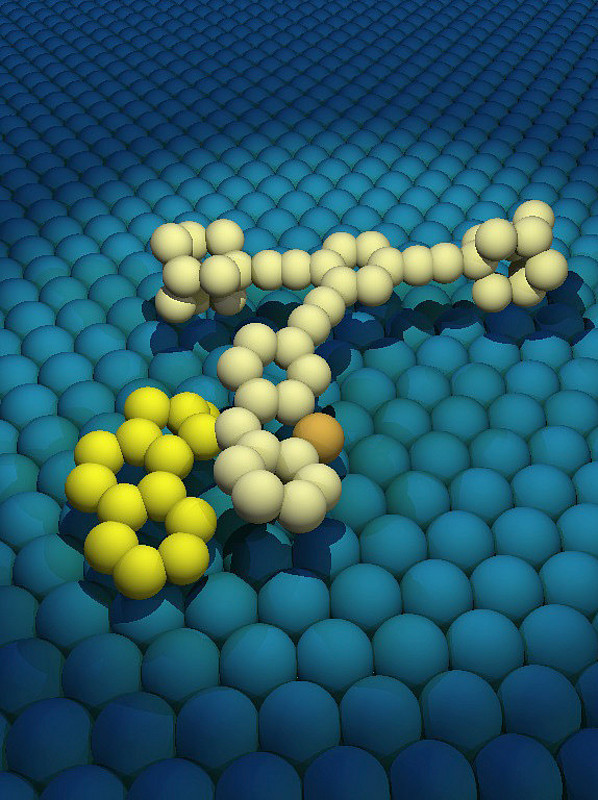
Nano-machine, consisting of only one molecule, on a surface

Nano-machines like this one are to be controlled remotely in future and transport cargo at the atomic level. Graphic: Uni Graz/Grill

Leonhard Grill receives 2.5 million euros for nano research

The aim of the AMOS research project (short for Adsorbate Motors: Tricking Microscopic Reversibility on Surfaces) is to make nano-machines fit for practice. The big challenge here is to trick nature to steer molecules in a desired direction. "All chemical processes - such as the movement of atoms - always run both forwards and backwards in equilibrium. Redirecting this backward movement is fundamentally important in order to be able to control molecular motors in a targeted manner," explains project leader Leonhard Grill, a physicist at the University of Graz. For his project, he has now been awarded an ERC Advanced Grant, one of the highest endowed grants awarded by the EU. He will receive 2.5 million euros for the next five years.

"Our goal is to control molecular motors that can also transport cargo at the atomic level," the researcher describes. Light is used as the "drive" so that many of these mini-machines can be set in motion from a distance. The big challenge for Grill is to find the right combination of motor and surface so that the molecules can be moved efficiently and precisely.
 
AMOS is concerned with both basic research and potential technological applications. "The project will give us a better understanding of nano-machines. In addition, we want to develop model systems and investigate how the motor activity can be enhanced, for example by arranging many motors that function cooperatively next to each other," explains the physicist. This opens up revolutionary possibilities in a wide range of areas, for example materials whose properties are manipulated by light, or the control of flows through microscopic channels and membranes.

About the researcher
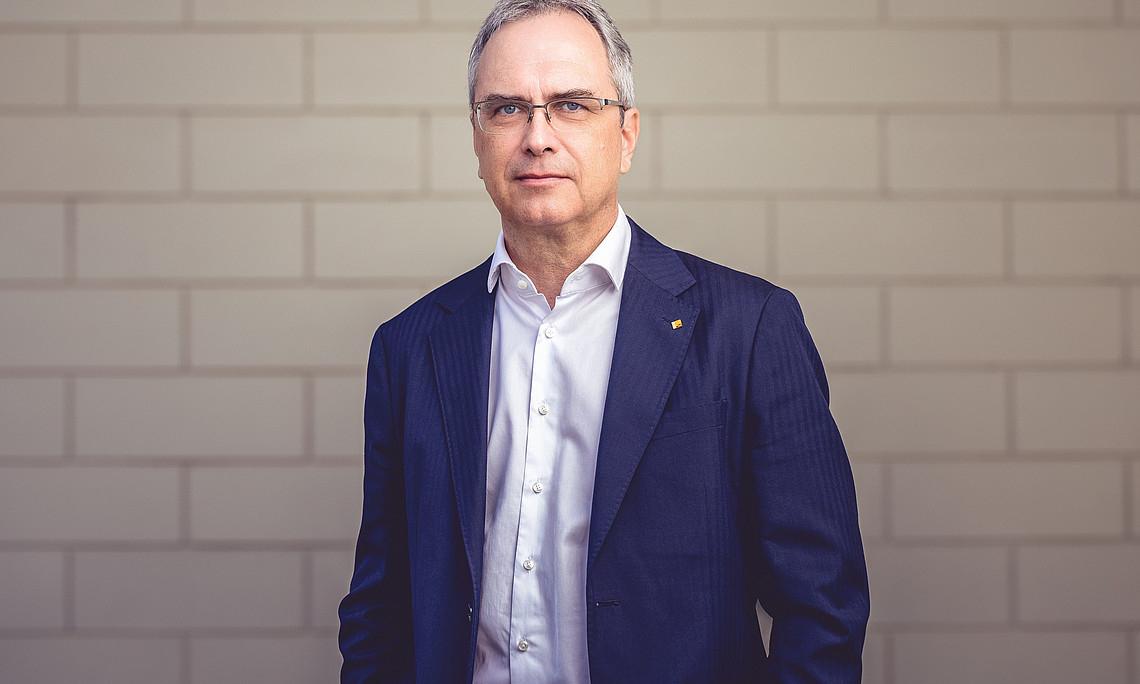
Leonhard Grill has been Professor of Physical Chemistry at the University of Graz since 2013. In 2017, he won the first international nano-car race. Furthermore, he and his team have already succeeded in sending and receiving individual molecules, controlling their state with light, linking them together to form molecular wires or networks, or rotating them in a desired direction.

About the ERC Advanced Grant
The European Research Council (ERC) selected 218 applications for funding out of 1647 submitted, four of them from Austria. "This high distinction shows that scientists at the University of Graz are also among the European excellence or world leaders," emphasises Joachim Reidl, Vice Rector for Research.

 

created by Dagmar Eklaude

Related news

How formulas are making medicine more personalised

When Federica Caforio talks about the heart, it doesn’t sound like an operating theatre, but rather like equations, parameters and simulations. Yet this is precisely where the medical promise of her research lies: one day, clinical data will be used to create a digital twin of the heart – a virtual model that will enable a better understanding of diseases and allow for more personalised treatment plans. She will be presenting her research at the ‘ECMTB 2026’ mathematics conference.

University Spin-Off Company “Innovation Hub Graz” works to make Spin-Offs investor ready

The Medical University of Graz, University of Graz and TU Graz are once again joining forces to establish a joint Innovation Hub Graz (iHub Graz). At this transfer centre, selected, particularly promising university spin-offs are specifically prepared to be investor ready.

Adhesive force: Researchers demonstrate how cells determine their function

How does a single cell develop into an organism with skin, muscles, intestines, a heart and other specialised tissues? Two studies published in leading journals have identified a mechanism that links genes, chemical signals and the physical properties of tissues. Scientists from London, Heidelberg and Graz were involved in the research.

Vitamin E is the key: a pharmacist has discovered a substance that ‘switches off’ inflammation

Alzheimer’s, obesity or atherosclerosis: many lifestyle-related diseases are driven by or accompanied by inflammation. “Treatments usually aim to halt the progression of inflammation. However, for a long-term cure, it must be completely resolved,” explains Andreas Koeberle, a pharmacist at the University of Graz. Normally, the body carries out this work itself. However, if this process does not function properly, chronic inflammation can develop, which can contribute to conditions such as cardiovascular disease or cancer.

Begin of page section:
Additional information:

University of Graz
Universitaetsplatz 3
8010 Graz
Austria
  • Contact
  • Web Editors
  • Moodle
  • UNIGRAZonline
  • Imprint
  • Data Protection Declaration
  • Accessibility Declaration
Weatherstation
Uni Graz

End of this page section. Go to overview of page sections

End of this page section. Go to overview of page sections

Begin of page section:

End of this page section. Go to overview of page sections

