Begin of page section:
Page sections:

  • Go to contents (Accesskey 1)
  • Go to position marker (Accesskey 2)
  • Go to main navigation (Accesskey 3)
  • Go to sub navigation (Accesskey 4)
  • Go to additional information (Accesskey 5)
  • Go to page settings (user/language) (Accesskey 8)
  • Go to search (Accesskey 9)

End of this page section. Go to overview of page sections

Begin of page section:
Page settings:

English en
Deutsch de
Search
Login

End of this page section. Go to overview of page sections

Begin of page section:
Search:

Search for details about Uni Graz
Close

End of this page section. Go to overview of page sections


Search

Begin of page section:
Main navigation:

Page navigation:

  • University

    University
    • About the University
    • Organisation
    • Faculties
    • Library
    • Working at University of Graz
    • Campus
    Developing solutions for the world of tomorrow - that is our mission. Our students and our researchers take on the great challenges of society and carry the knowledge out.
  • Research Profile

    Research Profile
    • Our Expertise
    • Research Questions
    • Research Portal
    • Promoting Research
    • Research Transfer
    • Ethics in Research
    • Commission for Scientific Integrity
    Scientific excellence and the courage to break new ground. Research at the University of Graz creates the foundations for making the future worth living.
  • Studies

    Studies
    • Prospective Students
    • Students
  • Community

    Community
    • International
    • Location
    • Research and Business
    • Alumni
    The University of Graz is a hub for international research and brings together scientists and business experts. Moreover, it fosters the exchange and cooperation in study and teaching.
Topics
  • Sustainable University
  • Researchers answer
  • Work for us
Close menu

End of this page section. Go to overview of page sections

Begin of page section:
You are here:

University of Graz News Human rights prize : for a more peaceful and just world

End of this page section. Go to overview of page sections

Tuesday, 25 November 2025

Human rights prize : for a more peaceful and just world

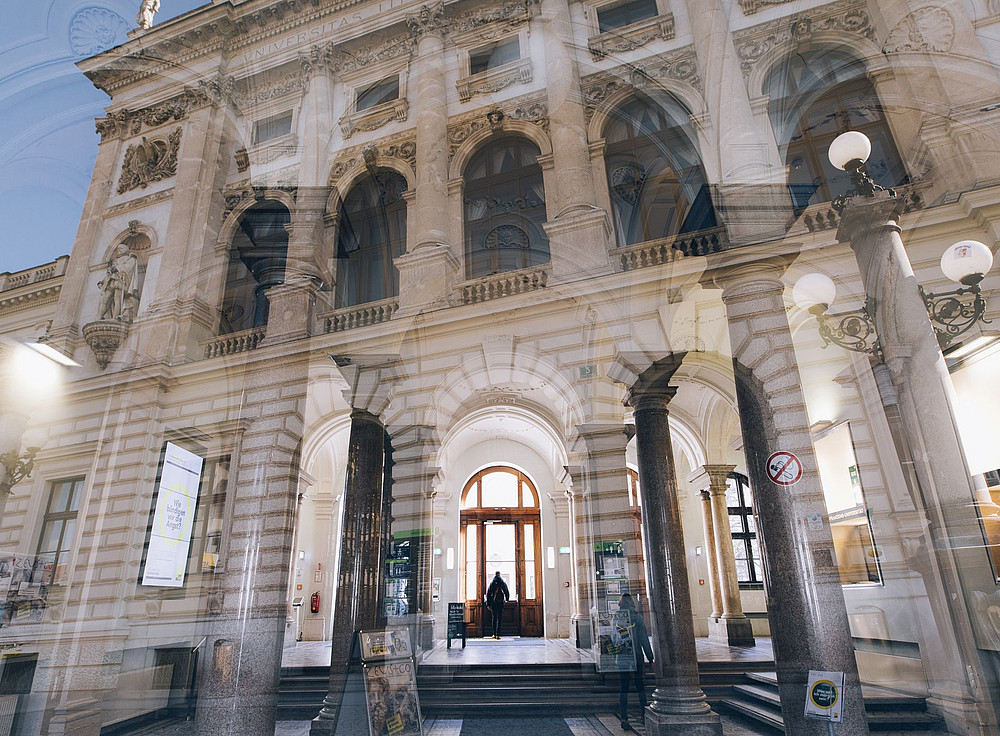
Hauptgebäude-Front ©Uni Graz/Kanizaj

"The awarding of a human rights prize is an appropriate act to express the ethical responsibility of the sciences for a more peaceful and just world." With these words, the University of Graz announced the establishment of a human rights prize in 1991. Thirty-three years later, the rationale is more important than ever.

Simon Wiesenthal received it in 1994 for his fight for the rights of Jewish victims of National Socialism and the investigation of Nazi crimes. Conductor Daniel Barenboim received it in 2011 for his artistic and political work for peace in the Middle East. And Volker Türk, now UN High Commissioner, received it in 2016 for his work to protect people fleeing their homes.

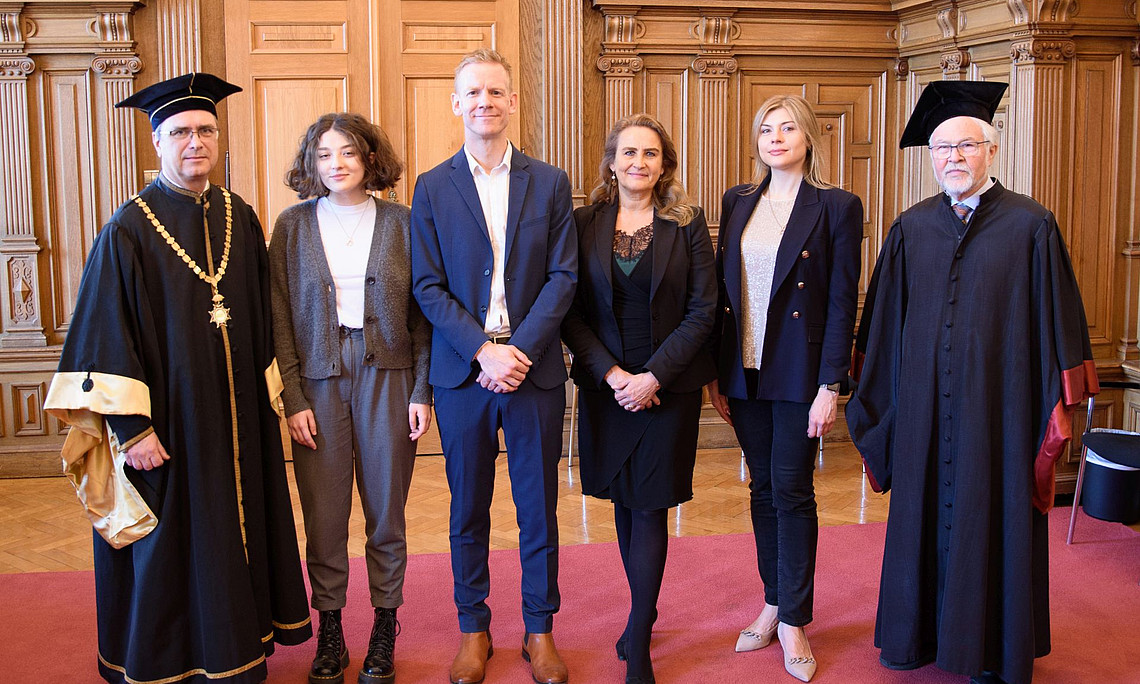
The University of Graz honoured these and other personalities with its Human Rights Award. The University of Graz award is presented to individuals or institutions that have made an outstanding contribution to the realisation of human rights. Such as the International Platform for Belarus, which will receive the University of Graz Human Rights Award on 22 March 2024. The association is being honoured for its activities in exposing serious human rights violations and crimes against humanity.

"Even though we face many challenges today, there are many opportunities to make the world a more just and inclusive place. Through dialogue, cooperation and commitment, we can realise the vision of the Universal Declaration of Human Rights and create a world in which everyone can live in dignity and freedom," emphasises Rector Peter Riedler.

The Human Rights Award is presented at irregular intervals and is decided by the Senate.

created by Andreas Schweiger

Related news

The digital world of tomorrow: University of Graz works with people to shape the future

Digitalisation is supposed to make everything better: artificial intelligence that even organises travel. The car that drives itself. Robots that care for us in our old age. But what kind of future do people actually want? What role should technology play in this? The University of Graz is exploring these questions through a new research facility. At the Graz Sociodigital and Participatory Futures Studio – or GraSP Futures Studio for short – young and old work together with researchers to design visions of the future that also critically examine technical innovations.

Superti-Furga will becomefounding director of the CORI Institute in Graz

The Austrian Academy of Sciences (ÖAW) is establishing a new flagship centre for research into metabolic diseases in collaboration with the three universities in Graz. This innovative research approach combines mathematics and experimental biology with artificial intelligence

A match for life

Stem cell donations save lives. However, the only way to determine who is ultimately compatible with whom is through a testing process. Pharmacist Marion Mußbacher explains the mechanisms behind this. On 6 May 2026, the ÖH and the charity “Geben für Leben” are calling for people to come forward for typing at the University of Graz.

A sign of freedom and democracy: University of Graz awards human rights prize to IAPB

The University of Graz awards its Human Rights Prize to the International Accountability Platform for Belarus for its crucial work in documenting serious human rights violations in Belarus. A clear signal for justice and a democratic Europe.

Begin of page section:
Additional information:

University of Graz
Universitaetsplatz 3
8010 Graz
Austria
  • Contact
  • Web Editors
  • Moodle
  • UNIGRAZonline
  • Imprint
  • Data Protection Declaration
  • Accessibility Declaration
Weatherstation
Uni Graz

End of this page section. Go to overview of page sections

End of this page section. Go to overview of page sections

Begin of page section:

End of this page section. Go to overview of page sections