Begin of page section:
Page sections:

  • Go to contents (Accesskey 1)
  • Go to position marker (Accesskey 2)
  • Go to main navigation (Accesskey 3)
  • Go to sub navigation (Accesskey 4)
  • Go to additional information (Accesskey 5)
  • Go to page settings (user/language) (Accesskey 8)
  • Go to search (Accesskey 9)

End of this page section. Go to overview of page sections

Begin of page section:
Page settings:

English en
Deutsch de
Search
Login

End of this page section. Go to overview of page sections

Begin of page section:
Search:

Search for details about Uni Graz
Close

End of this page section. Go to overview of page sections


Search

Begin of page section:
Main navigation:

Page navigation:

  • University

    University
    • About the University
    • Organisation
    • Faculties
    • Library
    • Working at University of Graz
    • Campus
    Developing solutions for the world of tomorrow - that is our mission. Our students and our researchers take on the great challenges of society and carry the knowledge out.
  • Research Profile

    Research Profile
    • Our Expertise
    • Research Questions
    • Research Portal
    • Promoting Research
    • Research Transfer
    • Ethics in Research
    Scientific excellence and the courage to break new ground. Research at the University of Graz creates the foundations for making the future worth living.
  • Studies

    Studies
    • Prospective Students
    • Students
  • Community

    Community
    • International
    • Location
    • Research and Business
    • Alumni
    The University of Graz is a hub for international research and brings together scientists and business experts. Moreover, it fosters the exchange and cooperation in study and teaching.
  • Spotlight
Topics
  • Sustainable University
  • Researchers answer
  • Work for us
Close menu

End of this page section. Go to overview of page sections

Begin of page section:
You are here:

University of Graz News Master-MIND

End of this page section. Go to overview of page sections

Tuesday, 27 August 2013

Master-MIND

Die ersten frischgebackenen MIND-Master
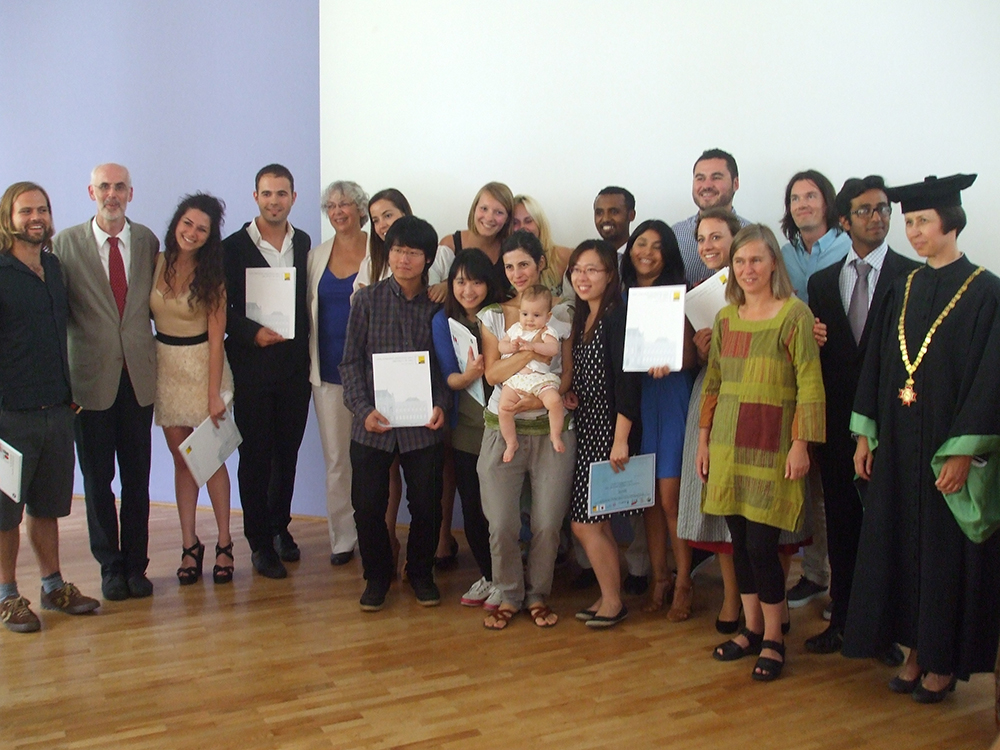
Die ersten frischgebackenen MIND-Master

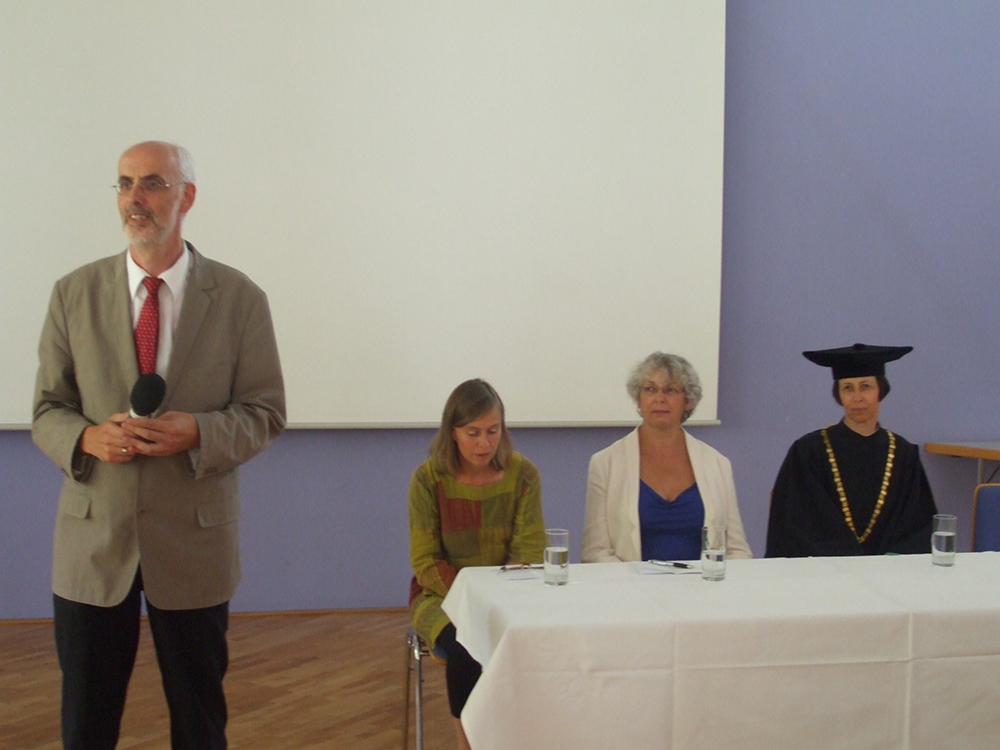
Feierliche Sponsion: Ralf Aschemann (Uni Graz), Ulrika Lundqvist (Chalmers Göteborg), Ester van der Voet (Uni Leiden) und Dekanin Barbara Gasteiger-Klicpera bei der Sponsion (v.l.)

Feierliche Sponsion: Ralf Aschemann (Uni Graz), Ulrika Lundqvist (Chalmers Göteborg), Ester van der Voet (Uni Leiden) und Dekanin Barbara Gasteiger-Klicpera bei der Sponsion (v.l.)

Erste Sponsion für internationales, interuniversitäres und interdisziplinäres Studium „Industrial Ecology“

Premiere für das länderübergreifende Erasmus Mundus-Masterstudium „Industrial Ecology“ (MIND), das die Karl-Franzens-Universität Graz seit dem Wintersemester 2011/12 koordiniert. Am 23. August 2013 erhielten die ersten 15 AbsolventInnen im Rahmen der akademischen Feier auf Schloss Seggau ihr Diplom. Die Sponsion wurde von URBI-Dekanin Univ.-Prof. Dr. Barbara Gasteiger-Klicpera vorgenommen.
Die Tage davor hatte die Uni Graz gemeinsam mit ihren Partneruniversitäten – Leiden, TU Delft, Chalmers Göteborg, Waseda Tokio, Rochester Institute of Technology und Asian Institute of Technology – knapp 50 MIND-Studierende aus allen fünf Kontinenten in die Südsteiermark eingeladen. „Dabei wurde für die neuen MIND-Studierenden eine Orientierungswoche angeboten und für jene, die im vergangenen Wintersemester begannen, eine Sommerschule veranstaltet“, berichtet MIND-Koordinator Dr. Ralf Aschemann vom Institut für Systemwissenschaften, Innovations- und Nachhaltigkeitsforschung.
Das internationale, interuniversitäre und interdisziplinäre Studium wird von der Europäischen Kommission bis 2017 gefördert und ausschließlich in englischer Sprache angeboten.

>> Nähere Informationen zum Masterstudium "Industrial Ecology"

created by Andreas Schweiger

Related news

Diversity buddies at the University of Graz: Support on equal terms

The University of Graz is strengthening its commitment to equal opportunities with its new Diversity Buddies. University members can find easily accessible contact persons here for questions relating to equality and diversity. All employees can get involved and take action.

When parents find it difficult to have a say

In her dissertation, translation scholar Marie Tschurtschenthaler examines how communication between compulsory schools and parents whose first language is not German works – and what role professional language mediation plays in this. Initial insights show that it is not just about language, but also about resources, responsibilities and the institutional framework.

AI in schools: Maria Bertel drafts legal guidelines for teachers

The legal expert and her team analysed the legal situation regarding the use of artificial intelligence in education as part of an EU project and answered open questions from practice.

Cosmetics in the environment: University of Graz proves danger to ants

Titanium dioxide, which is found in cosmetics, for example, is increasingly entering the environment in the form of nanoparticles. This could also put insects at risk. If ants ingest the substance in combination with the pesticide glyphosate, it disturbs the development of their offspring. Scientists at the University of Graz are drawing attention to the negative consequences of this toxic cocktail.

Begin of page section:
Additional information:

University of Graz
Universitaetsplatz 3
8010 Graz
Austria
  • Contact
  • Web Editors
  • Moodle
  • UNIGRAZonline
  • Imprint
  • Data Protection Declaration
  • Accessibility Declaration
Weatherstation
Uni Graz

End of this page section. Go to overview of page sections

End of this page section. Go to overview of page sections

Begin of page section:

End of this page section. Go to overview of page sections