Begin of page section:
Page sections:

  • Go to contents (Accesskey 1)
  • Go to position marker (Accesskey 2)
  • Go to main navigation (Accesskey 3)
  • Go to sub navigation (Accesskey 4)
  • Go to additional information (Accesskey 5)
  • Go to page settings (user/language) (Accesskey 8)
  • Go to search (Accesskey 9)

End of this page section. Go to overview of page sections

Begin of page section:
Page settings:

English en
Deutsch de
Search
Login

End of this page section. Go to overview of page sections

Begin of page section:
Search:

Search for details about Uni Graz
Close

End of this page section. Go to overview of page sections


Search

Begin of page section:
Main navigation:

Page navigation:

  • University

    University
    • About the University
    • Organisation
    • Faculties
    • Library
    • Working at University of Graz
    • Campus
    Developing solutions for the world of tomorrow - that is our mission. Our students and our researchers take on the great challenges of society and carry the knowledge out.
  • Research Profile

    Research Profile
    • Our Expertise
    • Research Questions
    • Research Portal
    • Promoting Research
    • Research Transfer
    • Ethics in Research
    Scientific excellence and the courage to break new ground. Research at the University of Graz creates the foundations for making the future worth living.
  • Studies

    Studies
    • Prospective Students
    • Students
  • Community

    Community
    • International
    • Location
    • Research and Business
    • Alumni
    The University of Graz is a hub for international research and brings together scientists and business experts. Moreover, it fosters the exchange and cooperation in study and teaching.
  • Spotlight
Topics
  • Our digital Advent calendar
  • Sustainable University
  • Researchers answer
  • Work for us
Close menu

End of this page section. Go to overview of page sections

Begin of page section:
You are here:

University of Graz News Will the virus result in a more climate-friendly future?

End of this page section. Go to overview of page sections

Thursday, 26 March 2020

Will the virus result in a more climate-friendly future?

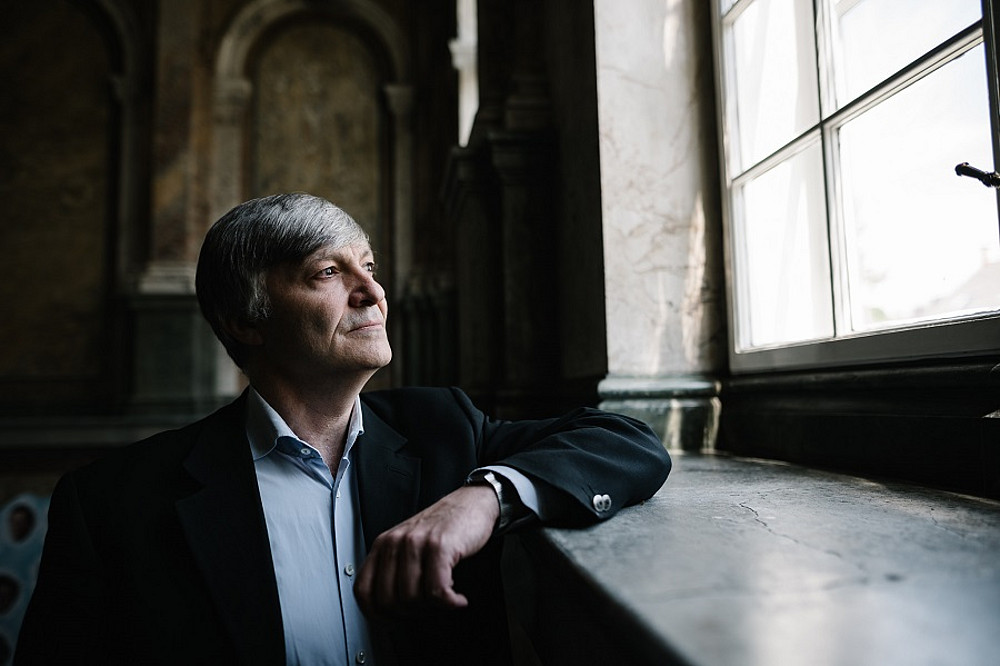
“What we are experiencing and learning from this crisis may accelerate some fundamental changes as part of the transition to sustainability”, says climate economist Karl Steininger. Foto: Uni Graz/Kernasenko

“What we are experiencing and learning from this crisis may accelerate some fundamental changes as part of the transition to sustainability”, says climate economist Karl Steininger. Foto: Uni Graz/Kernasenko

The University of Graz responds to questions on the coronavirus crisis: Current “emergency measures” may accelerate the sustainable transition of our society and economy, says economist Karl Steininger

Video conferences instead of business trips, working at home instead of commuting to the office – if they work well, the current emergency measures may become standard in the future, according to Karl Steininger, an economist at the University of Graz; he sees this as a good opportunity in the battle against climate change. “The coronavirus crisis is forcing us to try new ways of working. If the experience is positive, we could continue to use and extend them, making a significant contribution to the sustainable transformation of our society,” believes the climate economist.

The restrictions on manufacturing and mobility that have been forced on us by the coronavirus crisis have resulted in a significant decrease in atmospheric pollution. In China, according to analyses by the Finnish Center for Research on Energy and Clean Air, greenhouse gas emissions fell by more than 25 per cent in February 2020. However, short-term reductions like these have no effect on global warming, says Karl Steininger: “To actually reverse the trend, greenhouse gas emissions need to be reduced worldwide and permanently.” Nevertheless, the current situation is revealing an opportunity for our environment: “What we are experiencing and learning from this crisis may accelerate some fundamental changes as part of the transition to sustainability.”

In addition to the effects on our working lives, the crisis is also highlighting the dangers inherent in our dependence on global supply chains. If countries in Asia are no longer able to supply medications, electronic components, or spare parts for the automobile industry, this may have dramatic consequences for people and the economy in Europe. “This realisation is an argument for developing production structures that are regionally concentrated, to allow more autonomy; as a side-effect it would significantly reduce the ecological footprint,” says the climate economist.

Steininger points out that we already have some potential options for decentralisation, such as “additive production” technologies, i.e. 3D printing. “This would mean parts for the automobile industry, for example, could be produced where they are needed.” He mentions “flow chemistry” as another example, which allows pharmaceutical substances to be manufactured on a smaller scale, so reducing dependence on international supply chains. The chemist Oliver C. Kappe, from the University of Graz, is a pioneer in this field of research.

To achieve sustainable transformation of our society and economy, which is a central research objective for “Climate Change Graz”, one of the university’s Fields of Excellence, we need to radically rethink and reorient every area of our lives, across all sectors. The current crisis may make it easier for us to move on from the old ways of doing things, hopes Steininger.
Yet he does find it puzzling that the immediate threat posed by the coronavirus is suddenly making us accept certain measures and changes in the way we behave, which we so far did not see justified by the long-term, greater dangers of climate change.

created by Gudrun Pichler

Related news

Fair distribution: Researchers determine just greenhouse gas budgets for all EU regions

Ten years ago, on 12 December 2015, the Paris Climate Agreement was signed at the UN Climate Conference. In order to limit global warming to well below two degrees, only a certain amount of CO2 may be emitted worldwide. While the focus was originally on national emission targets, more than 200 subnational regions and almost 300 cities have now adopted their own targets. But how many emissions are they fairly entitled to? Researchers at the University of Graz have now developed transparent criteria for fair distribution at the subnational level for the first time and determined corresponding greenhouse gas budgets for all European regions. The paper was published today in the scientific journal Nature Communications.

Chemical Christmas show at the University of Graz: An explosive evening at the Schauspielh

At the beginning of December, the University of Graz transformed the theater into a laboratory: as part of “Chemical Life,” teacher training students staged a chemical Christmas show for Styrian school classes—complete with ethanol rockets, nitrogen snow, and glowing effects. An evening designed to inspire interest in studying chemistry.

Train by train: Koralm railway accelerates exchange between the Universities

Lectures at the University of Klagenfurt in the morning, seminars at the University of Graz in the afternoon: Austria's longest tunnel and a journey time of around 45 minutes make it easy. The Koralm railway increases the speed of networking between the two university locations. The collaboration builds on existing cooperation - for example in the areas of teacher training, Slavic studies and as employers, the universities are well coordinated.

On the trail of the Big Bang: University of Graz receives 1.5 million euros for doctoral programmes

The Austrian Science Fund FWF has selected the Doctoral Programme in Theoretical Particle Physics at the University of Graz for funding from the Doc.funds. Six young scientists will be funded for 3.5 years. They will gain fundamentally new insights into the origins of the world.

Begin of page section:
Additional information:

University of Graz
Universitaetsplatz 3
8010 Graz
Austria
  • Contact
  • Web Editors
  • Moodle
  • UNIGRAZonline
  • Imprint
  • Data Protection Declaration
  • Accessibility Declaration
Weatherstation
Uni Graz

End of this page section. Go to overview of page sections

End of this page section. Go to overview of page sections

Begin of page section:

End of this page section. Go to overview of page sections