Begin of page section:
Page sections:

  • Go to contents (Accesskey 1)
  • Go to position marker (Accesskey 2)
  • Go to main navigation (Accesskey 3)
  • Go to sub navigation (Accesskey 4)
  • Go to additional information (Accesskey 5)
  • Go to page settings (user/language) (Accesskey 8)
  • Go to search (Accesskey 9)

End of this page section. Go to overview of page sections

Begin of page section:
Page settings:

English en
Deutsch de
Search
Login

End of this page section. Go to overview of page sections

Begin of page section:
Search:

Search for details about Uni Graz
Close

End of this page section. Go to overview of page sections


Search

Begin of page section:
Main navigation:

Page navigation:

  • University

    University
    • About the University
    • Organisation
    • Faculties
    • Library
    • Working at University of Graz
    • Campus
    Developing solutions for the world of tomorrow - that is our mission. Our students and our researchers take on the great challenges of society and carry the knowledge out.
  • Research Profile

    Research Profile
    • Our Expertise
    • Research Questions
    • Research Portal
    • Promoting Research
    • Research Transfer
    • Ethics in Research
    Scientific excellence and the courage to break new ground. Research at the University of Graz creates the foundations for making the future worth living.
  • Studies

    Studies
    • Prospective Students
    • Students
  • Community

    Community
    • International
    • Location
    • Research and Business
    • Alumni
    The University of Graz is a hub for international research and brings together scientists and business experts. Moreover, it fosters the exchange and cooperation in study and teaching.
  • Spotlight
Topics
  • Our digital Advent calendar
  • Sustainable University
  • Researchers answer
  • Work for us
Close menu

End of this page section. Go to overview of page sections

Begin of page section:
You are here:

University of Graz News Lettlands Tragödie

End of this page section. Go to overview of page sections

Friday, 26 June 2015

Lettlands Tragödie

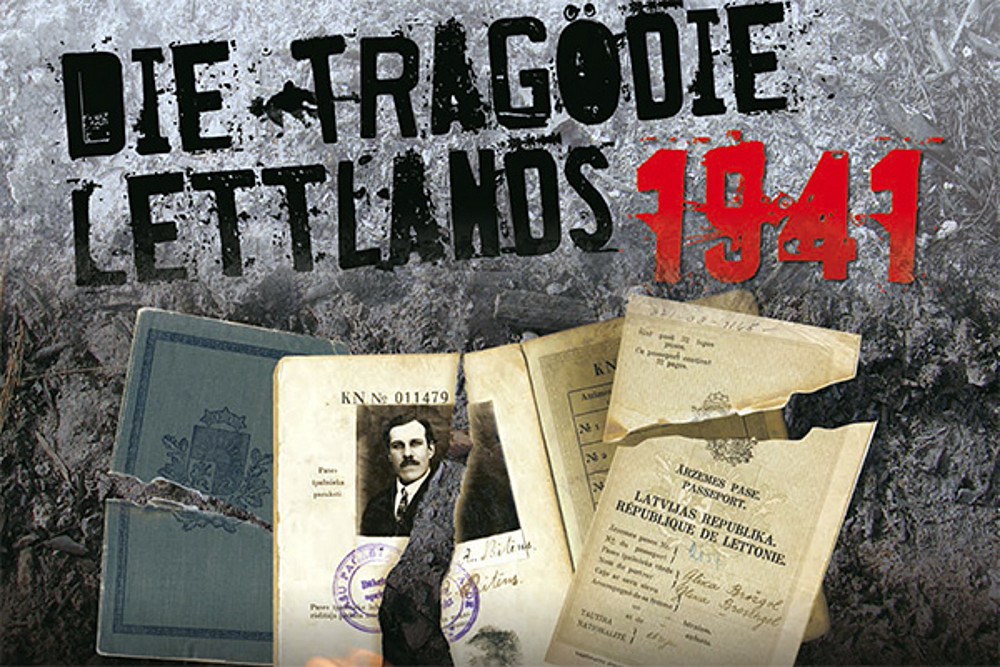
Der Holocaust in Lettland ab 1941 und die Folgen bis heute sind Gegenstand einer Ausstellung im RESOWI-Zentrum.

Der Holocaust in Lettland ab 1941 und die Folgen bis heute sind Gegenstand einer Ausstellung im RESOWI-Zentrum.

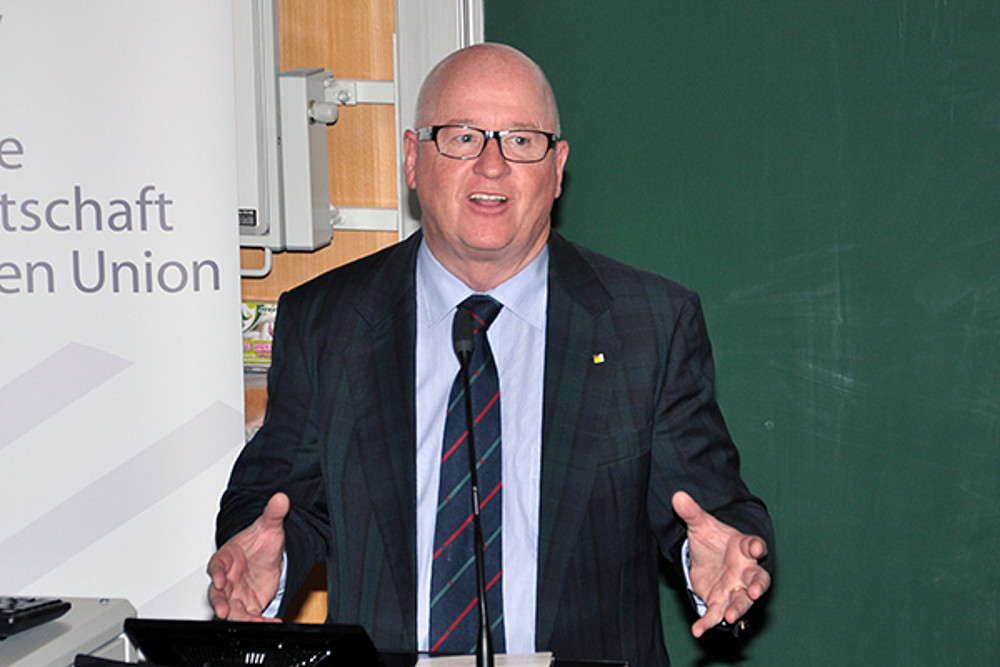
Stefan Karner eröffnete die Ausstellung und begrüßte zahlreiche Prominenz. Fotos: Uni Graz/Eklaude

Stefan Karner eröffnete die Ausstellung und begrüßte zahlreiche Prominenz. Fotos: Uni Graz/Eklaude

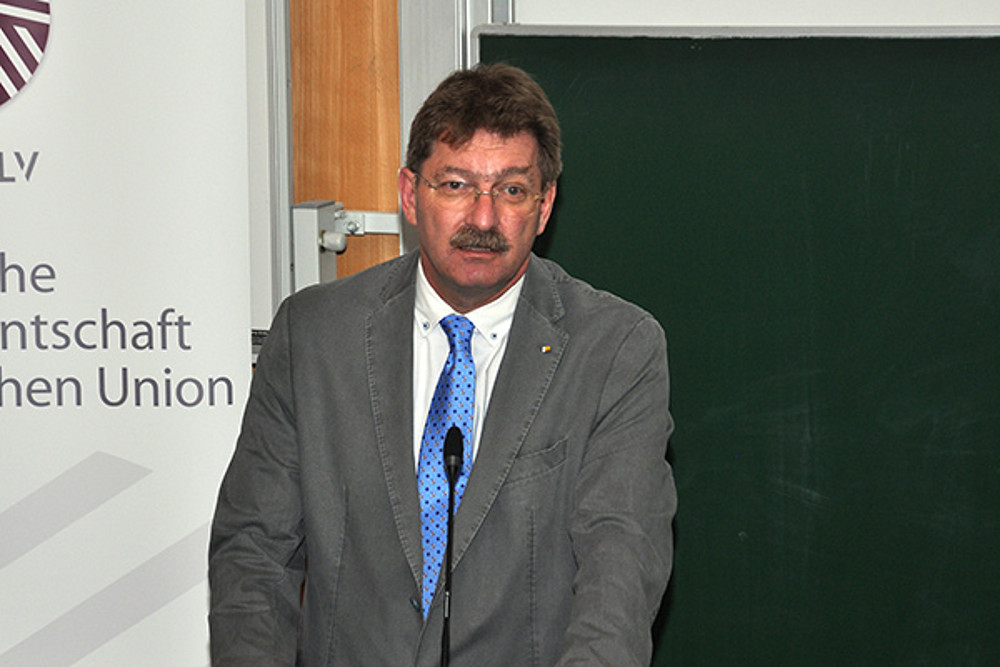
Peter Scherrer dankte den OrganisatorInnen sowie den VertreterInnen der lettischen Botschaft, die durch ihr Kommen die Bedeutung der Ausstellung hervorhoben.

Peter Scherrer dankte den OrganisatorInnen sowie den VertreterInnen der lettischen Botschaft, die durch ihr Kommen die Bedeutung der Ausstellung hervorhoben.

Ausstellung zu Kriegsereignissen im Jahr 1941 im RESOWI-Zentrum eröffnet

Am Institut für Wirtschafts-, Sozial- und Unternehmensgeschichte ist bis zum 10. Juli die Schau „Die Tragödie Lettlands 1941“ zu sehen. Sie zeigt den Holocaust im baltischen Staat nach dem Einmarsch Hitlers im Juli 1941. Bereits seit 1940 war Lettland aufgrund des Hitler-Stalin-Paktes von der Sowjetunion okkupiert. Der Wechsel der Besatzung brachte den Menschen enormes Leid, besonders die jüdische Bevölkerung wurde verfolgt und vernichtet. Später deportierte man Jüdinnen und Juden aus ganz Europa in die baltischen Länder, um sie dort in den deutschen Konzentrationslagern zu ermorden.
Die Aufarbeitung der Geschichte begann erst mit der Eigenständigkeit Lettlands in den 1990er-Jahren. Der Umgang mit der großen russischen Minderheit und der eigenen Kollaboration mit den NS-Besatzern sind dabei eine Herausforderung. Die Schau beleuchtet eine zeitgeschichtlich wichtige Facette an einer politischen wie geografischen Nahtstelle – gerade jetzt, da die Spannungen zwischen Russland und der EU zunehmen.
Das Ludwig-Boltzmann-Institut für Kriegsfolgen-Forschung in Graz hat gemeinsam mit lettischen KollegInnen die Schicksale von knapp 300 österreichischen Jüdinnen und Juden erforscht, die zwischen 1938 und 1941 in Lettland Zuflucht vor der Verfolgung durch das NS-Regime fanden.
Die Ausstellung wurde heute im Beisein zahlreicher Prominenz eröffnet, darunter der lettische Botschafter in Österreich Edgars Skuja, der frühere lettische Außenminister Botschafter Kärlis Eihenbaums, OSZE-Botschafter Bahtijors Hasans, Landesrat Christian Buchmann, die Honorarkonsuln Tino Pölzer, Johannes Hornig und Gerold Ortner, sowie die Leiter des Okkupationsmuseum in Riga und des jüdischen Museums in Lettland, die auch die Schau entwickelt haben. Stefan Karner, Leiter des Ludwig-Boltzmann-Instituts sowie des Instituts für Wirtschafts-, Sozial- und Unternehmensgeschichte der Uni Graz, verwies darauf, dass Lettland das letzte Land war, das im Zweiten Weltkrieg noch Jüdinnen und Juden aus Österreich und Deutschland aufnahm. Vizerektor Peter Scherrer verwies auf die Zeitlosigkeit des Themas Genozid und betonte: "Lettland ist nur ein Beispiel unter vielen. Die Schau möge und allen zeigen, was unsere Pflichten als Europäer sind."

Die Ausstellung findet im Rahmen der zu Ende gehenden EU-Ratspräsidentschaft Lettlands statt und ist nun erstmals im deutschsprachigen Raum zu sehen.

created by Dagmar Eklaude

Related news

Chemical Christmas show at the University of Graz: An explosive evening at the Schauspielh

At the beginning of December, the University of Graz transformed the theater into a laboratory: as part of “Chemical Life,” teacher training students staged a chemical Christmas show for Styrian school classes—complete with ethanol rockets, nitrogen snow, and glowing effects. An evening designed to inspire interest in studying chemistry.

Train by train: Koralm railway accelerates exchange between the Universities

Lectures at the University of Klagenfurt in the morning, seminars at the University of Graz in the afternoon: Austria's longest tunnel and a journey time of around 45 minutes make it easy. The Koralm railway increases the speed of networking between the two university locations. The collaboration builds on existing cooperation - for example in the areas of teacher training, Slavic studies and as employers, the universities are well coordinated.

On the trail of the Big Bang: University of Graz receives 1.5 million euros for doctoral programmes

The Austrian Science Fund FWF has selected the Doctoral Programme in Theoretical Particle Physics at the University of Graz for funding from the Doc.funds. Six young scientists will be funded for 3.5 years. They will gain fundamentally new insights into the origins of the world.

From trans women and knee prostheses: sports science prizes awarded

Walking better with a prosthesis, successfully getting rid of excess weight, training more effectively, more fairness for trans people in sport: these were the topics addressed by the students at the University of Graz who were awarded the sports science prizes for their Master's theses on 3 December 2025.

Begin of page section:
Additional information:

University of Graz
Universitaetsplatz 3
8010 Graz
Austria
  • Contact
  • Web Editors
  • Moodle
  • UNIGRAZonline
  • Imprint
  • Data Protection Declaration
  • Accessibility Declaration
Weatherstation
Uni Graz

End of this page section. Go to overview of page sections

End of this page section. Go to overview of page sections

Begin of page section:

End of this page section. Go to overview of page sections