Begin of page section:
Page sections:

  • Go to contents (Accesskey 1)
  • Go to position marker (Accesskey 2)
  • Go to main navigation (Accesskey 3)
  • Go to sub navigation (Accesskey 4)
  • Go to additional information (Accesskey 5)
  • Go to page settings (user/language) (Accesskey 8)
  • Go to search (Accesskey 9)

End of this page section. Go to overview of page sections

Begin of page section:
Page settings:

English en
Deutsch de
Search
Login

End of this page section. Go to overview of page sections

Begin of page section:
Search:

Search for details about Uni Graz
Close

End of this page section. Go to overview of page sections


Search

Begin of page section:
Main navigation:

Page navigation:

  • University

    University
    • About the University
    • Organisation
    • Faculties
    • Library
    • Working at University of Graz
    • Campus
    Developing solutions for the world of tomorrow - that is our mission. Our students and our researchers take on the great challenges of society and carry the knowledge out.
  • Research Profile

    Research Profile
    • Our Expertise
    • Research Questions
    • Research Portal
    • Promoting Research
    • Research Transfer
    • Ethics in Research
    • Commission for Scientific Integrity
    Scientific excellence and the courage to break new ground. Research at the University of Graz creates the foundations for making the future worth living.
  • Studies

    Studies
    • Prospective Students
    • Students
    • Registration for Study Programme (Winter semester 2026/27)
  • Community

    Community
    • International
    • Location
    • Research and Business
    • Alumni
    The University of Graz is a hub for international research and brings together scientists and business experts. Moreover, it fosters the exchange and cooperation in study and teaching.
Topics
  • Sustainable University
  • Researchers answer
  • Work for us
Close menu

End of this page section. Go to overview of page sections

Begin of page section:
You are here:

University of Graz News Lernen und leben

End of this page section. Go to overview of page sections

Thursday, 20 November 2014

Lernen und leben

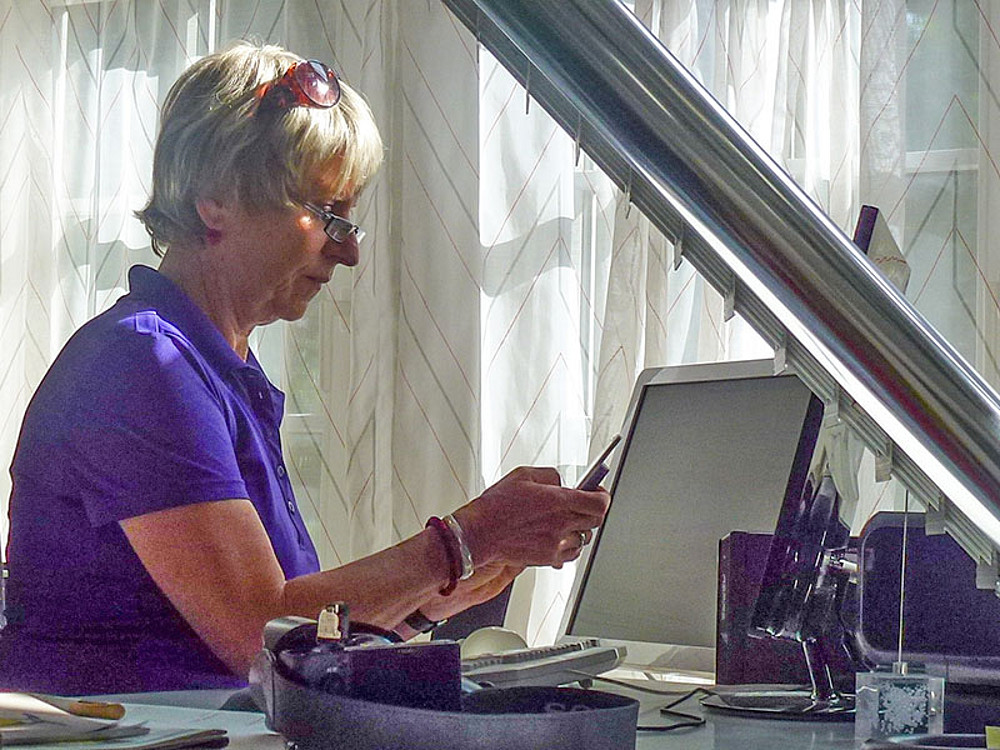
Ein Forschungsprojekt soll Zusammenhänge zwischen Wissensgesellschaft und alternder Gesellschaft aufzeigen. Foto: Rainer Sturm/<a href="http://www.pixelio.de">pixelio.de</a>

Ein Forschungsprojekt soll Zusammenhänge zwischen Wissensgesellschaft und alternder Gesellschaft aufzeigen. Foto: Rainer Sturm/<a href="http://www.pixelio.de">pixelio.de</a>

Ein Forschungsprojekt der Uni Graz untersucht die Bedeutung von Nicht-Wissen für ältere Menschen

Wissen ist Macht – behauptete der englische Philosoph Francis Bacon Ende des 16. Jahrhunderts angesichts neuer Erkenntnisse der Naturwissenschaften. Heute ist die Rede von der Wissensgesellschaft, in der Wissen als Voraussetzung angesehen wird, um am sozialen und wirtschaftlichen Leben teilhaben zu können. Ob das tatsächlich so ist, untersucht ein Forschungsprojekt der Karl-Franzens-Universität Graz, das seinen Fokus auf die Bedeutung von Nicht-Wissen für ältere Menschen richtet.


„Lebensbegleitendes Lernen“ lautet ein Schlagwort der Wissensgesellschaft. Menschen sind aufgefordert, sich bis ins Alter weiterzubilden, um am Ball zu bleiben. Oma befolgt diesen Rat. Sie ruft zweimal die Woche ihre E-Mails ab und freut sich über die Fotos von ihren Enkelkindern. Aber ihr Geld zahlt sie lieber am Bankschalter ein, weil sie mit E-Banking nicht zurechtkommt.

Ein Forschungsprojekt unter der Leitung von Dr. Claudia Gerdenitsch vom Institut für Erziehungs- und Bildungswissenschaft der Uni Graz will herausfinden, welche Bedeutung es für ältere Menschen hat, wenn sie bestimmte Dinge nicht wissen. Interviews sollen Aufschluss darüber geben, wie sie zu ihrer „Unwissenheit“ in manchen Bereichen stehen. Ob beziehungsweise wann mangelnde Kenntnisse oder Kompetenzen dazu führen, dass sie gewisse Dinge meiden oder ob das Nicht-Wissen in ihrem Alltag überhaupt eine Rolle spielt. „Ein Ziel ist herauszufinden, wo Weiterbildung für den Einzelnen/die Einzelne relevant ist – im Hinblick auf Selbstbestimmung, Autonomie und Entscheidungsqualität, und in welchen Bereichen man sich eventuell auch leisten kann, nichts zu wissen“, erklärt Claudia Gerdenitsch.

Darüber hinaus sollen Zusammenhänge zwischen Wissensgesellschaft und alternder Gesellschaft sichtbar gemacht werden: Welche Bedeutung hat Wissen in einer alternden Gesellschaft und – anders herum – Alter in einer Wissensgesellschaft? Hier gebe es noch einiges zu tun: „Um älteren Menschen die Aneignung von neuem Wissen zu ermöglichen, braucht es vor allem mehr Vermittlungsangebote“, betont Gerdenitsch. So werden zum Beispiel durch die modernen Informations- und Kommunikationstechnologien plötzlich viele in bestimmten sozialen Kontexten inkompetent – was nicht sein müsste. Die ProjektpartnerInnen wollen geeignete Maßnahmen und alternative Weiterbildungsangebote konzipieren.

Eingebunden in das Projekt sind an der Uni Graz ForscherInnen aus den Erziehungs- und Bildungswissenschaften, der Philosophie und der Moraltheologie. Das Institut für Geragogik in Witten/Deutschland und der Verein Akzente aus Voitsberg/Steiermark sind weitere Projektpartner. Finanziert werden die Forschungen vom Land Steiermark im Rahmen der Ausschreibung „Die Zunahme von Nicht-Wissen“ als Teil der Förderschiene „Polaritäten in der Wissensgesellschaft“.


Im Webradio der Grazer Universitäten spricht Claudia Gerdenitsch über die „Koordinationsstelle Altern“.

created by Gudrun Pichler

Related news

Sport beyond the World Cup: the TV channel “Welt der Wunder” features diabetes research from the University of Graz

Keeping blood sugar levels in check during physical exertion is a particular challenge for people with type 1 diabetes. Othmar Moser examines how those affected manage to balance physical activity, sport and their metabolic disorder.

"Mathematics explains the world"

How can life be quantified? And what can science reveal that remains hidden from the naked eye? The 14th European Conference on Mathematical and Theoretical Biology at the University of Graz is dedicated to these questions. From 13 to 17 July, around 1,300 researchers from all over the world will gather on campus to discuss models, biological processes and the future of data-driven medicine. Klemens Fellner, Dean of the Faculty of Natural Sciences and Mathematics and a mathematician, talks about the language that explains the world

Internationally up-to-date: University of Graz offers new degree programmes in art studies

From the Old Masters to AI art – three newly designed degree programmes offer students at the University of Graz fresh perspectives on artistic production. In addition to historical art, the programmes place a greater emphasis on contemporary and global developments. The registration period is open.

The Nazi elite school Napola: Historian seeks memories and personal documents

They were to be brought up to become the future elite of National Socialism: boys and girls aged ten and over who, following the ‘Anschluss’ of Austria to the German Reich, attended a so-called Napola (short for Nationalpolitische Lehranstalt; also known as NPEA, Nationalpolitische Erziehungsanstalt). There were nine such institutions in what is now Austria between 1939 and 1945.

Begin of page section:
Additional information:

University of Graz
Universitaetsplatz 3
8010 Graz
Austria
  • Contact
  • Web Editors
  • Moodle
  • UNIGRAZonline
  • Imprint
  • Data Protection Declaration
  • Accessibility Declaration
Weatherstation
Uni Graz

End of this page section. Go to overview of page sections

End of this page section. Go to overview of page sections

Begin of page section:

End of this page section. Go to overview of page sections