Begin of page section:
Page sections:

  • Go to contents (Accesskey 1)
  • Go to position marker (Accesskey 2)
  • Go to main navigation (Accesskey 3)
  • Go to sub navigation (Accesskey 4)
  • Go to additional information (Accesskey 5)
  • Go to page settings (user/language) (Accesskey 8)
  • Go to search (Accesskey 9)

End of this page section. Go to overview of page sections

Begin of page section:
Page settings:

English en
Deutsch de
Search
Login

End of this page section. Go to overview of page sections

Begin of page section:
Search:

Search for details about Uni Graz
Close

End of this page section. Go to overview of page sections


Search

Begin of page section:
Main navigation:

Page navigation:

  • University

    University
    • About the University
    • Organisation
    • Faculties
    • Library
    • Working at University of Graz
    • Campus
    Developing solutions for the world of tomorrow - that is our mission. Our students and our researchers take on the great challenges of society and carry the knowledge out.
  • Research Profile

    Research Profile
    • Our Expertise
    • Research Questions
    • Research Portal
    • Promoting Research
    • Research Transfer
    • Ethics in Research
    • Commission for Scientific Integrity
    Scientific excellence and the courage to break new ground. Research at the University of Graz creates the foundations for making the future worth living.
  • Studies

    Studies
    • Prospective Students
    • Students
    • Registration for Study Programme (Winter semester 2026/27)
  • Community

    Community
    • International
    • Location
    • Research and Business
    • Alumni
    The University of Graz is a hub for international research and brings together scientists and business experts. Moreover, it fosters the exchange and cooperation in study and teaching.
Topics
  • Sustainable University
  • Researchers answer
  • Work for us
Close menu

End of this page section. Go to overview of page sections

Begin of page section:
You are here:

University of Graz News Leinwand frei!

End of this page section. Go to overview of page sections

Wednesday, 07 March 2018

Leinwand frei!
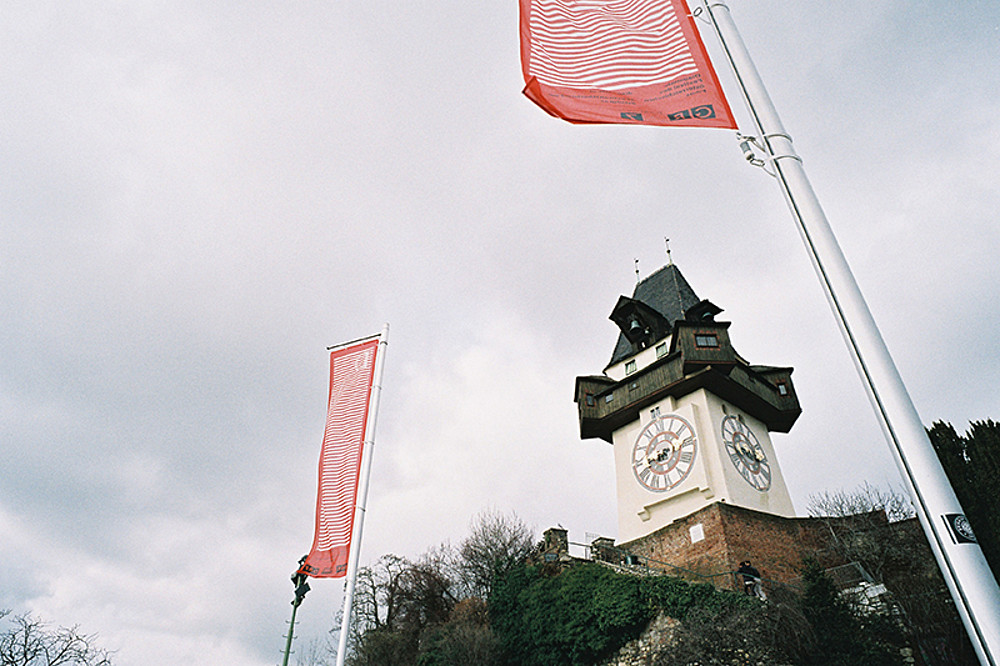
Die Diagonale wird Graz von 13. bis 18. März 2018 zum filmischen Zentrum Österreichs machen. Foto: Diagonale/Pibernig.
Die Diagonale wird Graz von 13. bis 18. März 2018 zum filmischen Zentrum Österreichs machen. Foto: Diagonale/Pibernig.

Die Diagonale, das Festival des österreichischen Films, startet nächste Woche in Graz

Wenn es Frühling wird, lädt die Diagonale zum Rendezvous mit dem österreichischen Film nach Graz. Vom 13. bis 18. März 2018 geht das Filmfestival zum 21. Mal inmitten der steirischen Landeshauptstadt mit rund 100 Filmen über die Bühne. Dabei gilt: Es gibt viel zu entdecken – im Kino, auf der Leinwand und darüber hinaus. So etwa im diesjährigen Dokumentarfilmwettbewerb.

Mit "Waldheims Walzer" von Ruth Beckermann blickt die Diagonale’18 ins Jahr 1986, auf die Zeit kurz vor der Bundespräsidentschaftswahl. Ruth Beckermann spürt dem Beginn der „Affäre Waldheim“ nach, die einen Wendepunkt in der österreichischen Nachkriegsgeschichte markiert und die Doktrin der Zweiten Republik, lediglich Opfer Hitlers gewesen zu sein, ins Wanken brachte. Ein betörender Essay, montiert aus zusammengetragenem Archivmaterial und wiedergefundenen eigenen Aufnahmen, ein dokumentarisches Opus Magnus über individuelles wie kollektives Erinnern und Vergessen.

Eine ähnliche Thematik behandelt "Back to the Fatherland" von Kat Rohrer und Gil Levanon. Mit ihrem Dokumentarfilm gehen die beiden Frauen der Frage nach, was es für Holocaust-Überlebende in Israel wohl bedeuten mag, wenn die Enkelkinder zurück nach Deutschland oder Österreich ziehen, und welch zwiespältige Gefühle dieser Schritt auf allen Seiten hervorruft. "Back to the Fatherland" ist filmisches Ergründen. Ein Zusammenbringen von Stimmen für die Beziehungsarbeit mit dem Jetzt, in das die Vergangenheit eingeschrieben ist.

Thematisch verschwistert erscheinen diese Arbeiten auch mit dem historischen Spezialprogramm der Diagonale’18, "Kein schöner Land", in dem die Hauptstadt in den Hintergrund treten soll. Gemeinsam, aber aus unterschiedlichen Perspektiven wagen das Österreichische Filmmuseum, das Filmarchiv Austria und das ORF-Archiv Blicke in die Provinz und suchen nach Perspektiven aus der Provinz.

In diesem Rahmen wird noch ein weiteres Programm präsentiert. Und zwar das multimediale Projekt Work in Progress: „Die Kinder der Toten“. Nach zwei Jahren Vorbereitungszeit und 28 Drehtagen im Rahmen des „steirischen herbst“ 2017 ermöglicht die Diagonale erste Einblicke in ein eigentlich unmögliches Projekt: Elfriede Jelineks monumentalem Gespensterroman „Die Kinder der Toten“, gedreht mit LaiendarstellerInnen in obersteirischen Kindheitsorten der Nobelpreisträgerin, gebannt auf 666 Rollen Super-8-Film.

Gezeigt wird die Arbeit "Die Untoten von Neuberg" von Ulrich A. Reiterer, die die filmische Realisierung des Projekts dokumentiert. In "Die Steiermark hasse ich am allerwenigsten" erzählt Jelinek außerdem von ihrem Verhältnis zu ihrem Heimatbundesland. Außerdem zu sehen: die Ausstellung „Die Kinder der Toten“ mit Setfotos von Ditz Fejer, vom. 9. März bis 9. April im Feinkost Mild.

>>> KINO ZUM HÖREN: Im Diagonale-"Special" läuft heuer "Erdbeerland", ausgezeichnet mit dem Diagonale-Kurzspielfilm-Preis 2013. Regisseur und Autor Florian Pochlatko spricht im AirCampus-Podcast über zerstörte Utopien in Österreich und berührte Seelen. Wer zuhört, kann auch eine Diagonale-Goody-Bag gewinnen!

Tickets gibt es ab heute, 7. März, im Kunsthaus Graz sowie im MANGOLDS vis-a-vis (Zinzendorfgasse), auf diagonale.at/tickets , unter +43(0)316–269 555 (jeweils 10 bis 18 Uhr) sowie ab 14. März zusätzlich in den Festivalkinos.

created by Gerhild Leljak

Related news

When stress melts away in your mouth: nicotine pouches are widespread among Styrian students

Sociologists at the University of Graz, in collaboration with VIVID – the Centre for Addiction Prevention, have carried out a survey involving more than 600 participants. Around a quarter of them use these products. The ability to use them discreetly and flexibly is a key motivation.

Desert sand, microplastics, cancer cells: David Clases awarded ERC grant for analytical method

Nanoparticles trapped in polar ice can reveal a great deal about the climate 100,000 years ago. Chemist David Clases is developing unique methods to analyse them in detail. He will now adapt these methods for use with larger particles in order to glean even more information about Earth’s history. The method can be used for a wide range of other purposes – for example, in medical diagnostics or the investigation of environmental pollution. Clases has been awarded a Proof-of-Concept Grant by the European Research Council (ERC) for this work.

Staying fit during the holidays: summer sports on the University of Graz campus

The Kleeblattlauf is not the end of the fitness term. Following last year’s successful launch, the University of Graz is once again offering summer sports on campus this year. From 30 June to 16 July 2026, there will be a free exercise programme in the open air. On the shady Südwiese (between the main building and Universitätsplatz 2), anyone interested can get in shape in the afternoons with body workouts, fascia training and yoga.

Getting even hotter: Researchers predict global warming of 1.7 degrees by 2027

While Europe is currently sweltering in the heat, global temperatures are also rising towards concerning record levels. In 2026, Earth’s surface air temperature is expected to reach 1.62 degrees, and in 2027 even 1.71 degrees Celsius above pre-industrial levels. The long-term temperature rise – an average over a 20-year period – is predicted to exceed the 1.5-degree threshold of the Paris Agreement as of 2026 already. For the first time, researchers at the University of Graz have been able to make such a forecast so far in advance. The intensifying El Niño climate event favors forecast skill and thereby facilitates a reliable computation.

Begin of page section:
Additional information:

University of Graz
Universitaetsplatz 3
8010 Graz
Austria
  • Contact
  • Web Editors
  • Moodle
  • UNIGRAZonline
  • Imprint
  • Data Protection Declaration
  • Accessibility Declaration
Weatherstation
Uni Graz

End of this page section. Go to overview of page sections

End of this page section. Go to overview of page sections

Begin of page section:

End of this page section. Go to overview of page sections