Begin of page section:
Page sections:

  • Go to contents (Accesskey 1)
  • Go to position marker (Accesskey 2)
  • Go to main navigation (Accesskey 3)
  • Go to sub navigation (Accesskey 4)
  • Go to additional information (Accesskey 5)
  • Go to page settings (user/language) (Accesskey 8)
  • Go to search (Accesskey 9)

End of this page section. Go to overview of page sections

Begin of page section:
Page settings:

English en
Deutsch de
Search
Login

End of this page section. Go to overview of page sections

Begin of page section:
Search:

Search for details about Uni Graz
Close

End of this page section. Go to overview of page sections


Search

Begin of page section:
Main navigation:

Page navigation:

  • University

    University
    • About the University
    • Organisation
    • Faculties
    • Library
    • Working at University of Graz
    • Campus
    Developing solutions for the world of tomorrow - that is our mission. Our students and our researchers take on the great challenges of society and carry the knowledge out.
  • Research Profile

    Research Profile
    • Our Expertise
    • Research Questions
    • Research Portal
    • Promoting Research
    • Research Transfer
    • Ethics in Research
    • Commission for Scientific Integrity
    Scientific excellence and the courage to break new ground. Research at the University of Graz creates the foundations for making the future worth living.
  • Studies

    Studies
    • Prospective Students
    • Students
  • Community

    Community
    • International
    • Location
    • Research and Business
    • Alumni
    The University of Graz is a hub for international research and brings together scientists and business experts. Moreover, it fosters the exchange and cooperation in study and teaching.
  • Spotlight
Topics
  • Sustainable University
  • Researchers answer
  • Work for us
Close menu

End of this page section. Go to overview of page sections

Begin of page section:
You are here:

University of Graz News Mild Research Night: Around 750 visitors travelled around the world at the university

End of this page section. Go to overview of page sections

Monday, 27 April 2026

Mild Research Night: Around 750 visitors travelled around the world at the university

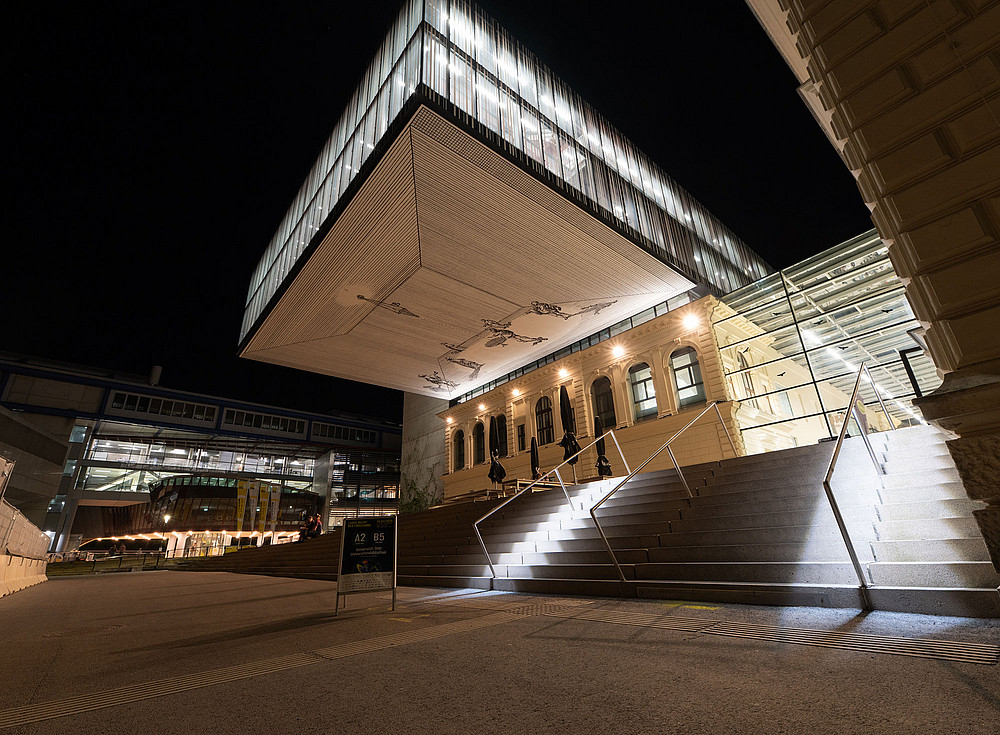
Night view of the entrance to the University Library

Open doors on a long, balmy night: Around 750 people came to the University of Graz on April 24 to experience research up close. Photo: University of Graz/Weber

Lovely weather and a wide range of research topics drew visitors to the University of Graz last Friday. Highlights included a journey around the globe in eight stops, a ‘speed-dating’ session with books, insights into Alfred Wegener’s Greenland expedition, and guided tours of the democracy exhibition at the UniGraz@Museum.

Ever heard of Wolani? In which part of Indonesia is this language – one of nearly 1,000 – spoken? Or is it perhaps easier to write your own name in Chinese than to find the right answers in the GEWI language quiz? It took some brainpower to tackle the ‘Better Living’ memory game at the MetAge research cluster’s stand. As a reward, participants received insightful information on the factors that promote good health into old age. 

Biologists demonstrated which plants and animals stop off in Austria on their journey around the world or have settled here permanently, including a live feed of the hustle and bustle in the RESOWI pond and insect identification in a specially erected light tent on campus. In doing so, the university also took part in this year’s City Nature Challenge.

Should friends or like-minded people see my posts? Do I want more likes or greater reach? At the IDea_Lab stand, interested visitors could design their own social network and control the algorithm. The effect was immediately evident from the messages posted.

Visitors of all ages were enthusiastic about the colourful programme, which had been organised with the help of nearly a hundred staff members from the University of Graz. The next Long Night of Research will take place in 2028.
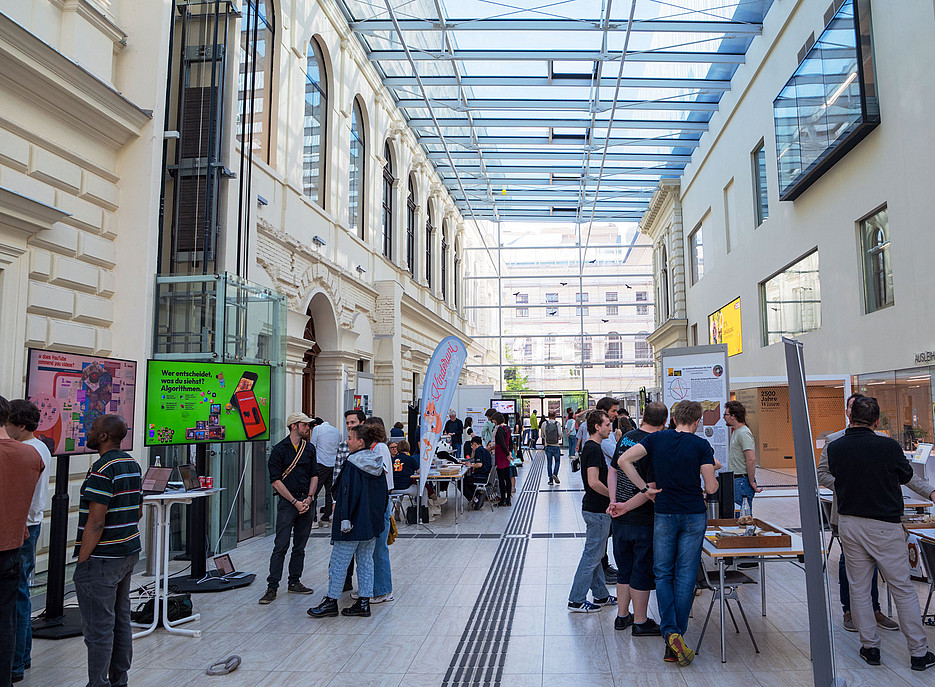
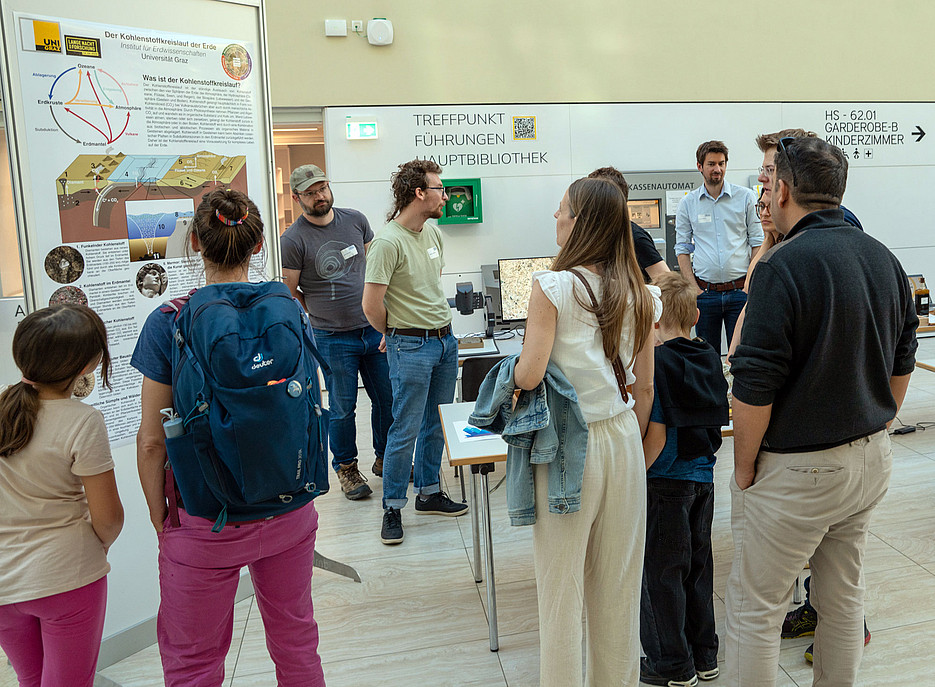
A view of the University Library foyer during the Long Night of Research
Between Earth Sciences and Digital Worlds: In the University Library foyer, visitors could look, try things out, and get involved. Photo: University of Graz/Angele
The foyer of the University Library during the 2026 Long Night of Research
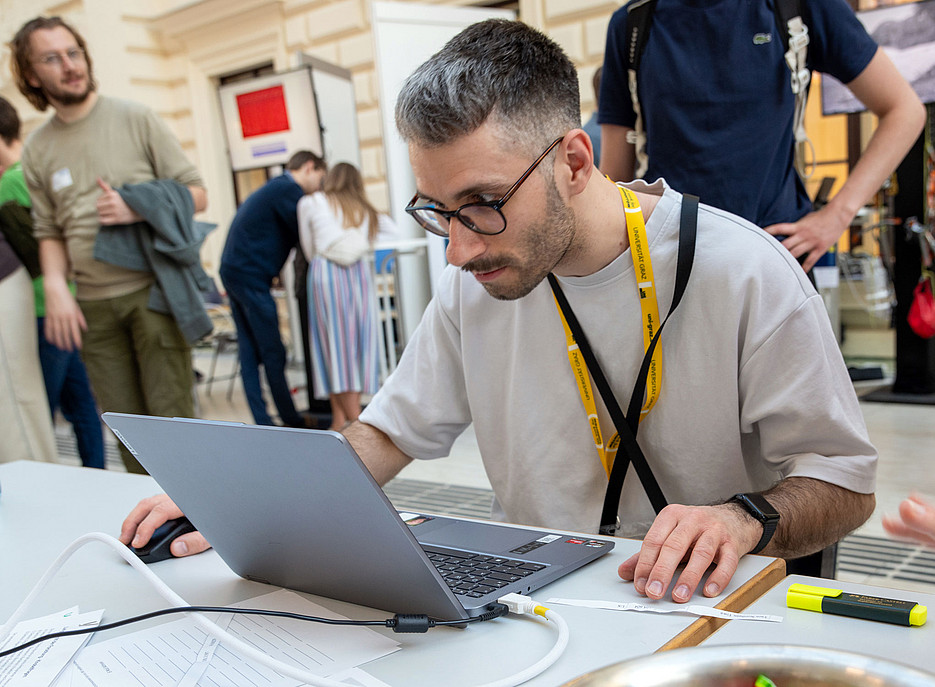
Where on the world map can a language that has never been heard before be located? Finding the correct coordinates within the allotted time was a challenge. Photo: University of Graz
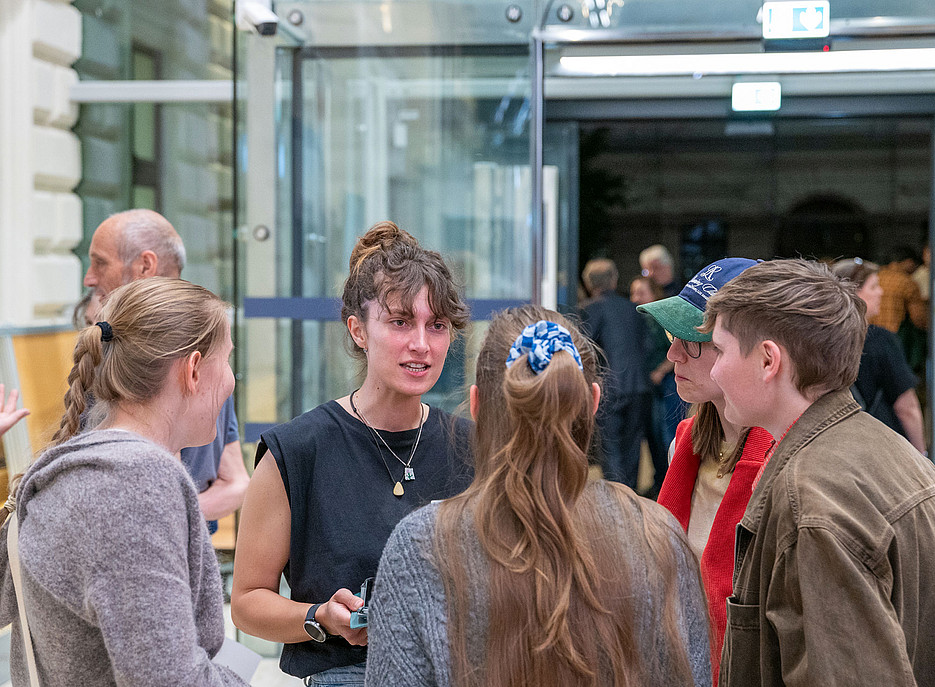
A researcher speaks with three visitors at the Long Night of Research ©Uni Graz/Weber
©Uni Graz/Weber
Florina Schalamon describes life and work at the University of Graz research station in Greenland. Photo: University of Graz/Weber
Several interested visitors at the Earth Sciences Institute’s booth
Geoscientists from the University of Graz explained the journey minerals have taken and what else can be gleaned from rock samples. Photo: University of Graz/Angele
created by Dagmar Eklaude

Related news

Career Booster: How the Research Careers Campus supports researchers

They are innovative, creative and productive – researchers who have not yet been appointed to a professorship make a massive contribution to a university’s research output. To provide them with even better support on their career path, the University of Graz has established the Research Careers Campus. The official launch took place on 22 April 2026 with a ‘festival’.

Greenery on the rise: over 500 new flowers, perennials and shrubs on campus

Bright blooms and fresh greenery make our hearts beat faster in spring. But it is not just us humans who delight in this colourful growth. For many animals, this splendour provides, above all, food and habitat. There has recently been an increase in this on the University of Graz campus. More than 500 native flowers, perennials and shrubs have been planted on strips of fallow land around Universitätsplatz 2.

Building biological bridges: Chemist discovers an ecological tool for the pharmaceutical industry

Building a relationship on a solid foundation is also important in chemistry. To produce medicines, disinfectants or plant protection products, stable bonds between carbon atoms must be formed. Conventional chemical methods rely on environmentally harmful reagents and solvents to carry out the desired reaction. This process also produces unusable by-products. Chemist Lilla Gal has discovered an enzyme that enables the same process to take place efficiently and sustainably. The results of her research were recently published in the prestigious journal Angewandte Chemie.

Higher Education Strategy 2040: Austria’s universities on course for the future

Austria has 77 higher education institutions, which is above the EU average – but does this really make sense? The new Higher Education Strategy 2040 focuses on cooperation rather than mergers. As one of the six largest universities in Austria, the University of Graz plays a central role in this.

Begin of page section:
Additional information:

University of Graz
Universitaetsplatz 3
8010 Graz
Austria
  • Contact
  • Web Editors
  • Moodle
  • UNIGRAZonline
  • Imprint
  • Data Protection Declaration
  • Accessibility Declaration
Weatherstation
Uni Graz

End of this page section. Go to overview of page sections

End of this page section. Go to overview of page sections

Begin of page section:

End of this page section. Go to overview of page sections