



Begin of page section:
Page sections:

  • Go to contents (Accesskey 1)
  • Go to position marker (Accesskey 2)
  • Go to main navigation (Accesskey 3)
  • Go to sub navigation (Accesskey 4)
  • Go to additional information (Accesskey 5)
  • Go to page settings (user/language) (Accesskey 8)
  • Go to search (Accesskey 9)

End of this page section. Go to overview of page sections

Begin of page section:
Page settings:

English en
Deutsch de
Search
Login

End of this page section. Go to overview of page sections

Begin of page section:
Search:

Search for details about Uni Graz
Close

End of this page section. Go to overview of page sections


Search

Begin of page section:
Main navigation:

Page navigation:

  • University

    University
    • About the University
    • Organisation
    • Faculties
    • Library
    • Working at University of Graz
    • Campus
    Developing solutions for the world of tomorrow - that is our mission. Our students and our researchers take on the great challenges of society and carry the knowledge out.
  • Research Profile

    Research Profile
    • Our Expertise
    • Research Questions
    • Research Portal
    • Promoting Research
    • Research Transfer
    • Ethics in Research
    • Commission for Scientific Integrity
    Scientific excellence and the courage to break new ground. Research at the University of Graz creates the foundations for making the future worth living.
  • Studies

    Studies
    • Prospective Students
    • Students
    • Registration for Study Programme (Winter semester 2026/27)
    • Study Days 22-26 June 2026
  • Community

    Community
    • International
    • Location
    • Research and Business
    • Alumni
    The University of Graz is a hub for international research and brings together scientists and business experts. Moreover, it fosters the exchange and cooperation in study and teaching.
Topics
  • Sustainable University
  • Researchers answer
  • Work for us
Close menu

End of this page section. Go to overview of page sections

Begin of page section:
You are here:

University of Graz News Krise der Jüngsten

End of this page section. Go to overview of page sections

Tuesday, 04 May 2021

Krise der Jüngsten

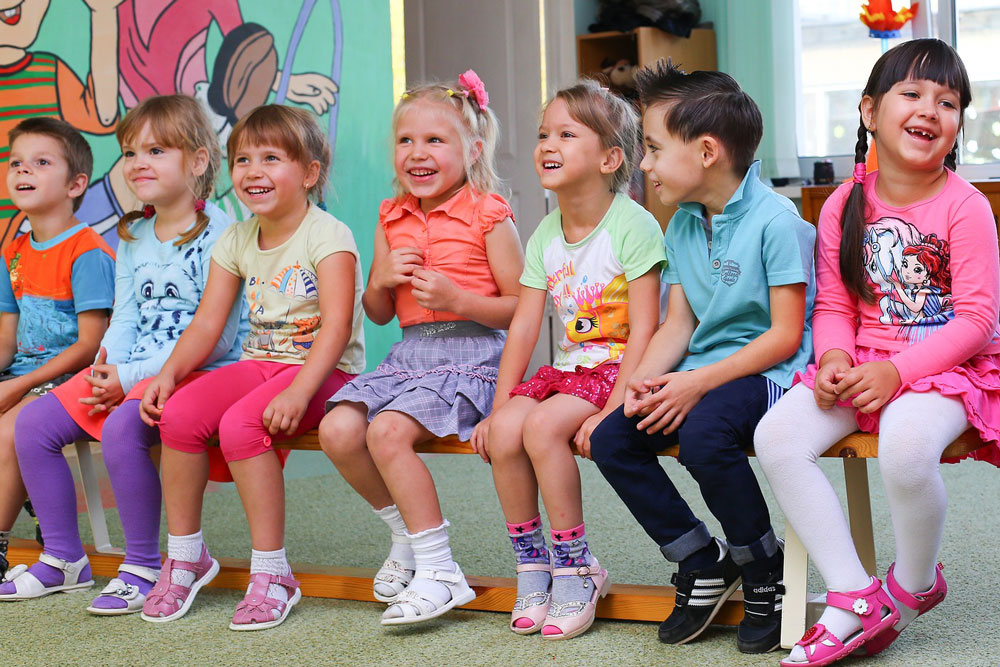
Professionelle Betreuung und der Kontakt mit Gleichaltrigen sind auch für Kleinkinder extrem wichtig. Sehr viele leiden unter Lockdowns, wie eine Studie der Uni Graz zeigt. Foto: Pixabay

Professionelle Betreuung und der Kontakt mit Gleichaltrigen sind auch für Kleinkinder extrem wichtig. Sehr viele leiden unter Lockdowns, wie eine Studie der Uni Graz zeigt. Foto: Pixabay

Internationale Corona-Studie zeigt Lockdown-Folgen für Kleinkinder

Rund Dreiviertel der Eltern von Kleinkindern sind durch Lockdowns und geschlossene Betreuungseinrichtung stark belastet, und viele beobachten pandemiebedingte Veränderungen an ihrem Nachwuchs. Das ist ein alarmierendes Ergebnis einer großangelegten Kooperationsstudie der Universität Graz und der Klinik für Pädiatrie Berlin, für die knapp 17.000 Familien und mehr als 3.600 LeiterInnen von Kindergärten und -krippen aus dem gesamten deutschen Sprachraum befragt wurden.  

Besonders gravierende psychische und zum Teil auch finanzielle Folgen hatte das Wegfallen der professionellen Betreuung für Eltern im Homeoffice, da die Doppelbelastung im Regelfall nicht zu stemmen war. Sie mussten die Arbeit in die Nacht verlegen, Stunden reduzieren oder gar den Job kündigen. „Dazu kommt die Sorge um die Entwicklung der Kinder durch fehlende Anregung, mangelnde Sozialkontakte und die angespannte Situation in der Familie“, schildert Catherine Walter-Laager von der Forscherinnen-Gruppe für Elementarpädagogik an der Universität Graz. Weit über tausend Befragte gaben außerdem an, dass sich die Monotonie und die fehlenden Freunde negativ auswirkten. Hunderte Familien bemerkten bei zunehmender Länge oder Häufung von Lockdowns psychische und emotionale Veränderungen bei ihren Kindern – etwa Gereiztheit, Lustlosigkeit und Traurigkeit.

Sowohl die StudienteilnehmerInnen als auch die ExpertInnen pochen auf die Bedeutung der Krippen und Kindergärten: Die Gleichaltrigen sowie das pädagogische Personal sind wichtige Bezugspersonen, und die vielen zusätzlichen Erfahrungen, die die Kleinen dort sammeln, können in einem Corona-Alltag zu Hause nicht wettgemacht werden. Stabile soziale Netzwerke und vielfältige Lern- und Spielmöglichkeiten sind unerlässlich, damit sich die Jüngsten gut entwickeln. „Daher ist es wichtig, dass die Einrichtungen unter Einhaltung bekannter Sicherheitskonzepte geöffnet bleiben und der Betrieb möglichst gewohnt ablaufen kann. Das unterstützt auch das psychische Wohlbefinden“, betont Walter-Laager. Zu den wirkungsvollen Schutzmaßnahmen zählen etwa fixe Gruppen mit festen Betreuungspersonen, reichliches Lüften und Maskentragen bei Kontakten von Erwachsenen außerhalb der Gruppen.

Die Studie wurde vom Internationalen Zentrum für Professionalisierung der Elementarpädagogik der Universität Graz mit Standorten in Österreich und Deutschland und der Berliner Klinik für Pädiatrie von Jänner bis März 2021 durchgeführt und untersuchte die Auswirkungen der zweiten Welle ab August 2020. In diesem Zeitraum gab es in etwa vier Prozent der Familien und in der Hälfte der Betreuungseinrichtungen zumindest einen Covid-Fall.
 

created by Dagmar Eklaude

Related news

Getting even hotter: Researchers predict global warming of 1.7 degrees by 2027

While Europe is currently sweltering in the heat, global temperatures are also rising towards concerning record levels. In 2026, Earth’s surface air temperature is expected to reach 1.62 degrees, and in 2027 even 1.71 degrees Celsius above pre-industrial levels. The long-term temperature rise – an average over a 20-year period – is predicted to exceed the 1.5-degree threshold of the Paris Agreement as of 2026 already. For the first time, researchers at the University of Graz have been able to make such a forecast so far in advance. The intensifying El Niño climate event favors forecast skill and thereby facilitates a reliable computation.

Forest fire at Rosenhain: Volunteer fire brigade carried out an evacuation drill at the Jesuit refectory

Thick smoke in the stairwell, flames at the edge of the forest, people missing in the Jesuit refectory at the University of Graz: at Rosenhain, the Graz Volunteer Fire Brigade carried out a drill simulating a scenario that is becoming increasingly realistic given the heat and drought

Full effort in the heat: the Sports Centre was in full swing at the Kleeblattlauf

On 19 June 2026, 2,000 runners and hundreds of supporters made their way to the Rosenhain for a sporting end-of-term event.

Save, invest or guarantee: What Austrians expect from the state

Austria needs to make savings. But where? And what should the Republic actually be spending its money on? The answers are provided by the initial findings of a major study involving the University of Graz. 99 per cent of those surveyed are in favour of the state ensuring healthcare provision. Almost three-quarters would like to see more public funding for education, whilst only around three per cent are in favour of cuts in this sector.

Begin of page section:
Additional information:

University of Graz
Universitaetsplatz 3
8010 Graz
Austria
  • Contact
  • Web Editors
  • Moodle
  • UNIGRAZonline
  • Imprint
  • Data Protection Declaration
  • Accessibility Declaration
Weatherstation
Uni Graz

End of this page section. Go to overview of page sections

End of this page section. Go to overview of page sections

Begin of page section:

End of this page section. Go to overview of page sections

