



Begin of page section:
Page sections:

  • Go to contents (Accesskey 1)
  • Go to position marker (Accesskey 2)
  • Go to main navigation (Accesskey 3)
  • Go to sub navigation (Accesskey 4)
  • Go to additional information (Accesskey 5)
  • Go to page settings (user/language) (Accesskey 8)
  • Go to search (Accesskey 9)

End of this page section. Go to overview of page sections

Begin of page section:
Page settings:

English en
Deutsch de
Search
Login

End of this page section. Go to overview of page sections

Begin of page section:
Search:

Search for details about Uni Graz
Close

End of this page section. Go to overview of page sections


Search

Begin of page section:
Main navigation:

Page navigation:

  • University

    University
    • About the University
    • Organisation
    • Faculties
    • Library
    • Working at University of Graz
    • Campus
    Developing solutions for the world of tomorrow - that is our mission. Our students and our researchers take on the great challenges of society and carry the knowledge out.
  • Research Profile

    Research Profile
    • Our Expertise
    • Research Questions
    • Research Portal
    • Promoting Research
    • Research Transfer
    • Ethics in Research
    • Commission for Scientific Integrity
    Scientific excellence and the courage to break new ground. Research at the University of Graz creates the foundations for making the future worth living.
  • Studies

    Studies
    • Prospective Students
    • Students
    • Registration for Study Programme (Winter semester 2026/27)
  • Community

    Community
    • International
    • Location
    • Research and Business
    • Alumni
    The University of Graz is a hub for international research and brings together scientists and business experts. Moreover, it fosters the exchange and cooperation in study and teaching.
Topics
  • Sustainable University
  • Researchers answer
  • Work for us
Close menu

End of this page section. Go to overview of page sections

Begin of page section:
You are here:

University of Graz News Kreative Muster

End of this page section. Go to overview of page sections

Tuesday, 16 January 2018

Kreative Muster

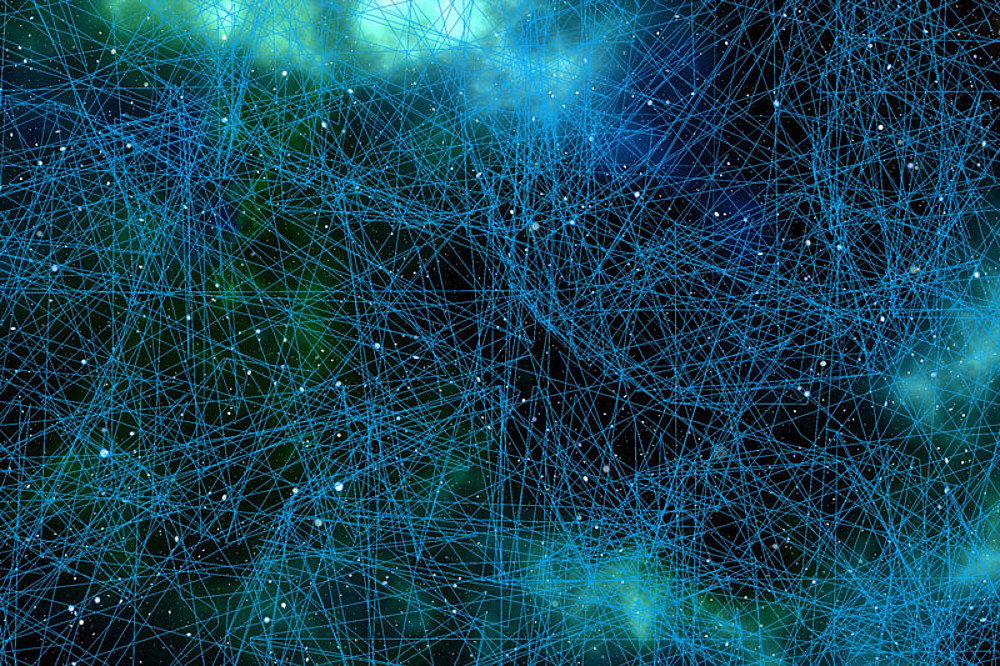
Bei kreativen Menschen arbeiten einzelne Gehirnregionen verstärkt zusammen und bilden Netzwerke. Zu diesem Ergebnis kam ein internationales ForscherInnen-Team. Foto: Pixabay.com

Bei kreativen Menschen arbeiten einzelne Gehirnregionen verstärkt zusammen und bilden Netzwerke. Zu diesem Ergebnis kam ein internationales ForscherInnen-Team. Foto: Pixabay.com

Internationales Forschungsteam mit Uni-Graz-Beteiligung bestätigt die Vorhersage menschlicher Kreativität

Was passiert im Gehirn beim kreativen Denken? Und was unterscheidet weniger kreative von kreativen Menschen? An der Karl-Franzens-Universität Graz beschäftigen diese komplexe Fragestellungen die Wissenschafter Assoz.Univ.-Prof. Dr. Andreas Fink und Dr. Mathias Benedek vom Institut für Psychologie. Sie analysieren Vorgänge im menschlichen Gehirn, die bei kreativem Denken angestoßen werden. „Wir wissen durch unsere langjährigen Studien, dass sich kreatives Denken nicht nur in der Aktivierung bestimmter Gehirnregionen widerspiegelt, sondern insbesondere auch in der Art wie große Gehirnnetzwerke interagieren“, erklärt Mathias Benedek.

Nun konnten die Grazer Psychologen gemeinsam mit KollegInnen aus China sowie den USA und mittels eines neuartigen Verfahrens – connectome-based predictive modeling (CPM) – Herausragendes entdecken: In vier voneinander unabhängigen Datensätzen wurde erkennbar, dass sich die Kreativität einer Person auch durch das Konnektivitätsmuster ihrer Gehirnnetzwerke robust vorhersagen lässt. Die Ergebnisse wurden kürzlich in einer gemeinsamen Publikation unter Federführung der Universität Harvard im Fachjournal PNAS veröffentlicht.

Die WissenschafterInnen konzentrierten sich bei ihren Tests auf die aktive Zusammenarbeit unterschiedlicher Gehirnregionen und nahmen diese durch den Einsatz der Kernspintomographie (funktionelle Magnetresonanztomographie) unter die Lupe. „Interessanterweise interagieren beim kreativen Denken bestimmte Netzwerke, die sonst eher unabhängig sind oder sogar gegenläufig agieren. Und bei kreativen Personen ist dieses Zusammenspiel stärker ausgeprägt, sodass sogar eine Vorhersage von individuellen Unterschieden in der Kreativität möglich ist“, sagt Benedek. „Besonders bemerkenswert ist, dass in dieser Arbeit die kreative Denkleistung von Personen über vier unabhängige Datensätze aus China, den USA und Österreich hinweg in konsistenter Weise vorhergesagt werden kann“, führt Andreas Fink aus.

created by Konstantinos Tzivanopoulos

Related news

“HeinrichBiCool”: University of Graz demonstrates the effects of green facades and roofs

The University of Graz has launched a pioneering project at the University Centre for Theology. Its name, “HeinrichBiCool”, says it all: a comprehensive system of green facades and roof will cool the building at Heinrichstraße 80 during the summer. At the same time, this will create a new habitat for plants and animals, helping to increase biodiversity. The accompanying monitoring programme will provide detailed data on the impact of the measures on indoor climate, energy consumption and biodiversity. The findings will lay a scientifically sound foundation for further projects aimed at making cities sustainable, climate-resilient and liveable. The partners in this project, funded by the Austrian Research Promotion Agency (FFG), are AEE INTEC – Institute for Sustainable Technologies, Technisches Büro Siegfried Stark, the landscape architecture and urban planning firm “studio boden”, and Ökoteam Graz.

When stress melts away in your mouth: nicotine pouches are widespread among Styrian students

Sociologists at the University of Graz, in collaboration with VIVID – the Centre for Addiction Prevention, have carried out a survey involving more than 600 participants. Around a quarter of them use these products. The ability to use them discreetly and flexibly is a key motivation.

Desert sand, microplastics, cancer cells: David Clases awarded ERC grant for analytical method

Nanoparticles trapped in polar ice can reveal a great deal about the climate 100,000 years ago. Chemist David Clases is developing unique methods to analyse them in detail. He will now adapt these methods for use with larger particles in order to glean even more information about Earth’s history. The method can be used for a wide range of other purposes – for example, in medical diagnostics or the investigation of environmental pollution. Clases has been awarded a Proof-of-Concept Grant by the European Research Council (ERC) for this work.

Staying fit during the holidays: summer sports on the University of Graz campus

The Kleeblattlauf is not the end of the fitness term. Following last year’s successful launch, the University of Graz is once again offering summer sports on campus this year. From 30 June to 16 July 2026, there will be a free exercise programme in the open air. On the shady Südwiese (between the main building and Universitätsplatz 2), anyone interested can get in shape in the afternoons with body workouts, fascia training and yoga.

Begin of page section:
Additional information:

University of Graz
Universitaetsplatz 3
8010 Graz
Austria
  • Contact
  • Web Editors
  • Moodle
  • UNIGRAZonline
  • Imprint
  • Data Protection Declaration
  • Accessibility Declaration
Weatherstation
Uni Graz

End of this page section. Go to overview of page sections

End of this page section. Go to overview of page sections

Begin of page section:

End of this page section. Go to overview of page sections

