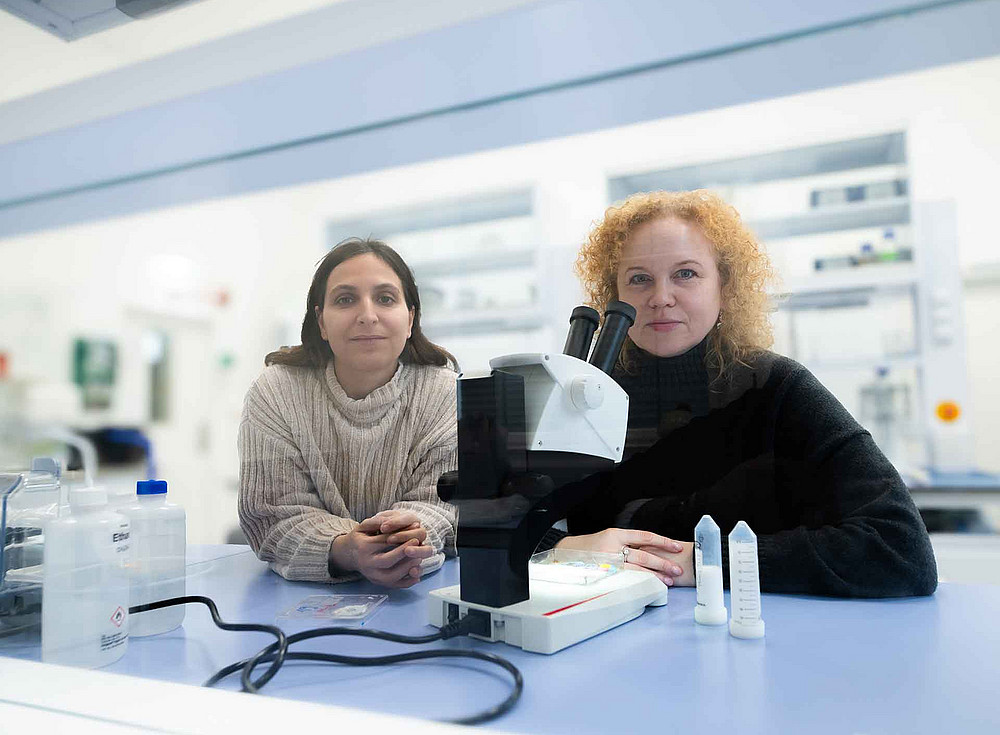
“A large amount of titanium dioxide (TiO2) and glyphosate has been released into the environment in recent years,” says biology doctoral student Danae Nyckees. Especially the chemical compound TiO2, which is found in sun creams, lotions and toothpaste, but also in paints, enters nature as nanoparticles via wastewater and improperly disposed waste. A team of biologists and chemists from the University of Graz has investigated the effects of the pollutant on insects using the ant species Cardiocondyla obscurior as an example.
The animals, which are found in both the tropics and Europe, ingest tiny particles of the substance through their food. “It has a negative effect on microorganisms in their gut,” confirms Dalial Freitak, head of the Insect Health Research Group at the University of Graz. Titanium dioxide also affects the number of offspring and may potentially increase the effects of the herbicide glyphosate, adds Danae Nyckees.
“Pollutants do not always immediately increase the mortality rate,” say Freitak and Nyckees, referring to the long-term effects of environmental toxins. Further research is needed. “We know far too little about the interactions between harmful substances,” emphasise the two scientists.
The study was conducted in close cooperation with Reinhard Sittinger, Raquel Gonzalez de Vega and David Clases from the Department of Chemistry at the University of Graz and recently published in the journal “Environmental Science and Pollution Research”.