Begin of page section:
Page sections:

  • Go to contents (Accesskey 1)
  • Go to position marker (Accesskey 2)
  • Go to main navigation (Accesskey 3)
  • Go to sub navigation (Accesskey 4)
  • Go to additional information (Accesskey 5)
  • Go to page settings (user/language) (Accesskey 8)
  • Go to search (Accesskey 9)

End of this page section. Go to overview of page sections

Begin of page section:
Page settings:

English en
Deutsch de
Search
Login

End of this page section. Go to overview of page sections

Begin of page section:
Search:

Search for details about Uni Graz
Close

End of this page section. Go to overview of page sections


Search

Begin of page section:
Main navigation:

Page navigation:

  • University

    University
    • About the University
    • Organisation
    • Faculties
    • Library
    • Working at University of Graz
    • Campus
    Developing solutions for the world of tomorrow - that is our mission. Our students and our researchers take on the great challenges of society and carry the knowledge out.
  • Research Profile

    Research Profile
    • Our Expertise
    • Research Questions
    • Research Portal
    • Promoting Research
    • Research Transfer
    • Ethics in Research
    Scientific excellence and the courage to break new ground. Research at the University of Graz creates the foundations for making the future worth living.
  • Studies

    Studies
    • Prospective Students
    • Students
  • Community

    Community
    • International
    • Location
    • Research and Business
    • Alumni
    The University of Graz is a hub for international research and brings together scientists and business experts. Moreover, it fosters the exchange and cooperation in study and teaching.
  • Spotlight
Topics
  • Our digital Advent calendar
  • Sustainable University
  • Researchers answer
  • Work for us
Close menu

End of this page section. Go to overview of page sections

Begin of page section:
You are here:

University of Graz News Knappes CO2-Budget

End of this page section. Go to overview of page sections

Tuesday, 24 October 2017

Knappes CO2-Budget

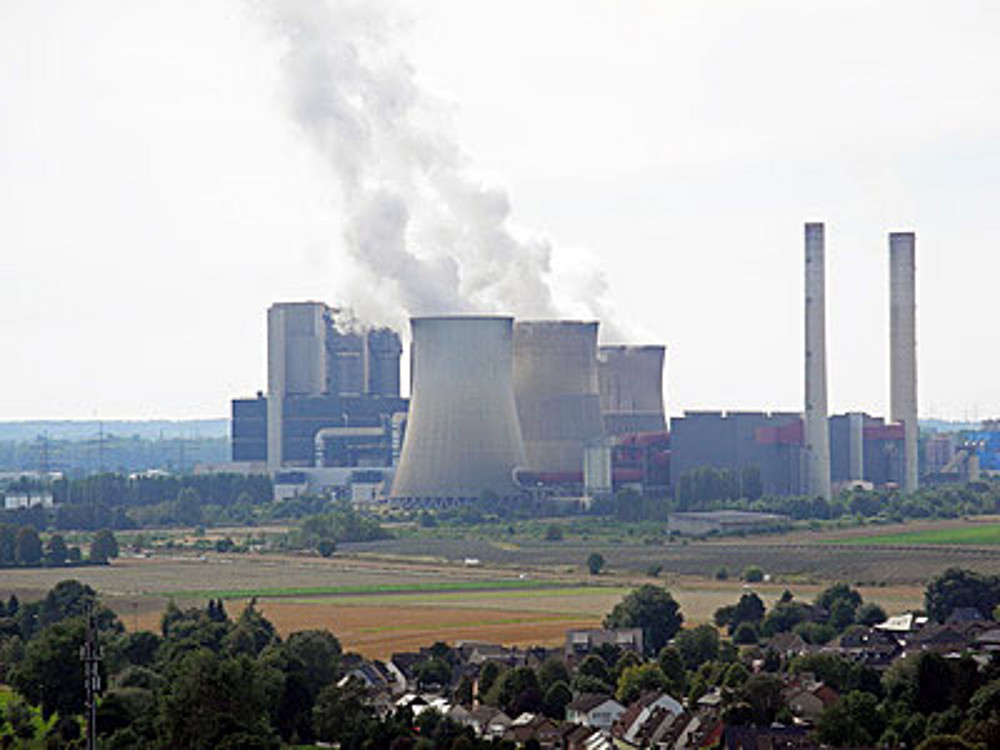
Rauchende Fabrik-Schlote. Foto: Heike/pixelio.de

Will Österreich seine Verpflichtungen aus dem Pariser Klimaschutzabkommen einhalten, stehen dem Land bis 2050 nur mehr 1 500 Millionen Tonnen CO2-Äquivalente zur Verfügung, haben Forscher der Uni Graz errechnet. Foto: Heike/pixelio.de

Forscher des Wegener Center sehen dringenden Handlungsbedarf für Österreich

Damit das Mindestziel des Pariser Klimaschutzabkommens – die Begrenzung des Temperaturanstiegs auf deutlich unter 2° Celsius – erreicht werden kann, dürfen nach derzeitigem Wissensstand bis 2050 weltweit nur mehr rund 800 Milliarden Tonnen CO2 emittiert werden. Im Auftrag der Initiative MUTTER ERDE haben Forscher des Wegener Center für Klima und Globalen Wandel der Karl-Franzens-Universität Graz nun erstmals berechnet, was das für Österreich bedeutet: Unter Berücksichtigung von Fairnessüberlegungen steht unserem Land von 2017 bis zur Mitte dieses Jahrhunderts ein Budget von lediglich 1 000 bis 1 500 Millionen Tonnen CO2-Äquivalenten zur Verfügung, zeigen Ökonom Ao.Univ.-Prof. Dr. Karl Steininger und Philosoph Univ.-Prof. Dr. Lukas Meyer in ihrer Studie auf, die heute bei einer Pressekonferenz in Wien präsentiert wurde.

Unter Beibehaltung des aktuellen Emissionsniveaus wäre dieses Budget selbst im großzügigsten Fall in nicht einmal 20 Jahren ausgeschöpft. Ab 2035 dürften dann überhaupt keine Treibhausgase mehr ausgestoßen werden. „Selbst das maximale Budget ist nur ein Bruchteil dessen, was wir in der Vergangenheit im gleichen Zeitraum von drei Dekaden aufgebraucht haben. Mit diesem Budget auszukommen, erfordert daher tiefgreifende Änderungen in unserem Wirtschaftsstil. Ein solcher Weg kann nur durch eine umgehende Neuorientierung und politisches Handeln in allen Bereichen Wirklichkeit werden“, unterstreicht Karl Steininger die Wichtigkeit von raschen Weichenstellungen.
„Zudem gibt es gute Gründe, dass Österreich deutlich weniger als die 1 500 Millionen Tonnen CO2-Äquivalente nutzen sollte“, ergänzt Lukas Meyer. „Unter dem Aspekt der Klimagerechtigkeit gilt es auch die historischen Emissionen bei der Berechnung des Budgets zu berücksichtigen, und die waren in Österreich sehr hoch”, so Meyer.

created by Gudrun Pichler

Related news

Chemical Christmas show at the University of Graz: An explosive evening at the Schauspielh

At the beginning of December, the University of Graz transformed the theater into a laboratory: as part of “Chemical Life,” teacher training students staged a chemical Christmas show for Styrian school classes—complete with ethanol rockets, nitrogen snow, and glowing effects. An evening designed to inspire interest in studying chemistry.

Train by train: Koralm railway accelerates exchange between the Universities

Lectures at the University of Klagenfurt in the morning, seminars at the University of Graz in the afternoon: Austria's longest tunnel and a journey time of around 45 minutes make it easy. The Koralm railway increases the speed of networking between the two university locations. The collaboration builds on existing cooperation - for example in the areas of teacher training, Slavic studies and as employers, the universities are well coordinated.

On the trail of the Big Bang: University of Graz receives 1.5 million euros for doctoral programmes

The Austrian Science Fund FWF has selected the Doctoral Programme in Theoretical Particle Physics at the University of Graz for funding from the Doc.funds. Six young scientists will be funded for 3.5 years. They will gain fundamentally new insights into the origins of the world.

From trans women and knee prostheses: sports science prizes awarded

Walking better with a prosthesis, successfully getting rid of excess weight, training more effectively, more fairness for trans people in sport: these were the topics addressed by the students at the University of Graz who were awarded the sports science prizes for their Master's theses on 3 December 2025.

Begin of page section:
Additional information:

University of Graz
Universitaetsplatz 3
8010 Graz
Austria
  • Contact
  • Web Editors
  • Moodle
  • UNIGRAZonline
  • Imprint
  • Data Protection Declaration
  • Accessibility Declaration
Weatherstation
Uni Graz

End of this page section. Go to overview of page sections

End of this page section. Go to overview of page sections

Begin of page section:

End of this page section. Go to overview of page sections