




Begin of page section:
Page sections:

  • Go to contents (Accesskey 1)
  • Go to position marker (Accesskey 2)
  • Go to main navigation (Accesskey 3)
  • Go to sub navigation (Accesskey 4)
  • Go to additional information (Accesskey 5)
  • Go to page settings (user/language) (Accesskey 8)
  • Go to search (Accesskey 9)

End of this page section. Go to overview of page sections

Begin of page section:
Page settings:

English en
Deutsch de
Search
Login

End of this page section. Go to overview of page sections

Begin of page section:
Search:

Search for details about Uni Graz
Close

End of this page section. Go to overview of page sections


Search

Begin of page section:
Main navigation:

Page navigation:

  • University

    University
    • About the University
    • Organisation
    • Faculties
    • Library
    • Working at University of Graz
    • Campus
    Developing solutions for the world of tomorrow - that is our mission. Our students and our researchers take on the great challenges of society and carry the knowledge out.
  • Research Profile

    Research Profile
    • Our Expertise
    • Research Questions
    • Research Portal
    • Promoting Research
    • Research Transfer
    • Ethics in Research
    • Commission for Scientific Integrity
    Scientific excellence and the courage to break new ground. Research at the University of Graz creates the foundations for making the future worth living.
  • Studies

    Studies
    • Prospective Students
    • Students
    • Registration for Study Programme (Winter semester 2026/27)
  • Community

    Community
    • International
    • Location
    • Research and Business
    • Alumni
    The University of Graz is a hub for international research and brings together scientists and business experts. Moreover, it fosters the exchange and cooperation in study and teaching.
Topics
  • Sustainable University
  • Researchers answer
  • Work for us
Close menu

End of this page section. Go to overview of page sections

Begin of page section:
You are here:

University of Graz News Klingende Ideen

End of this page section. Go to overview of page sections

Thursday, 28 March 2019

Klingende Ideen

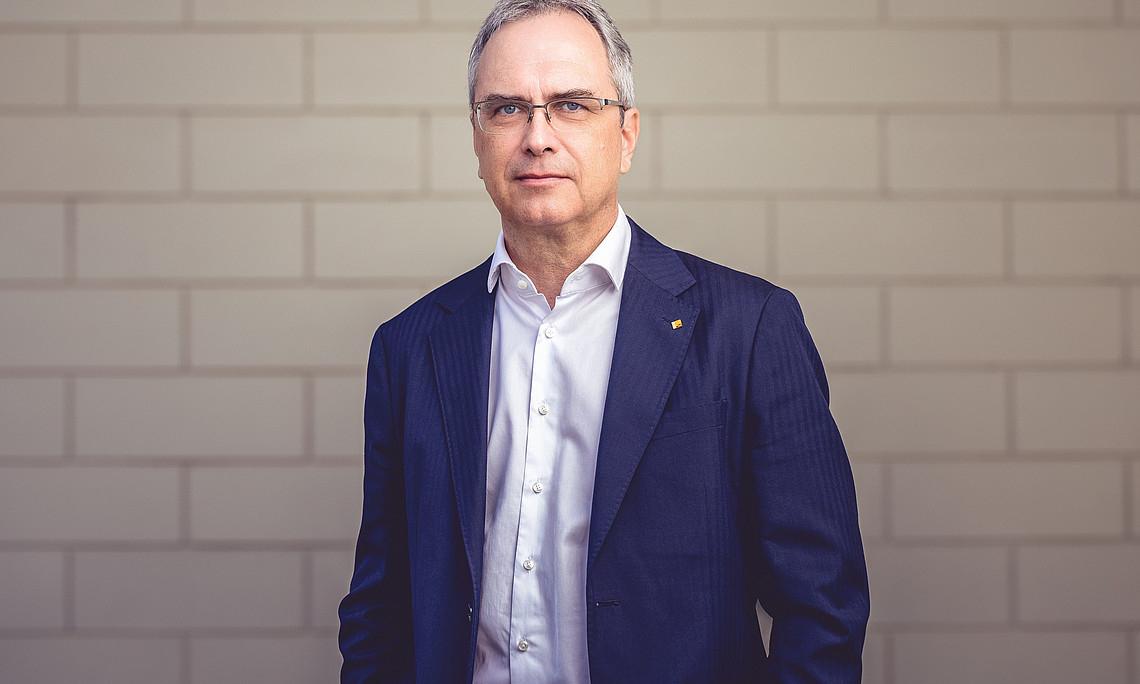
Dank eines Marietta-Blau-Stipendiums des Bundesministeriums für Bildung, Wissenschaft und Forschung kann die Musikwissenschafterin Monika Voithofer ein halbes Jahr in den USA forschen. Foto: Voithofer

Dank eines Marietta-Blau-Stipendiums des Bundesministeriums für Bildung, Wissenschaft und Forschung kann die Musikwissenschafterin Monika Voithofer ein halbes Jahr in den USA forschen. Foto: Voithofer

Monika Voithofer widmet sich in ihrer Dissertation konzeptueller Musik

„Denken, Hören, Da Capo“ lautet der Arbeits-Titel der Doktorarbeit der Musikwissenschafterin Monika Voithofer. Es ist derselbe, den ein Werk des oberösterreichischen Komponisten Peter Ablinger trägt – ein Stück „konzeptueller Musik“. Mit diesem Begriff bezeichnet Voithofer intermedial-performative Kompositionsverfahren, die seit dem Beginn des 20. Jahrhunderts im weiteren Umfeld zeitgenössischen Musikschaffens entstanden sind und denen sie ihre Dissertation widmet.

Alles, was an dem Werk „Denken, Hören, Da Capo“ sinnlich wahrgenommen werden kann, ist diese knappe Textpartitur. Ablinger selbst bezeichnet es als „Hinweisstück“ und erklärt: Das sind „Stücke, die oft nur aus ihrem Titel bestehen; man kann sie ausführen oder aufsuchen, man kann sie tun oder denken“, wie auf seiner Webseite zu lesen ist. „Das, was man sich vorstellt, ist die Musik. Der Text weist darauf hin, er leitet zum Hören an“, sagt Voithofer.
Wie die vorrangig visuelle Konzeptkunst, die in den 1960er- und 70er-Jahren in den USA in Erscheinung getreten ist, versteht sich auch die konzeptuelle Musik als Verstandeskunst. Die sinnliche Wahrnehmung spielt in der Rezeption nur eine untergeordnete Rolle. „Die Idee des Künstlers/der Künstlerin und der Prozess der Auseinandersetzung damit sind wichtiger als das Produkt selbst“, erläutert die Wissenschafterin. Bisher hat sich die Forschung nur mit einzelnen Stücken und KomponistInnen des 21. Jahrhunderts befasst. Voithofer erarbeitet nun erstmals einen historischen und systematischen Überblick über konzeptuelle Musik im europäischen Raum. Dabei untersucht sie unter anderem, inwieweit die US-Konzeptkunst der 1960er- und 70er-Jahre Einfluss auf die konzeptuelle Musik genommen hat.

Dank eines Marietta-Blau-Stipendiums des Bundesministeriums für Bildung, Wissenschaft und Forschung in Höhe von 10 500 Euro kann Voithofer auch in den USA ihrer Forschung nachgehen: im Museum of Modern Art in New York, das mit der „Gilbert and Lila Silverman Fluxus Collection“ die weltweit größte Sammlung zu Fluxus und Konzeptkunst beherbergt, in der New York Public Library for the Performing Arts und an der Northwestern University in Chicago. Dort befinden sich Sammlungen zu weiteren bedeutenden VertreterInnen, unter ihnen die Komponisten Alvin Lucier und Dick Higgins sowie die Cellistin Charlotte Moorman.
Konzeptuelle Musik findet ihren Ausstellungsraum vor allem im Internet. „In diesem Zusammenhang möchte ich herausfinden, ob beziehungsweise wie sich die Digitalisierung auf die Produktion und Verbreitung auswirkt“, nennt die Forscherin ein weiteres Ziel ihrer Arbeit.

Monika Voithofer ist Mitglied im Doktoratsprogramms „Kultur – Text – Handlung“ der Universität Graz. Dieses vernetzt junge ForscherInnen verschiedener Disziplinen, die sich mit kulturwissenschaftlichen Fragestellungen auseinandersetzen.

created by Gudrun Pichler

Related news

Complying with the norm: Why Do Standards Shape Our Lives, Elisabeth Staudegger?

Standards determine whether a sheet of paper fits in a printer or whether a charging plug can power multiple devices. These standards shape our everyday lives. But who actually sets these standards? Where are the weaknesses, and how could science help to improve them? Elisabeth Staudegger, Head of the ‘Law and IT’ Department at the Institute for Legal Foundations at the University of Graz, host the Academic Standards Day on 16 June. Here she relays how sciences can contribute to the topic of standardisation and reveals her personal favourite standard.

More body awareness than a culture war

In Italy, sex education lessons will in future only be permitted with parental consent, and will be banned entirely in nurseries and primary schools. At the same time, Pride Month highlights why knowledge about the body, relationships, boundaries and diversity is important for young people. A study by the University of Graz shows how important knowledge about the body, contraception, relationship skills and protection against violence is

Will Austria win the World Cup? Mathematician reveals calculation method

Michael Fischer uses the football tournament as a practical example for highschool lessons.

Survival strategies: How plants respond to drought

According to Geosphere Austria, this spring was the driest in Austria since records began around 170 years ago. The low rainfall put particular pressure on the agricultural sector. And climate change is set to make the situation even worse in the coming decades. We asked Johannes Liesche, a professor at the Department of Biology at the University of Graz, how plants react to water shortages and how they survive periods of drought.

Begin of page section:
Additional information:

University of Graz
Universitaetsplatz 3
8010 Graz
Austria
  • Contact
  • Web Editors
  • Moodle
  • UNIGRAZonline
  • Imprint
  • Data Protection Declaration
  • Accessibility Declaration
Weatherstation
Uni Graz

End of this page section. Go to overview of page sections

End of this page section. Go to overview of page sections

Begin of page section:

End of this page section. Go to overview of page sections

