



Begin of page section:
Page sections:

  • Go to contents (Accesskey 1)
  • Go to position marker (Accesskey 2)
  • Go to main navigation (Accesskey 3)
  • Go to sub navigation (Accesskey 4)
  • Go to additional information (Accesskey 5)
  • Go to page settings (user/language) (Accesskey 8)
  • Go to search (Accesskey 9)

End of this page section. Go to overview of page sections

Begin of page section:
Page settings:

English en
Deutsch de
Search
Login

End of this page section. Go to overview of page sections

Begin of page section:
Search:

Search for details about Uni Graz
Close

End of this page section. Go to overview of page sections


Search

Begin of page section:
Main navigation:

Page navigation:

  • University

    University
    • About the University
    • Organisation
    • Faculties
    • Library
    • Working at University of Graz
    • Campus
    Developing solutions for the world of tomorrow - that is our mission. Our students and our researchers take on the great challenges of society and carry the knowledge out.
  • Research Profile

    Research Profile
    • Our Expertise
    • Research Questions
    • Research Portal
    • Promoting Research
    • Research Transfer
    • Ethics in Research
    • Commission for Scientific Integrity
    Scientific excellence and the courage to break new ground. Research at the University of Graz creates the foundations for making the future worth living.
  • Studies

    Studies
    • Prospective Students
    • Students
    • Registration for Study Programme (Winter semester 2026/27)
    • Study Days 22-26 June 2026
  • Community

    Community
    • International
    • Location
    • Research and Business
    • Alumni
    The University of Graz is a hub for international research and brings together scientists and business experts. Moreover, it fosters the exchange and cooperation in study and teaching.
Topics
  • Sustainable University
  • Researchers answer
  • Work for us
Close menu

End of this page section. Go to overview of page sections

Begin of page section:
You are here:

University of Graz News Klimawandel-Effekt

End of this page section. Go to overview of page sections

Wednesday, 01 June 2022

Klimawandel-Effekt

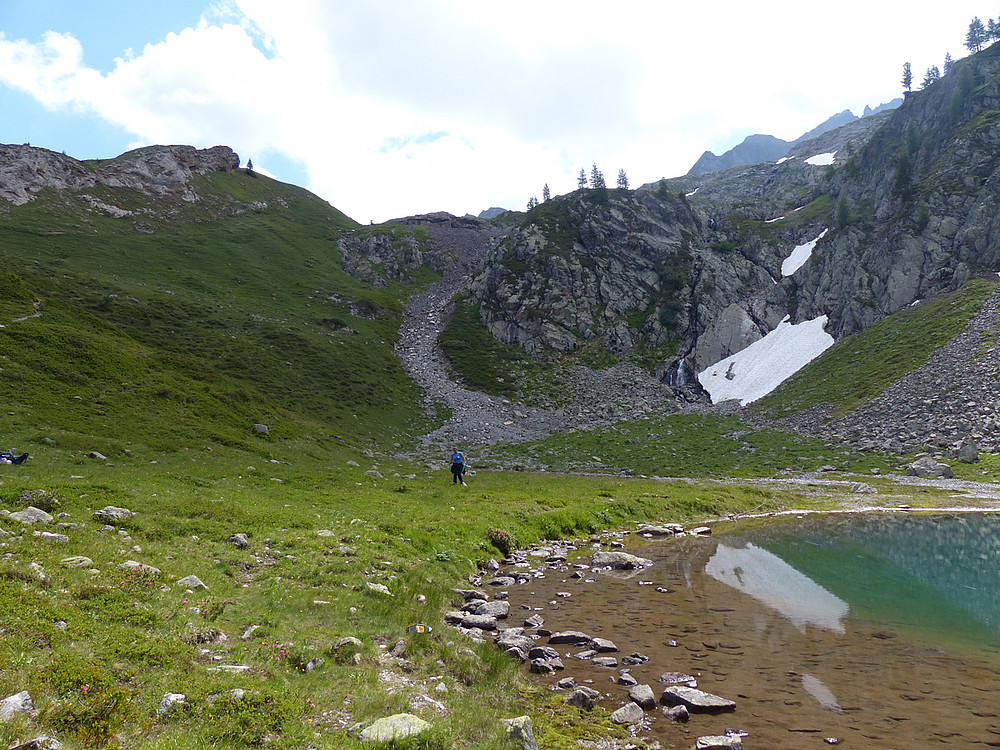
Arsen ist in natürlicher Form fixer Bestandteil in vielen Erdböden, wie hier in der Schweiz. ForscherInnen der Uni Bern und Graz haben nun herausgefunden, dass Starkregen und Erderwärmung für die Mobilisierung des giftigen Stoffs sorgen. Foto: Uni Bern/Adrien Mestrot

Welche Rolle spielt Starkregen und Erderwärmung bei der Arsen-Vergiftung von Erdböden?

Das giftige Arsen ist verantwortlich für Krebserkrankungen beim Menschen und kann verstärkt in Nahrungsmitteln wie Reis aufgenommen wird. Dies haben ChemikerInnen an der Uni Graz in mehreren Studien bereits nachgewiesen. Neu ist, dass der giftige Stoff – bedingt durch den Klimawandel und die damit verbundene Erderwärmung – auch weitere Ökosysteme bedroht. „Wir haben in Zusammenarbeit mit den Universitäten Bern und Aberdeen herausgefunden, dass bei Überschwemmungen und erhöhter Temperatur Arsen verstärkt aus Böden mobilisiert wird“, erklärt der Grazer Umweltchemiker Jörg Feldmann. Die Daten wurden nun in der Publikation „Increasing temperature and flooding enhance arsenic release and biotransformations in Swiss soils“ veröffentlicht.
 

Feldmanns Forschungsgruppe hat in der Schweiz zwei unterschiedliche Böden genauer unter die Lupe genommen: eine Probe, in der Arsen durch menschliches Einwirken freigesetztes wird – wie zum Beispiel durch Bergbau –, die zweite Probe stammte aus einem Boden mit natürlichem Arsen-Gehalt. Klimawandel-Effekte, wie etwa Starkregen- und Hitze-Simulationen im Labor zeigten ein klares Bild: „Bei Überschwemmungen und einer Erd-Erwärmung von rund fünf Grad verändert sich die Zusammensetzung des biologischen Mileus, das Arsen wird metabolisiert und wird wasserlöslich und flüchtig“, betont Feldmann. Das bedeutet, dass es sich aus belasteten Böden ins Grundwasser und in die Atmosphäre festsetzen und dort seine toxische Wirkung entfalten kann. Am Ende des Tages bestünde die Möglichkeit, dass es nicht nur ins Grundwasser kommt, sondern über die Atemwege und Nahrung auch in den menschlichen Organismus gelangt, so Feldmann.

In einem nächsten Schritt möchte der Chemiker die steirischen Böden untersuchen: Denn besonders das Erdreich von Graz bis Maribor, ein Großteil der Südsteiermark also, verfügt durch die Alpen bedingt einen erhöhten Arsengehalt. „Das resultiert daraus, dass das Arsen über den Regen aus dem Gestein der Alpen herausgeschwemmt wird und sich seinen Weg schlussendlich über Flüsse und andere Gewässer in den Süden bahnt.“

created by Konstantin Tzivanopoulos

Related news

Full effort in the heat: the Sports Centre was in full swing at the Kleeblattlauf

On 19 June 2026, 2,000 runners and hundreds of supporters made their way to the Rosenhain for a sporting end-of-term event.

Save, invest or guarantee: What Austrians expect from the state

Austria needs to make savings. But where? And what should the Republic actually be spending its money on? The answers are provided by the initial findings of a major study involving the University of Graz. 99 per cent of those surveyed are in favour of the state ensuring healthcare provision. Almost three-quarters would like to see more public funding for education, whilst only around three per cent are in favour of cuts in this sector.

Complying with the norm: Why Do Standards Shape Our Lives, Elisabeth Staudegger?

Standards determine whether a sheet of paper fits in a printer or whether a charging plug can power multiple devices. These standards shape our everyday lives. But who actually sets these standards? Where are the weaknesses, and how could science help to improve them? Elisabeth Staudegger, Head of the ‘Law and IT’ Department at the Institute for Legal Foundations at the University of Graz, host the Academic Standards Day on 16 June. Here she relays how sciences can contribute to the topic of standardisation and reveals her personal favourite standard.

More body awareness than a culture war

In Italy, sex education lessons will in future only be permitted with parental consent, and will be banned entirely in nurseries and primary schools. At the same time, Pride Month highlights why knowledge about the body, relationships, boundaries and diversity is important for young people. A study by the University of Graz shows how important knowledge about the body, contraception, relationship skills and protection against violence is

Begin of page section:
Additional information:

University of Graz
Universitaetsplatz 3
8010 Graz
Austria
  • Contact
  • Web Editors
  • Moodle
  • UNIGRAZonline
  • Imprint
  • Data Protection Declaration
  • Accessibility Declaration
Weatherstation
Uni Graz

End of this page section. Go to overview of page sections

End of this page section. Go to overview of page sections

Begin of page section:

End of this page section. Go to overview of page sections

