




Begin of page section:
Page sections:

  • Go to contents (Accesskey 1)
  • Go to position marker (Accesskey 2)
  • Go to main navigation (Accesskey 3)
  • Go to sub navigation (Accesskey 4)
  • Go to additional information (Accesskey 5)
  • Go to page settings (user/language) (Accesskey 8)
  • Go to search (Accesskey 9)

End of this page section. Go to overview of page sections

Begin of page section:
Page settings:

English en
Deutsch de
Search
Login

End of this page section. Go to overview of page sections

Begin of page section:
Search:

Search for details about Uni Graz
Close

End of this page section. Go to overview of page sections


Search

Begin of page section:
Main navigation:

Page navigation:

  • University

    University
    • About the University
    • Organisation
    • Faculties
    • Library
    • Working at University of Graz
    • Campus
    Developing solutions for the world of tomorrow - that is our mission. Our students and our researchers take on the great challenges of society and carry the knowledge out.
  • Research Profile

    Research Profile
    • Our Expertise
    • Research Questions
    • Research Portal
    • Promoting Research
    • Research Transfer
    • Ethics in Research
    • Commission for Scientific Integrity
    Scientific excellence and the courage to break new ground. Research at the University of Graz creates the foundations for making the future worth living.
  • Studies

    Studies
    • Prospective Students
    • Students
    • Welcome Weeks for First Year Students
  • Community

    Community
    • International
    • Location
    • Research and Business
    • Alumni
    The University of Graz is a hub for international research and brings together scientists and business experts. Moreover, it fosters the exchange and cooperation in study and teaching.
Topics
  • Sustainable University
  • Researchers answer
  • Work for us
Close menu

End of this page section. Go to overview of page sections

Begin of page section:
You are here:

University of Graz News Kein Holzweg

End of this page section. Go to overview of page sections

Friday, 10 June 2022

Kein Holzweg

ForscherInnen der Uni Graz haben untersucht, wie Bildungsarbeit in der Holzwirtschaft funktioniert und wie sie verbessert wird. Foto: pexels.com

ForscherInnen der Uni Graz haben untersucht, wie Bildungsarbeit in der Holzwirtschaft funktioniert und wie sie verbessert wird. Foto: pexels.com

ForscherInnen haben untersucht, wie Bildungsarbeit in der Holzwirtschaft funktioniert und wie sie verbessert wird

Der digitale Wandel macht deutlich: Professionelle Bildungsarbeit in Betrieben wird auch in traditionellen Branchen immer wichtiger. WissenschafterInnen der Universität Graz haben im Projekt „Valid Holz“ untersucht, wie Aus- und Weiterbildungsangebote die Kompetenzen von MitarbeiterInnen fördern und wo es in diesem Bereich Verbesserungspotenzial gibt. Der Projekttitel verrät es schon: Das Projektteam hat sich die Bildungsarbeit in Sägewerken, bei HerstellerInnen von Brettschicht- und Brettsperrholz sowie bei ProduzentInnen von Parkett und Fenstern angesehen. 


Sichtbar gemachtes „Learning by doing“ 
Ein bekanntes Problem in diesem Zusammenhang schildert Projektleiter Philipp Assinger so: Berufserfahrung oder bestimmte Kompetenzen, wie zum Beispiel Ausdrucksfähigkeit, Einsatzbereitschaft oder Verantwortungsbewusstsein, sind sehr wichtig, lassen sich aber kaum angemessen in Zeugnissen abbilden. „Solche Fähigkeiten eignet man sich meist durch zielgerichtete Tätigkeiten am Arbeitsplatz an, also durch learning by doing“, führt Assinger aus. Der Forscher macht sich deshalb dafür stark, dieses informelle Lernen, das oft beiläufig und unbewusst geschieht, sichtbar und formalisierbar zu machen. Zum Beispiel in betrieblichen Bestätigungen, Lern-Zertifikaten oder beruflichen Qualifikationen. „Das stärkt sowohl ArbeitnehmerInnen in ihrer beruflichen Entwicklung als auch Betriebe beim Umgang mit dem Arbeits- und Fachkräfteproblem“, unterstreicht der Berufsbildungswissenschafter. 

Das Forschungsteam hat daher ein Kompetenzvalidierungsverfahren entwickelt, das besonders für Klein- und Mittebetriebe geeignet ist. Philipp Assinger erklärt: „Betriebe können mit diesem Tool die Kompetenzen und die Entwicklungsbereitschaft ihrer MitarbeiterInnen identifizieren, dokumentieren, evaluieren und weiterentwickeln. Und zwar unabhängig davon, ob das Lernen in der formalen Ausbildung, der non-formalen Weiterbildung oder direkt am Arbeitsplatz passiert.“ 


Neues Verständnis für Aus- und Weiterbildung
Abschließend hält der Projektleiter fest: „Betriebe aus traditionsreichen Branchen in strukturschwachen Regionen müssen in Innovationen investieren, um zukünftige Herausforderungen meistern zu können.“ Innovation meint aber nicht nur technologische Anschaffungen, sondern vor allem auch ein erneuertes Verständnis für die Aus- und Weiterbildung der MitarbeiterInnen. „Es wird in Zukunft nicht mehr ausreichen, mit Schulung und Seminaren zu reagieren, wenn jemand eingestellt wird oder wenn die neue Anlage schon im Betrieb steht“, schildert Assinger. Alle MitarbeiterInnen, egal in welchen Tätigkeiten oder auf welchen Qualifikationsstufen, sollten frühzeitig, langfristig und systematisch in die Entwicklung eines Betriebs miteinbezogen werden. „Dazu ist es wichtig, eine Bestandsaufnahme zu machen. Jedem/jeder UnternehmensleiterIn sollte klar sein: Was können meine MitarbeiterInnen und wohin möchten sie sich entwickeln? Und wie können wir als Betrieb sie dabei unterstützen?“, resümiert der Wissenschafter.


Das Projekt „Valid Holz“ wurde in Zusammenarbeit mit dem Holzcluster Steiermark sowie mit Unterstützung der Fachgruppe Holzindustrie der Wirtschaftskammer Steiermark durchgeführt und von Dezember 2019 bis März 2022 vom Zukunftsfonds des Landes Steiermark gefördert. 
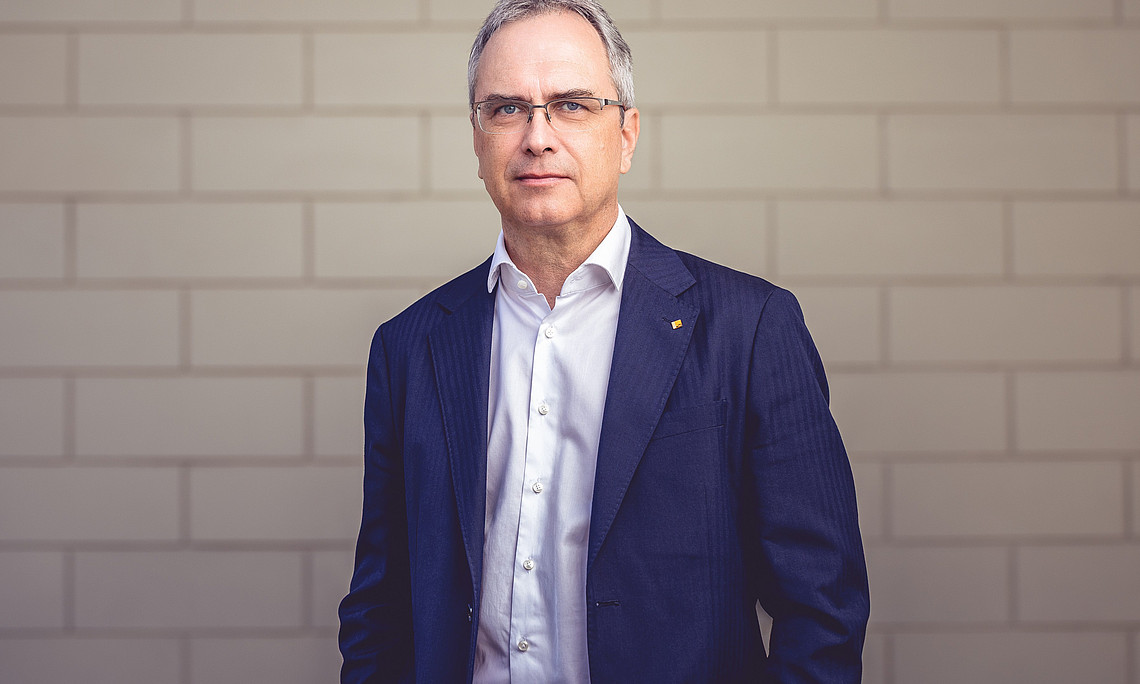
created by Gerhild Leljak

Related news

Electrifying: Researchers film the first moments on the way from light to electricity

Physicists at the University of Graz (Austria), in collaboration with colleagues from Marburg University and Forschungszentrum Jülich (Germany), have achieved a scientific breakthrough. For the first time, the generation of electrical energy from light has been filmed and described theoretically. This work is of far-reaching significance, not least for optimising sustainable energy production from photovoltaics. This is because it provides fundamental building blocks for understanding the physical processes that take place, for example, in organic solar cells. The paper was published in the journal Physical Review X, one of the world’s most prestigious physics journals.

University of Graz: Working together to make Styria a sustainable centre of learning

Round table calls for sustainable funding for the 2028–2030 performance agreement period between the five Styrian universities and the federal government.

How can we teach using YouTube and AI? The University of Graz is strengthening media education in schools

A journey through the blood vessels using VR headsets brings biology lessons to life. An interactive quiz brings physics to life. The YouTube video explains the First World War. Whilst mobile phones are increasingly being banned from the classroom, social media platforms, apps and AI are playing an ever-greater role in knowledge transfer at school. But how can teaching with media be made even more effective? What are the challenges in media-based teaching? At the University of Graz, researchers are discussing these issues at a conference being held in Austria for the first time.

Jurassic Sounds: Biologist reconstructs insect songs from 165 million years ago

It was apparently not just the roars of the dinosaurs that made up the soundscape of the animal world during the Jurassic period. Crickets and grasshoppers communicated through a variety of songs and high-pitched sounds, as Thorin Jonsson from the Institute of Biology at the University of Graz discovered together with colleagues from the universities of Lincoln, Bristol (UK), Beijing (China) and Tempe (USA). The findings on what are so far the oldest traces of sound on Earth have just been published in the journal PNAS.

Begin of page section:
Additional information:

University of Graz
Universitaetsplatz 3
8010 Graz
Austria
  • Contact
  • Web Editors
  • Moodle
  • UNIGRAZonline
  • Imprint
  • Data Protection Declaration
  • Accessibility Declaration
Weatherstation
Uni Graz

End of this page section. Go to overview of page sections

End of this page section. Go to overview of page sections

Begin of page section:

End of this page section. Go to overview of page sections


