Begin of page section:
Page sections:

  • Go to contents (Accesskey 1)
  • Go to position marker (Accesskey 2)
  • Go to main navigation (Accesskey 3)
  • Go to sub navigation (Accesskey 4)
  • Go to additional information (Accesskey 5)
  • Go to page settings (user/language) (Accesskey 8)
  • Go to search (Accesskey 9)

End of this page section. Go to overview of page sections

Begin of page section:
Page settings:

English en
Deutsch de
Search
Login

End of this page section. Go to overview of page sections

Begin of page section:
Search:

Search for details about Uni Graz
Close

End of this page section. Go to overview of page sections


Search

Begin of page section:
Main navigation:

Page navigation:

  • University

    University
    • About the University
    • Organisation
    • Faculties
    • Library
    • Working at University of Graz
    • Campus
    Developing solutions for the world of tomorrow - that is our mission. Our students and our researchers take on the great challenges of society and carry the knowledge out.
  • Research Profile

    Research Profile
    • Our Expertise
    • Research Questions
    • Research Portal
    • Promoting Research
    • Research Transfer
    • Ethics in Research
    • Commission for Scientific Integrity
    Scientific excellence and the courage to break new ground. Research at the University of Graz creates the foundations for making the future worth living.
  • Studies

    Studies
    • Prospective Students
    • Students
    • Welcome Weeks for First Year Students
  • Community

    Community
    • International
    • Location
    • Research and Business
    • Alumni
    The University of Graz is a hub for international research and brings together scientists and business experts. Moreover, it fosters the exchange and cooperation in study and teaching.
Topics
  • Sustainable University
  • Researchers answer
  • Work for us
Close menu

End of this page section. Go to overview of page sections

Begin of page section:
You are here:

University of Graz News Karriere, Preise, Ehrungen

End of this page section. Go to overview of page sections

Friday, 13 October 2017

Karriere, Preise, Ehrungen
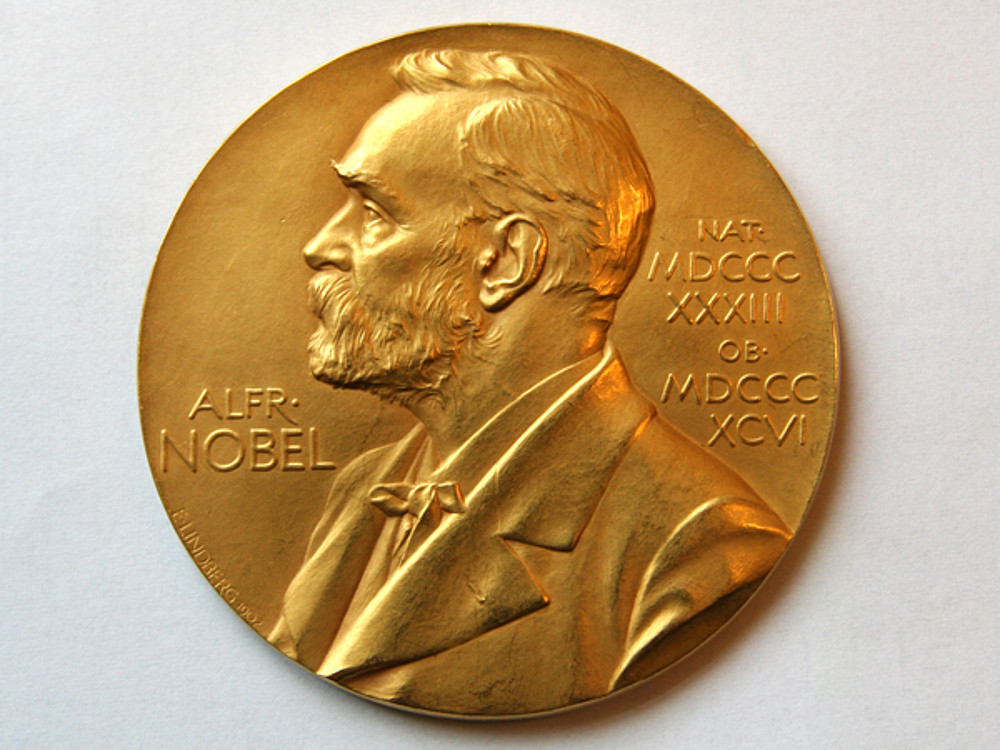
Erwähnungen in der UNIZEIT 3/2017

Univ.-Prof. Dr. Christian Aschauer vom Institut für Zivilverfahrensrecht und Insolvenzrecht wurde zum Mitglied des Rats des Schiedsgerichts (Consiglio Arbitrale) für die Jahre 2017–2020 durch die Schiedskammer der Handelskammer Mailand (Camera Arbitrale Milano) ernannt.

Univ.-Prof. Dr. Rupert Baumgartner vom Institut für Systemwissenschaften, Innovations- und Nachhaltigkeitsforschung wurde am 1. Juni 2017 mit dem mit 2000 Euro dotierten Seraphine-Puchleitner-Preis für DoktorandInnenbetreuung ausgezeichnet.

Dr. Christian Berg, Leiter des Botanischen Gartens, wurde am 22. April 2017 vom Steirischen Museumsverband für seine besonderen Verdienste um die Museumsarbeit in der Steiermark geehrt.

Univ.-Prof. Dr. Katja Corcoran vom Institut für Psychologie erhielt am 1. Juni 2017 einen mit 500 Euro dotierten Seraphine-Puchleitner-Anerkennungspreis für DoktorandInnenbetreuung.

Martin Griesbacher, MA, vom Institut für Soziologie erhielt am 26. Juni 2017 den Ars-docendi-Staatspreis.
Univ.-Prof. Dr. Markus Hadler vom Institut für Soziologie wurde vom Department of Sociology der Macquarie University in Sydney, Australien, zum „Honorary Professor of Sociology“ ernannt.

Mag. Daniel Heitzmann vom Zentrum für Südosteuropastudien erhielt ein mit 2000 Euro dotiertes Dissertationsstipendium für besondere wissenschaftliche Leistungen aus dem Bereich des Umwelt- und Technikrechts, das von der Niederhuber & Partner Rechtsanwälte GmbH in Kooperation mit dem Institut für Staats- und Verwaltungsrecht der Universität Wien vergeben wird.

Univ.-Prof. Robert Hill, PhD, vom Institut für Volkswirtschaftslehre wurde am 1. Juni 2017 mit einem mit 500 Euro dotierten Seraphine-Puchleitner-Anerkennungspreis für DoktorandInnenbetreuung ausgezeichnet.

Ao.Univ.-Prof. Dr. Ulrich Hohenester vom Institut für Physik erhielt am 1. Juni 2017 ebenfalls einen mit 500 Euro dotierten Seraphine-Puchleitner-Anerkennungspreis für DoktorandInnenbetreuung.

Univ.-Prof. Dr. Gottfried Kirchengast, Leiter des Wegener Center für Klima und Globalen Wandel der Uni Graz, wurde am 16. August 2017 in Peking eine Honorarprofessur auf Lebenszeit am National Space Science Center der Chinesischen Akademie der Wissenschaften verliehen.

Dr. Christian Kohlfürst vom Institut für Physik wurde der Viktor-Franz-Hess-Preis der Österreichischen Physikalischen Gesellschaft verliehen.

Annika Kruse, MA, vom Institut für Sportwissenschaft erhielt am 23. Mai 2017 ein Doktoratsstipendium für Frauen der Uni Graz.

O.Univ.-Prof. Dr. Karl Kunisch vom Institut für Mathematik und Wissenschaftliches Rechnen wurde zum „Fellow for the Society of Industrial and Applied Mathematics“ ernannt.

Dimitrios Meletis, MA, vom Institut für Sprachwissenschaft erhielt ein Doktoratsstipendium der Österreichischen Akademie der Wissenschaften.

Univ.-Prof. Dr. Stephan Moebius, Leiter des Instituts für Soziologie, erhielt am 26. Juni 2017 den Ars-docendi-Staatspreis. Außerdem wurde er in den Wissenschaftlichen Beirat der Kölner Zeitschrift für Soziologie und Sozialpsychologie gewählt.

Univ.-Prof. Dr. Bettina Nunner-Krautgasser vom Ins­titut für Zivilverfahrensrecht und Insolvenzrecht wurde zum Mitglied des „Global Network of Insolvency Law Experts“ ernannt.

Mag. Philipp Resl vom Institut für Pflanzenwissenschaften wurde am 14. Juni 2017 für seine Dissertation mit einem Theodor-Körner-Preis ausgezeichnet.

Veronika Slawitsch vom Institut für Erdwissenschaften erhielt ein Doktoratsstipendium der Österreichischen Akademie der Wissenschaften.

Dominik Sorger, MSc, vom Institut für Erdwissenschaften wurde ebenfalls mit einem Doktoratsstipendium der Österreichischen Akademie der Wissenschaften ausgezeichnet.

Mag. Ivana Turek vom Institut für Pharmazeutische Wissenschaften erhielt beim Young Scientists Meeting der Phytochemical Society of Europe in Lille den Jeffrey Harborne Prize für die beste Präsentation.

Related news

Jurassic Sounds: Biologist reconstructs insect songs from 165 million years ago

It was apparently not just the roars of the dinosaurs that made up the soundscape of the animal world during the Jurassic period. Crickets and grasshoppers communicated through a variety of songs and high-pitched sounds, as Thorin Jonsson from the Institute of Biology at the University of Graz discovered together with colleagues from the universities of Lincoln, Bristol (UK), Beijing (China) and Tempe (USA). The findings on what are so far the oldest traces of sound on Earth have just been published in the journal PNAS.

EU funding boosts international exchange between universities

The University of Graz is further expanding its international study opportunities through the European university alliance Arqus and is taking the lead in two key projects. In future, students will benefit from even more joint degree programmes and from simplified recognition of academic achievements through the Joint European Degree Label.

Rescue and risks: Researchers have surveyed public perceptions of AI

The use of artificial intelligence has had to be made transparent since 2 August 2026. The EU’s AI Act, which has been in force since then, also sets out how risky an application is and which security measures apply as a result. However, the assessment of risks by the legislation differs in some cases significantly from the perceptions of the Austrian public. This is the finding of a representative study carried out by data scientist Stefan Thalmann from the University of Graz and his team.

The Healing Sea: Researchers discover new approaches to treating chronic inflammation in sponges

Chronic inflammation plays a key role in many diseases, ranging from metabolic disorders and cardiovascular diseases to tissue damage following injuries or infections. “Normally, the body is able to resolve inflammation on its own. If this process becomes unbalanced, immune cells remain permanently active and continue to drive negative changes in the tissue,” explains Andreas Koeberle, a pharmacist at the University of Graz.

Begin of page section:
Additional information:

University of Graz
Universitaetsplatz 3
8010 Graz
Austria
  • Contact
  • Web Editors
  • Moodle
  • UNIGRAZonline
  • Imprint
  • Data Protection Declaration
  • Accessibility Declaration
Weatherstation
Uni Graz

End of this page section. Go to overview of page sections

End of this page section. Go to overview of page sections

Begin of page section:

End of this page section. Go to overview of page sections