Begin of page section:
Page sections:

  • Go to contents (Accesskey 1)
  • Go to position marker (Accesskey 2)
  • Go to main navigation (Accesskey 3)
  • Go to sub navigation (Accesskey 4)
  • Go to additional information (Accesskey 5)
  • Go to page settings (user/language) (Accesskey 8)
  • Go to search (Accesskey 9)

End of this page section. Go to overview of page sections

Begin of page section:
Page settings:

English en
Deutsch de
Search
Login

End of this page section. Go to overview of page sections

Begin of page section:
Search:

Search for details about Uni Graz
Close

End of this page section. Go to overview of page sections


Search

Begin of page section:
Main navigation:

Page navigation:

  • University

    University
    • About the University
    • Organisation
    • Faculties
    • Library
    • Working at University of Graz
    • Campus
    Developing solutions for the world of tomorrow - that is our mission. Our students and our researchers take on the great challenges of society and carry the knowledge out.
  • Research Profile

    Research Profile
    • Our Expertise
    • Research Questions
    • Research Portal
    • Promoting Research
    • Research Transfer
    • Ethics in Research
    • Commission for Scientific Integrity
    Scientific excellence and the courage to break new ground. Research at the University of Graz creates the foundations for making the future worth living.
  • Studies

    Studies
    • Prospective Students
    • Students
    • Welcome Weeks for First Year Students
  • Community

    Community
    • International
    • Location
    • Research and Business
    • Alumni
    The University of Graz is a hub for international research and brings together scientists and business experts. Moreover, it fosters the exchange and cooperation in study and teaching.
Topics
  • Sustainable University
  • Researchers answer
  • Work for us
Close menu

End of this page section. Go to overview of page sections

Begin of page section:
You are here:

University of Graz News Karriere & Ehrungen

End of this page section. Go to overview of page sections

Friday, 26 June 2015

Karriere & Ehrungen
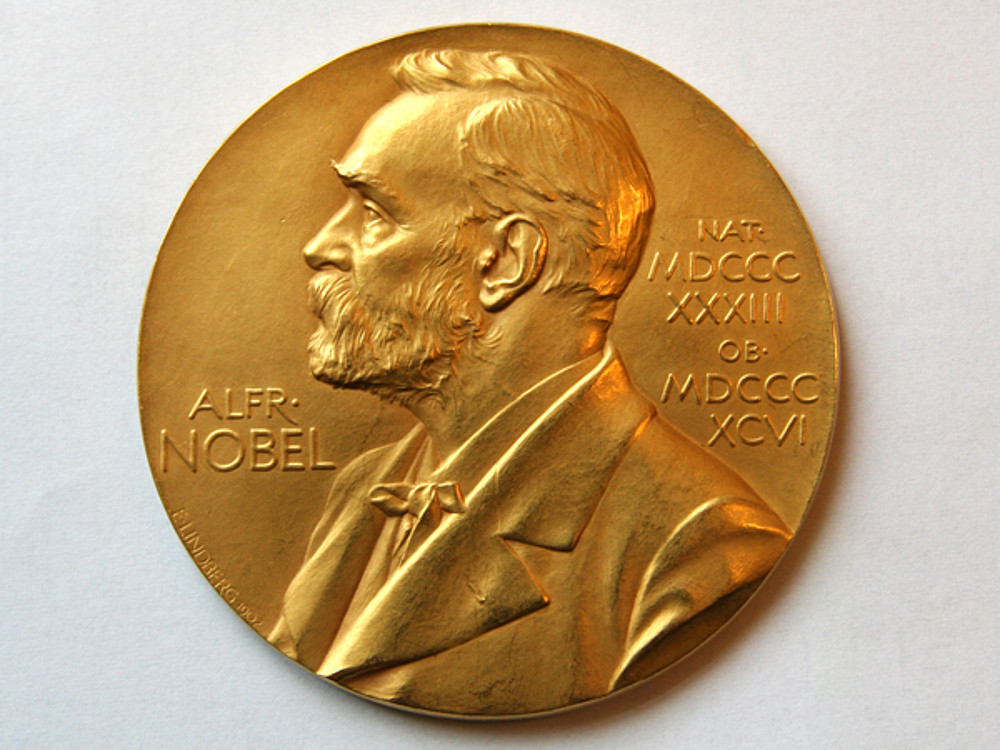
Meldungen aus der Unizeit 2/2015

Dr. Philipp Anzenberger vom Institut für Zivilverfahrensrecht und Insolvenzrecht erhielt den Wissenschaftspreis der ScherbaumSeebacher Rechtsanwälte für seine hervorragende Dissertation zum Insolvenz- und Sanierungsrecht.

Priv.-Doz. Dr. Mathias Benedek vom Institut für Psychologie erhielt den Berlyne Award der American Psychological Associaton, der herausragende WissenschafterInnen in ihrer frühen Karriere fördert.

Em.Univ.-Prof. Dr. Christian Brünner vom Institut für  Öffentliches Recht und Politikwissenschaft wurde der Polarstern-Preis 2015 des Österreichischen Weltraum Forums für herausragendes Engagement im Weltraumbereich verliehen.

tit.Univ.-Prof. Dr. Walter Brunner und Ao.Univ.-Prof. i.R. Dr. Günter Cerwinka vom Institut für Geschichte wurden in der Jahreshauptversammlung des Historischen Vereines für Steiermark zu dessen Ehrenmitgliedern gewählt.

Mag. Bettina Erregger vom Institut für Zoologie erhielt den mit 500 Euro dotierten Preis der Deutschen Entomologischen Gesellschaft für die beste Diplom-/Masterarbeit.

Ao.Univ.-Prof. Dr. Karl Farmer vom Institut für Volkswirtschaftslehre wurde die Ehrenprofessorenwürde der rumänischen Universität Cluj-Napoca verliehen.

Mag. Antonia Fleischhacker vom Institut für Pflanzenwissenschaften erhielt ein Frauenstipendium des Vizerektorats für Personal, Personalentwicklung und Gleichstellung.

Dr. Wolfgang Göderle vom Institut für Geschichte wurde der Michael-Mitterauer-Förderungspreis des Jahres 2014 verliehen.

Univ.-Prof. DDr. Christoph Grabenwarter, Institut für Öffentliches Recht und Politikwissenschaft, wurde zum Präsidenten des Österreichischen Juristentags gewählt.

Ao.Univ.-Prof. Dr. Kurt Kalcher vom Institut für Chemie erhielt das Ehrendoktorat der Universität Sarajevo.

O.Univ.-Prof. Dr. Karl Kaser vom Institut für Geschichte wurde zum Ehrenmitlgied der Slowenischen Akademie der Wissenschaften in Ljubljana ernannt.

Em.Univ.-Prof. Dr. Heinz Kurz vom Institut für Volkswirtschaftslehre ist neues Mitglied im Editorial Board des Italian Economic Journal.

Univ.-Prof. Dr. Axel Maas vom Institut für Physik wurde im Rahmen des Outstanding Referees Program der American Physical Society geehrt.

Univ.-Prof. Dr. Manuela Paechter vom Institut für Psychologie wurde mit dem Seraphine-Puchleitner-Preis für gute DoktorandInnenarbeit ausgezeichnet.

Priv.-Doz. Dr. Stefan Palan vom Institut für Banken und Finanzierung wurde in das Editorial Board des Central European Journal of Operations Research aufgenommen.

Mag. Elisa Rieger vom Zentrum für Kulturwissenschaften erhielt ein Frauenstipendium des Vizerektorats für Personal, Personalentwicklung und Gleichstellung.

Assoz. Prof. Dr. Thomas Schmickl vom Institut für Zoologie wurde auf der Vienna Conference on Mathematical Modelling mit dem Best Poster Award ausgezeichnet.

Dr. Franz-Philipp Schmidt vom Institut für Physik erhielt den Fritz-Grasenick-Preises 2014 der Österreichische Gesellschaft für Elektronenmikroskopie.

Ass.-Prof. Dr. Thomas Schoditsch vom Institut für Rechtsphilosophie, Rechtssoziologie und Rechtsinformatik erhielt den mit EUR 7.000 dotierten Herbert-Tumpel-Preis des Theodor-Körner-Fonds für sein Habiliationsprojekt.

Priv.-Doz. Dr. Georg Tafner vom Institut für Wirtschaftspädagogik wurde mit dem Kardinal-Innitzer-Förderungspreis 2014 ausgezeichnet.

DI Hildrun Walter vom Institut für Pflanzenwissenschaften erhielt ein Frauenstipendium des Vizerektorats für Personal, Personalentwicklung und Gleichstellung.

Dr. Clemens Wieser vom Institut für Erziehungs- und Bildungswissenschaft wurde mit dem Leopold-Kunschak-Wissenschaftspreis ausgezeichnet.

Dr. Johannes Wühl vom Institut für Zivilrecht, Ausländisches und Internationales Privatrecht erhielt den Wissenschaftspreis der ScherbaumSeebacher Rechtsanwälte für seine hervorragende Dissertation zum Insolvenz- und Sanierungsrecht.

Univ.-Prof. Dr. Rudolf Zechner vom Institut für Molekulare Biowissenschaften wurde der mit 700.000 Schweizer Franken dotierte Louis Jeantet Preis für Medizin 2015 überreicht.

Related news

Jurassic Sounds: Biologist reconstructs insect songs from 165 million years ago

It was apparently not just the roars of the dinosaurs that made up the soundscape of the animal world during the Jurassic period. Crickets and grasshoppers communicated through a variety of songs and high-pitched sounds, as Thorin Jonsson from the Institute of Biology at the University of Graz discovered together with colleagues from the universities of Lincoln, Bristol (UK), Beijing (China) and Tempe (USA). The findings on what are so far the oldest traces of sound on Earth have just been published in the journal PNAS.

EU funding boosts international exchange between universities

The University of Graz is further expanding its international study opportunities through the European university alliance Arqus and is taking the lead in two key projects. In future, students will benefit from even more joint degree programmes and from simplified recognition of academic achievements through the Joint European Degree Label.

Rescue and risks: Researchers have surveyed public perceptions of AI

The use of artificial intelligence has had to be made transparent since 2 August 2026. The EU’s AI Act, which has been in force since then, also sets out how risky an application is and which security measures apply as a result. However, the assessment of risks by the legislation differs in some cases significantly from the perceptions of the Austrian public. This is the finding of a representative study carried out by data scientist Stefan Thalmann from the University of Graz and his team.

The Healing Sea: Researchers discover new approaches to treating chronic inflammation in sponges

Chronic inflammation plays a key role in many diseases, ranging from metabolic disorders and cardiovascular diseases to tissue damage following injuries or infections. “Normally, the body is able to resolve inflammation on its own. If this process becomes unbalanced, immune cells remain permanently active and continue to drive negative changes in the tissue,” explains Andreas Koeberle, a pharmacist at the University of Graz.

Begin of page section:
Additional information:

University of Graz
Universitaetsplatz 3
8010 Graz
Austria
  • Contact
  • Web Editors
  • Moodle
  • UNIGRAZonline
  • Imprint
  • Data Protection Declaration
  • Accessibility Declaration
Weatherstation
Uni Graz

End of this page section. Go to overview of page sections

End of this page section. Go to overview of page sections

Begin of page section:

End of this page section. Go to overview of page sections